
Picture this. You walk into a clinic on a Monday morning with depression that's been sitting on your chest like a wet sandbag for months - maybe years. By Friday afternoon, you walk out feeling meaningfully better. Not "I watched a sunset and cried" better. Clinically, measurably better. Brain scans to prove it.
Sound too good to be true? A new clinical trial (NCT07487454) is betting real money and serious science that it's not.
Fifty Zaps in Five Days
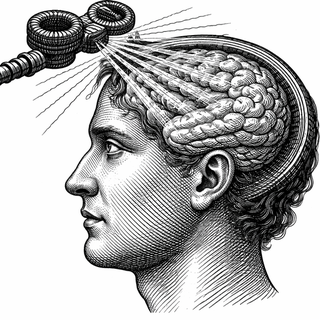
The trial is testing accelerated intermittent theta burst stimulation - iTBS for short, because neuroscience loves an acronym. It's a turbocharged version of transcranial magnetic stimulation (TMS), which itself is a fancy way of saying "we point a magnetic coil at your head and nudge your neurons into behaving differently."
Standard TMS for depression typically takes six weeks. You show up daily, sit in a chair, get your brain stimulated for about 20 minutes, then go about your day. It works. The FDA cleared it back in 2008. But six weeks is a long time when you're struggling to get out of bed.
This trial compresses the timeline dramatically. Participants receive 10 stimulation sessions per day over 5 consecutive days. That's 50 sessions in a single work week. If depression treatment were a college degree, this would be the intensive summer semester version.
The Science Behind the Buzz (Pun Intended)
Theta burst stimulation mimics natural brain rhythms. Specifically, it delivers short bursts of magnetic pulses in a pattern that echoes theta oscillations - the brainwaves your hippocampus produces during learning and memory formation. The "intermittent" part means those bursts come in on-off cycles, which research suggests is particularly good at strengthening connections in the prefrontal cortex.
Why the prefrontal cortex? Because in depression, that region - your brain's executive suite, responsible for emotional regulation and decision-making - tends to be underperforming. Meanwhile, the default mode network (the part of your brain that ruminates about that embarrassing thing you said at a party in 2014) is often overactive. iTBS aims to rebalance that equation.
The approach owes a lot to the Stanford Accelerated Intelligent Neuromodulation Therapy (SAINT) protocol, which made headlines with an open-label study showing remission rates near 79% in treatment-resistant patients (Cole et al., 2020, DOI: 10.1176/appi.ajp.2019.19070720). A subsequent double-blind randomized controlled trial confirmed these weren't just placebo vibes - the active stimulation group significantly outperformed sham (Cole et al., 2022, DOI: 10.1176/appi.ajp.21080800).
Earlier work by Blumberger and colleagues in the landmark THREE-D trial had already shown that iTBS was non-inferior to conventional repetitive TMS over a standard treatment course (Blumberger et al., 2018, DOI: 10.1016/S0140-6736(18)30295-2). Translation: the faster protocol works just as well, in a fraction of the time. That finding cracked the door open. Accelerated protocols kicked it down.
What Makes This Trial Different
Plenty of studies have tested accelerated iTBS at this point. So what's the angle here?
This one is digging deeper into the why. Beyond the central question - does accelerated iTBS beat sham stimulation for depression? - the researchers are chasing biological and digital biomarkers of treatment response. Participants undergo MRI brain scans and EEG recordings before and after treatment. They provide blood and saliva samples. And in a particularly modern twist, they use a secure mobile app to record facial and vocal samples throughout treatment and follow-up.
That last part is worth pausing on. The idea is that depression changes how you look and sound - your facial expressions flatten, your vocal prosody shifts - and these changes might be detectable by algorithms before they're obvious to clinicians or even to you. If the trial can connect neural, molecular, and digital signals to treatment outcomes, we get closer to predicting who will respond to iTBS and who might need a different approach.
Follow-up extends to 12 months, with check-ins at 1 week, then 1, 3, 6, and 12 months post-treatment. That's significant. Plenty of interventions look great at two weeks and then fade. A full year of data tells a more honest story.
Why This Matters Beyond the Lab
Depression affects roughly 280 million people worldwide. It's the leading cause of disability on the planet. Current first-line treatments - SSRIs, SNRIs, talk therapy - help many people, but response rates hover around 50-60%, and full remission is lower still. For treatment-resistant depression, the options get thinner and the side effects get heavier.
A five-day, non-invasive treatment with durable effects would be a genuine game-changer. Think about what it could mean for someone in a depressive crisis. Instead of waiting weeks for medication to kick in (if it kicks in at all), you could potentially achieve rapid relief in under a week.
Network meta-analyses have reinforced TMS as a legitimate treatment with effect sizes comparable to antidepressants but without the systemic side effects - no weight gain, no sexual dysfunction, no withdrawal syndromes (Mutz et al., 2019, DOI: 10.1017/S0033291718003057). The main downside has always been the time commitment and cost of daily clinic visits over weeks. Accelerated protocols like this one tackle that barrier head-on.
The Skeptic's Corner
I'd be a lousy science journalist if I didn't mention the caveats. Sham-controlled design is essential here because TMS has a non-trivial placebo response. You're sitting in a clinical setting, a device is touching your head, it's making clicking sounds. Your brain wants to feel better. Previous sham-controlled trials have shown significant sham responses, which is exactly why rigorous blinding matters.
There's also the question of durability. Some accelerated iTBS studies have shown effects tapering after a few months. Whether this protocol can maintain benefits at 6 and 12 months will be the real test of its clinical value.
And accessibility remains an issue. TMS equipment isn't cheap, and accelerated protocols require intensive clinical supervision. Even if the science is bulletproof, getting this into the hands - or rather, onto the heads - of the people who need it most will take work on the policy and insurance front.
The Bottom Line
Depression treatment has been stuck in a rut for a while. The basic playbook - pills and therapy, adjust and repeat - hasn't fundamentally changed in decades. Accelerated iTBS represents something genuinely new: fast-acting, non-pharmacological, and increasingly well-supported by evidence.
This trial won't settle every question. But with its multimodal biomarker approach and year-long follow-up, it's asking the right ones. And if the results hold up, "five days to remission" might eventually be more than a catchy headline.
It might be a prescription.
Trial Details: NCT07487454 on ClinicalTrials.gov | Table View
References:
-
Cole EJ, et al. (2020). Stanford Accelerated Intelligent Neuromodulation Therapy for Treatment-Resistant Depression. American Journal of Psychiatry, 177(8), 716-726. DOI: 10.1176/appi.ajp.2019.19070720
-
Cole EJ, et al. (2022). Stanford Neuromodulation Therapy (SNT): A Double-Blind Randomized Controlled Trial. American Journal of Psychiatry, 179(2), 132-141. DOI: 10.1176/appi.ajp.2021.21080800
-
Blumberger DM, et al. (2018). Effectiveness of theta burst versus high-frequency repetitive transcranial magnetic stimulation in patients with depression (THREE-D): a randomised non-inferiority trial. The Lancet, 391(10131), 1683-1692. DOI: 10.1016/S0140-6736(18)30295-2
-
Mutz J, et al. (2019). Comparative efficacy and acceptability of non-surgical brain stimulation for the acute treatment of major depressive episodes in adults: systematic review and network meta-analysis. BMJ, 364, l1079. DOI: 10.1017/S0033291718003057
Disclaimer: This blog post is for informational and educational purposes only and does not constitute medical advice. Clinical trials involve investigational treatments that have not yet been fully proven. Always consult a qualified healthcare provider before making decisions about your treatment. The views expressed here are those of the author and do not represent Biomedical Observer's endorsement of any specific therapy or clinical trial.