
Renovating medication adherence is a bit like fixing a drafty old house. You can keep telling people to turn up the heat, or you can find the actual gap in the window frame and seal it. This clinical trial, NCT07553377, is trying to do the second thing. Instead of assuming people are not taking medication because they do not care enough, it asks a more useful question: what if we could see adherence in real time, understand where it breaks down, and offer support that shows up exactly when needed?
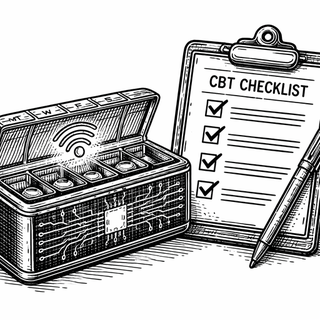
That is the core idea behind “A Digital Pill System to Measure and Support Acamprosate Adherence in Individuals With Alcohol Associated Liver Disease.” The study is testing a digital pill system, or DPS, paired with a cognitive behavioral therapy, or CBT-based, adherence intervention. In plain English, the goal is to track when a medication is actually ingested and then use that data to offer personalized support. As product ideas go, this is catnip. It takes one of healthcare’s oldest headaches, “patients do not always take the meds,” and treats it like an information problem instead of a moral failure.
Why this study stands out
Acamprosate is used to support people with alcohol use disorder, often by helping reduce the drive to return to drinking after stopping. That already matters. Add alcohol-associated liver disease to the picture, and adherence becomes even more important. This is not a wellness app nudging you to drink more water. This is a serious attempt to support people whose health can be shaped by whether treatment works in the real world, not just on the prescription pad.
What makes this trial especially interesting is the pairing of two ideas that usually live in separate rooms. One is measurement: a digital pill system that captures real-time ingestion data. The other is behavioral support: a CBT-based intervention designed to respond to that data in a personalized way. Most healthcare products do one or the other. They either collect data and admire it from a distance, or they offer generic coaching without knowing what actually happened. This trial is trying to close that loop.
From a commercial point of view, that is where things get spicy. A closed feedback loop is where software stops being decoration and starts becoming infrastructure.
The problem it is trying to solve
Medication adherence is one of those giant healthcare problems that everyone agrees is bad, yet the system still treats it with the technological sophistication of a sticky note. Take your meds. Please remember. Good luck out there.
For people living with alcohol use disorder and alcohol-associated liver disease, the barriers are not trivial. Treatment can collide with unstable routines, stigma, mental health strain, competing medical issues, and the basic fact that being human is messy. If someone misses doses, clinicians often find out late, if at all. By then, it becomes hard to separate whether a medication is ineffective, poorly tolerated, or simply not being taken consistently.
That uncertainty is expensive in every sense. It costs time, trust, money, and sometimes health that is hard to get back. A system that can identify missed ingestion in real time and connect it to tailored support could change the clinical conversation. Instead of asking, “Why is this treatment failing?” providers may be able to ask, “What got in the way this week, and how do we solve that?”
That is a much better product question. It is also a much kinder one.
What the trial appears to be testing
Based on the public summary, the study aims to develop and test a novel digital pill system that measures medication ingestion in real time and pairs it with a CBT-based intervention for personalized adherence support. The long-term goal is straightforward and ambitious: improve medication adherence by giving people support that is data-driven rather than generic.
A few details are especially notable:
- The medication in focus is acamprosate.
- The population is individuals with alcohol use disorder and alcohol-associated liver disease.
- The intervention combines digital ingestion tracking with behavioral support.
- The intended outcome is improved adherence, with the broader hope of better personalized care.
Even with just that, you can see the product logic. This is essentially precision adherence. Not precision medicine in the genomic sense, but in the operational sense. The right support, at the right time, triggered by what the patient actually did. Healthcare has spent years trying to become more personalized. Sometimes personalization means fancy biomarkers. Sometimes it means knowing whether Tuesday at 8 p.m. is when everything falls apart.
Why this matters beyond one trial
If this approach works, it could have implications well beyond acamprosate or liver disease. Any field where outcomes depend heavily on consistent medication use could pay attention. Psychiatry, addiction medicine, transplant care, infectious disease, cardiometabolic care, you name it. The pattern is familiar: medications can help, but only if they are taken, and clinicians usually get blurry information about that process.
A successful digital pill system with a behaviorally intelligent support layer could create a new category of treatment companion. Not a passive reminder app. Not a surveillance gadget dressed up as empathy. A true adherence platform that helps patients succeed while giving care teams a clearer view of what is happening between visits.
That said, the real opportunity will depend on design discipline. Patients are not lab robots with Wi-Fi. If the technology feels invasive, confusing, or naggy, adoption will sink faster than a startup pitch deck with twelve revenue models. The winning version has to be clinically useful and emotionally tolerable. Maybe even reassuring.
The business angle nobody should ignore
I read studies like this with one recurring thought: where is the repeatable engine here?
The answer may be in turning adherence from a black box into a service layer. If real-time ingestion data can trigger targeted behavioral interventions, then health systems, payers, specialty pharmacies, and digital therapeutics companies all have a reason to care. Better adherence can mean better outcomes, fewer avoidable complications, and a stronger case for reimbursement. It can also sharpen clinical trials, because researchers would have cleaner information about whether a drug underperformed or simply went untaken.
There is also a deeper shift hiding here. Healthcare software often stops at documentation. This kind of system tries to influence behavior in the moment of risk. That is a harder problem, but it is where a lot of real value lives.
And yes, it raises plenty of questions about privacy, usability, workflow burden, and trust. It should. Any tool that gets this close to daily life has to earn its place. But that is not a reason to back away. It is a reason to build carefully.
Why I find this genuinely exciting
What I like most about this trial is that it treats adherence as something you can design for. That sounds obvious, but healthcare often behaves as though nonadherence is a personal defect rather than a system failure with patterns, triggers, and solvable friction.
A digital pill system paired with CBT-based support suggests a more realistic worldview. People do better when support is timely, specific, and grounded in what is actually happening. Fancy sensors alone are not enough. Coaching alone is not enough. Put them together well, and you might have something that feels less like monitoring and more like backup.
That is the commercial lesson too. The next wave of digital health winners may not be the companies with the flashiest dashboards. They may be the ones that quietly reduce the distance between intention and action.
Disclaimer
This article is for informational purposes only and is not medical advice. It is based on the publicly provided study summary and should not be used to make treatment decisions. Clinical trial details can change over time, and readers should consult qualified healthcare professionals for personal medical guidance.
Citation
ClinicalTrials.gov. NCT07553377: A Digital Pill System to Measure and Support Acamprosate Adherence in Individuals With Alcohol Associated Liver Disease.
Primary study page: https://clinicaltrials.gov/study/NCT07553377
Table view: https://clinicaltrials.gov/study/NCT07553377?tab=table