
Picture this: you're a breast cancer survivor, lying awake at 3 AM, staring at the ceiling and worrying about everything from recurrence to whether you remembered to buy milk. Your oncologist suggests meditation. Great idea, you think - but every time you try to "clear your mind," it fills up with grocery lists and existential dread faster than a shopping cart on Black Friday.
Enter the MUSE-S, a wearable EEG headband that looks like something a cyberpunk character would wear to a yoga retreat. And researchers at Mayo Clinic are betting it might actually help.
The Study That Wants to Read Your Mind (In a Good Way)
Clinical trial NCT06274034 is investigating whether strapping a brain-sensing device to your head while you meditate - and while you sleep - can help breast cancer survivors deal with two of the most frustrating side effects of treatment: anxiety and insomnia.
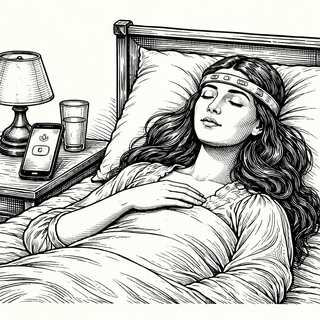
The study, led by researchers at the Mayo Clinic in Rochester, Minnesota, is an early phase pilot trial enrolling breast cancer survivors who are currently undergoing or have completed chemotherapy. Participants wear the MUSE-S headband to bed every night for eight weeks and use the accompanying phone app to meditate for at least five minutes during the day.
If that sounds like a lot of commitment, well, it is. But when you consider that anxiety and insomnia can turn an already challenging cancer journey into a sleep-deprived nightmare, a few minutes of daily meditation starts to look pretty appealing.
Why Breast Cancer Survivors Can't Catch a Break (Or a Nap)
Let's be honest - if you've gone through breast cancer treatment, nobody needs to explain to you why you can't sleep. Between the side effects of chemotherapy, the fear of recurrence, and the general uncertainty about the future, your brain has plenty of material for its nightly anxiety marathon.
Studies have consistently shown that distress levels in breast cancer patients are alarmingly high. And it's not just an annoyance - poor sleep and anxiety can actually impair treatment adherence and effectiveness. Your body is trying to fight cancer, and your brain is too busy doom-scrolling through worst-case scenarios to let you rest.
Traditional approaches to managing this stress include counseling, medication, and mindfulness-based interventions. But here's the thing about meditation: it's hard. Sitting quietly and focusing on your breath sounds simple until you actually try it and realize your mind has the attention span of a caffeinated squirrel.
The Muse Solution: Your Brain's Personal Trainer
This is where the MUSE headband gets interesting. Developed by InteraXon Inc. in Toronto, the device uses seven sensors to detect electrical impulses from your brain, providing four channels of EEG data. In English: it can tell when you're actually meditating versus when you're mentally composing your to-do list.
The headband monitors your brain state and provides real-time audio feedback through the app. When your mind wanders (and it will), you'll hear stormy weather sounds. As you settle into a calmer state, the weather clears up, and if you get really zen, you might even hear birds chirping. It's like having a meditation coach who speaks entirely in weather metaphors.
The device measures EEG signals at frontal and temporal locations on your head, tracking brain activity patterns associated with focused attention versus mental wandering. The goal isn't to achieve perfect stillness - it's to get feedback that helps you recognize when you've drifted off and gently guides you back.
What the Science Says So Far
This isn't the first rodeo for the MUSE headband in cancer research. A 2019 randomized controlled trial published in Integrative Cancer Therapies studied the device in newly diagnosed breast cancer patients (DOI: 10.1177/1534735419878770). The results were genuinely encouraging.
In that earlier study, researchers found that the wearable EEG device was both feasible and effective. Participants showed improvements in fatigue, quality of life, and stress levels. The authors concluded that such devices "have the potential to be efficacious and effective tools to reduce the stress of breast cancer patients before surgery."
The MUSE has also been used in research beyond cancer - including studies on PTSD, ADHD, and cognitive performance. According to the company, over 200 peer-reviewed studies have utilized the device, though of course, we should note that not all of those were rigorous clinical trials.
More recently, a 2025 study even explored using the MUSE device to treat long COVID symptoms (DOI: 10.1177/21501319251325639), suggesting that this little headband might have applications across a range of conditions involving stress and sleep dysfunction.
The Sleep Factor
One aspect that makes NCT06274034 particularly interesting is its focus on both daytime meditation AND nighttime sleep support. The MUSE-S is designed to be comfortable enough to wear all night - no small feat for a brain-sensing device - and can track sleep stages with reportedly 86% accuracy compared to expert analysis.
The theory is that regular meditation practice during the day, combined with sleep tracking and support at night, might create a virtuous cycle: better meditation skills lead to better sleep, which leads to lower anxiety, which makes meditation easier, and so on.
For breast cancer survivors who are used to the vicious cycle running in the opposite direction (anxiety leads to poor sleep leads to more anxiety leads to worse sleep), even interrupting that pattern could be meaningful.
Who's Eligible and What to Expect
The trial is actively recruiting breast cancer survivors who are either currently undergoing or have completed chemotherapy. As with all clinical trials, specific eligibility criteria apply, and interested patients should consult with their healthcare providers.
Participants commit to an eight-week study period, wearing the headband nightly and meditating daily. The study will evaluate how frequently participants actually use the meditation feature (because the best intervention in the world doesn't work if it stays in a drawer), the feasibility of the whole setup, and most importantly, whether it actually helps with anxiety and insomnia symptoms.
The Bottom Line
There's something both absurd and wonderful about the idea that a headband reading your brainwaves could help you achieve inner peace. It sounds like something from a sci-fi movie, and yet here we are, with rigorous clinical trials testing exactly that.
For breast cancer survivors dealing with the one-two punch of anxiety and insomnia, NCT06274034 represents an intriguing option in the growing field of integrative oncology. The Society for Integrative Oncology already gives meditation its highest level of evidence - a grade A recommendation - for managing cancer-related symptoms. Adding technology that makes meditation more accessible and provides feedback could be a game-changer for patients who've struggled with traditional approaches.
Whether the MUSE-S will prove to be a breakthrough or just a very expensive way to learn you think about groceries a lot remains to be seen. But given the minimal risks involved and the very real burden of anxiety and insomnia in this population, it's exactly the kind of study worth doing.
And hey, if nothing else, you'll finally have objective proof of just how busy your brain really is. Sometimes validation is its own reward.
Disclaimer: This article is for informational purposes only and does not constitute medical advice. Always consult with a qualified healthcare provider regarding any medical conditions or treatments. Clinical trial participation should be discussed with your healthcare team. For more information about this trial, visit ClinicalTrials.gov using identifier NCT06274034. Images and graphics are for illustrative purposes only and do not depict actual medical devices, procedures, mechanisms, or research findings from the referenced studies.