
Fibroids are rare. Pain after fibroid procedures is no big deal. Electrical stimulation belongs in a Frankenstein movie. And the only serious painkillers come from a pharmacy shelf.
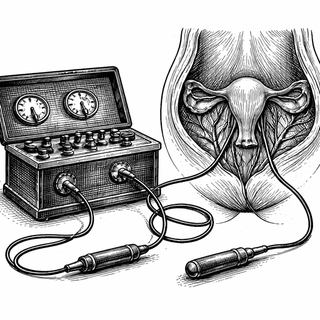
Every single one of those statements is wrong. Spectacularly wrong, in fact. And a new clinical trial is quietly building a case that might reshape how we think about post-procedure pain management for one of the most common conditions affecting women worldwide.
The Fibroid Problem Nobody Talks About Enough
Uterine fibroids - benign tumors that grow in and around the uterus - affect up to 70-80% of women by age 50, with Black women disproportionately impacted both in prevalence and symptom severity (Stewart, 2015). That's not a niche condition. That's basically most women. We're talking heavy bleeding, pelvic pressure, pain, and in many cases, a significant hit to quality of life.
One of the go-to treatments is uterine fibroid embolization (UFE), a minimally invasive procedure where an interventional radiologist threads a catheter into the arteries feeding the fibroids and blocks them off with tiny particles. The fibroids starve, shrink, and symptoms improve. It's clever, effective, and avoids major surgery.
But here's the catch that doesn't make it onto the brochure: the recovery pain can be absolutely brutal.
The "Minimally Invasive" Pain Problem
Post-embolization syndrome - the combo of cramping, pain, nausea, and fatigue that follows UFE - hits the majority of patients. We're talking significant pelvic pain that typically peaks in the first 24-48 hours and can linger for days. The standard playbook? Opioids, NSAIDs, and crossing your fingers.
As a parent who spends an unreasonable amount of time reading clinical literature while waiting at soccer practice, I find this situation frustrating. We have a procedure that brilliantly avoids cutting someone open, but then we hand them a bottle of oxycodone for the aftermath. It's like buying a Tesla and then towing it home with a horse. We can do better, right?
Enter TUNES: The Trial With a Great Acronym
A new clinical trial - NCT07501676 - thinks we absolutely can do better. TUNES stands for Transmucosal Uterosacral Electrical Stimulation, and yes, it sounds like something from a medical sci-fi novel, but the science behind it is surprisingly elegant.
The concept: deliver gentle, targeted electrical stimulation to the uterosacral nerves - the nerve pathways that carry pain signals from the uterus - through the mucosal tissue. Think of it as intercepting the pain signal at the switchboard instead of waiting for it to reach the brain and then trying to muffle it with drugs.
The trial design is rigorous, featuring three arms: active TUNES stimulation, sham stimulation (the device is placed but doesn't actually deliver current - the clinical trial equivalent of a placebo), and standard care alone. The investigators hypothesize that participants receiving the real deal will report lower pain scores and bounce back faster than either control group.
Why Electrical Stimulation Isn't as Wild as It Sounds
If your first reaction to "electrical stimulation near the uterus" was to wince, I get it. But neuromodulation - using electrical signals to influence nerve activity - is actually well-established medicine with decades of evidence behind it.
Transcutaneous electrical nerve stimulation (TENS) has been studied extensively for everything from labor pain to chronic pelvic conditions. A Cochrane systematic review found meaningful evidence supporting TENS for pain management, particularly for musculoskeletal and gynecological pain (Gibson et al., 2017). The general principle is rooted in gate control theory: electrical stimulation activates large-diameter nerve fibers that effectively "close the gate" on pain signals traveling through smaller fibers.
What makes TUNES different from slapping a TENS unit on your lower back is the transmucosal delivery and the targeted nerve pathway. By stimulating the uterosacral ligament nerves directly through mucosal tissue, you're getting much closer to the source of the pain signal. It's the difference between shouting at someone across a football field and whispering directly in their ear.
Recent research into sacral neuromodulation and tibial nerve stimulation for pelvic floor disorders has shown that targeted electrical approaches can produce meaningful clinical improvements with minimal side effects (Siegel et al., 2023). The TUNES approach extends this logic to acute post-procedural pain, which is a natural but largely unexplored application.
Why This Matters Beyond the Lab
Here's what makes my parent-brain light up about this trial. If TUNES works - and that's still a big "if" because that's how science works - the implications ripple outward in some pretty exciting directions.
The opioid angle. Every avoided opioid prescription matters. Post-procedural opioid use remains one of the on-ramps to longer-term dependence, and any tool that reduces that exposure is worth investigating seriously. A non-pharmacological pain management option for UFE recovery could be genuinely meaningful at a population level.
The access angle. UFE is already more accessible than hysterectomy or myomectomy because it doesn't require general anesthesia or a hospital stay. If you could also reduce the post-procedure pharmaceutical burden, you potentially make the entire recovery more manageable for patients who don't have someone at home to help manage complex medication schedules.
The precedent angle. If transmucosal nerve stimulation works for post-UFE pain, what else might it work for? Dysmenorrhea? Endometriosis-related pain? Post-surgical pelvic pain in general? A successful trial here could open an entirely new category of non-drug pain interventions for pelvic conditions.
The Honest Caveats
I'd be a lousy science communicator if I didn't mention: this is a clinical trial, not a finished product. We don't have results yet. The sham-controlled design is excellent - it's exactly what you want to see - but the proof is in the data, and the data isn't cooked yet.
There are also legitimate questions about practicality: Who administers the stimulation? What's the device like? Is it comfortable? Can it be standardized across different clinical settings? These are the kinds of boring-but-essential details that determine whether a clever idea becomes a real clinical tool.
But the fact that someone looked at the post-UFE pain problem and said, "What if we intercepted the nerve signal instead of drugging the whole person?" - that's the kind of thinking that makes me genuinely optimistic about where pain management is headed.
This article is for informational and educational purposes only and does not constitute medical advice. Always consult with a qualified healthcare provider regarding medical conditions and treatment options. For full trial details, visit ClinicalTrials.gov - NCT07501676 (Table View).
References:
-
Stewart, E. A. (2015). Uterine Fibroids. New England Journal of Medicine, 372(17), 1646-1655. https://doi.org/10.1056/NEJMcp1411029
-
Gibson, W., Wand, B. M., & O'Connell, N. E. (2017). Transcutaneous electrical nerve stimulation (TENS) for neuropathic pain in adults. Cochrane Database of Systematic Reviews. https://doi.org/10.1002/14651858.CD011976.pub2
-
Siegel, S., et al. (2023). Sacral Neuromodulation for Pelvic Floor Disorders. Urogynecology, 29(3), 217-225. https://doi.org/10.1097/SPV.0000000000001408