
The sharp clean smell of disinfectant in a clinic fridge is oddly reassuring, until you remember that most food in real life does not live in a carefully monitored medical refrigerator. It rides trucks, waits on loading docks, sits in corner stores, and sometimes endures the kind of temperature drama usually reserved for reality television. That is where food preservation becomes a public health issue, not just a grocery store inconvenience.
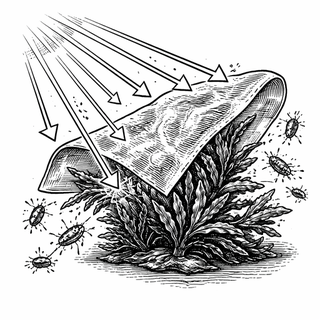
A new PubMed-indexed study looks at an inventive antibacterial packaging film designed to protect Undaria pinnatifida, an edible seaweed also known as wakame. The material combines chitosan, a natural polymer often derived from shellfish; a hollow carbon matrix; and fucoxanthin, a pigment found in brown seaweeds. Under visible light, the film produced a strong antibacterial effect and helped extend the shelf life of seaweed stipes to 15 days, about 2.5 times longer than usual in the study conditions.
That may sound like a niche story about seaweed packaging. It is not. Food spoilage and microbial contamination affect everyone, but they hit hardest where refrigeration is unreliable, food access is limited, and replacement costs are not small change. A smarter package that slows bacterial growth could mean less waste, safer food, and more breathing room for families, small retailers, school meal programs, and community food distributors.
Why Spoilage Is a Health Equity Problem
Food safety is often framed as a matter of individual behavior: wash your hands, cook things properly, keep perishables cold. Those steps matter. But they do not solve the bigger problem that some communities have fewer grocery options, longer transport distances, less reliable cold storage, and tighter household budgets.
When perishable foods spoil quickly, people with fewer resources have fewer choices. A wasted package of seafood or vegetables is not just annoying. It can mean money lost, meals skipped, or a shift toward shelf-stable but less nutritious options. Food waste also strains clinics, schools, shelters, and food banks that are already doing logistical gymnastics with one sneaker untied.
So yes, an antibacterial film for seaweed can matter. Not because seaweed is the center of public health, but because the technology points toward packaging that could help protect perishable foods in settings where every extra day of safe storage counts.
The Technology: Chitosan Meets Light-Activated Chemistry
The research team created a film using chitosan as the base material. Chitosan is already interesting for food and biomedical applications because it is biodegradable, film-forming, and positively charged. That positive charge matters because bacterial cell surfaces are often negatively charged. In simple terms, chitosan can help bring the antibacterial material close to bacteria, like a polite but firm bouncer escorting troublemakers to the door.
The team then added hollow carbon matrix-fucoxanthin nanofillers. Fucoxanthin can act as a photosensitizer, meaning it can respond to light and help generate reactive oxygen species, often shortened to ROS. These reactive molecules can damage bacterial membranes, interfere with bacterial defenses, and harm DNA.
The hollow carbon matrix appears to solve a common problem with fucoxanthin: aggregation in watery environments. When photosensitizers clump together, they may work less efficiently. By giving fucoxanthin a better carrier, the material can absorb visible light more effectively and keep the antibacterial process moving.
The study also describes a Z-scheme heterojunction, a materials-science design that helps separate charges and reduce recombination. Translation for the rest of us: the film is engineered so light energy is used more efficiently instead of fizzling out like a phone battery at 3 percent.
What Happened in the Study
Under visible light irradiation, the chitosan-hollow carbon matrix-fucoxanthin film achieved 99% bacterial sterilization within 30 minutes. The study reports that the antibacterial action worked through a dual-mode approach: electrostatic attraction from chitosan helped position the material near bacteria, while light-triggered ROS generation delivered the microbial damage.
That combination is the interesting part. Many antimicrobial approaches rely on one mechanism. Bacteria, being highly motivated survivors, can sometimes adapt. A packaging surface that physically attracts bacteria and then uses light-activated chemistry to disrupt them may offer a more effective strategy.
The film also extended the shelf life of Undaria pinnatifida stipes to 15 days, a 2.5-fold improvement. For a perishable marine food product, that is a meaningful jump. The difference between 6 days and 15 days can affect distribution routes, retail losses, household use, and whether more nutritious foods can reach people who live farther from major supply chains.
The researchers also tested biocompatibility. They reported low hemolysis, under 5%, and high cell viability, above 80%. Those are encouraging early signs for practical use, though packaging materials still need careful safety review before broad deployment. No one wants their lunch wrapped in a chemistry mystery novel.
Why Visible Light Is a Big Deal
Some antimicrobial technologies need ultraviolet light, high heat, or harsh chemicals. Those can work, but they may be costly, hard to control, or unsuitable for certain foods. Visible light is more practical in everyday environments. It is safer than UV in many settings and easier to imagine in food storage, retail displays, or controlled packaging systems.
This does not mean a package can sit under any random kitchen bulb and become a tiny superhero. Real-world performance depends on light intensity, exposure time, humidity, food type, packaging design, and the specific microbes present. Still, visible-light activation is a promising direction because it fits better with how food actually moves through the world.
For underserved communities, practical matters matter most. A technology is only as equitable as its ability to work outside elite supply chains. If an antimicrobial film requires expensive equipment, strict conditions, or fragile handling, its benefits may never reach the neighborhoods that need them most. This study is early, but the visible-light angle makes the concept more plausible.
The Bigger Public Health Picture
Food preservation is often discussed as an industry problem, but it is also a nutrition access problem. Fresh and minimally processed foods spoil quickly. That short shelf life raises prices, increases waste, and makes stores less likely to stock certain items in lower-income areas where turnover may be unpredictable.
Better packaging could help reduce those barriers. Longer shelf life can support small grocers, mobile markets, rural distribution, food banks, and meal delivery programs. It can also reduce pressure on families who cannot shop every few days. In public health, convenience is not a luxury. Sometimes convenience is the bridge between a good recommendation and something people can actually do.
There is also a sustainability angle. Chitosan-based films may offer a biodegradable alternative to some conventional plastics, depending on how they are manufactured and disposed of. Reducing food waste lowers environmental burden as well. Public health and environmental health are not separate lanes. They are more like two shopping carts with one squeaky wheel.
What Still Needs Work
This research is promising, but it is not ready to be treated as a finished solution. The study focused on Undaria pinnatifida stipes, so the next questions are practical. How does the film perform with other foods? What happens under real storage and retail conditions? How stable is the antibacterial activity over time? Can it be manufactured affordably and consistently? Are there any concerns for people with shellfish allergies if chitosan sources are not carefully managed?
Regulatory review would also be needed before this kind of material could be widely used in food packaging. Safety testing must consider not only cells in laboratory conditions, but also migration into food, environmental impact, disposal, consumer exposure, and performance across diverse settings.
The equity test is just as important. A technology that only works for premium products in high-end markets will have limited public health reach. The most exciting future would be one where antimicrobial packaging helps protect affordable, nutritious foods through long and imperfect supply chains.
A Bright Idea, Literally
The beauty of this study is that it treats food packaging as an active public health tool rather than passive wrapping. The film does not simply sit there looking transparent and underappreciated. It uses material design, natural polymers, seaweed-derived pigment, and visible light to make life harder for bacteria.
That is worth paying attention to. Not because one film will fix food insecurity or eliminate spoilage, but because better preservation technologies can become part of a larger strategy: safer food, less waste, lower costs, and more resilient access to nutritious options.
For communities that are too often asked to make healthy choices without healthy infrastructure, even a few extra days of freshness can matter. Sometimes health equity looks like a clinic, a policy change, or a community health worker. Sometimes it looks like smarter packaging quietly doing its job under the light.
This blog post discusses research findings and should not be taken as medical advice. If you have concerns about foodborne illness, food safety, or nutrition, please consult a healthcare provider or local public health department. Research discussed here represents ongoing scientific investigation and practical validation is still in progress.
All images used in this post are decorative illustrations only and do not represent or reflect the accuracy, reality, or correctness of the referenced research.
Primary Source: Light-driven dual-mode antibacterial composite based on chitosan, hollow carbon matrix, and fucoxanthin for preserving Undaria pinnatifida. PubMed Record ID 41794535. PubMed