
In the ongoing battle between movement and gravity, gravity has always been a smug little overachiever. That is part of what makes a new clinical trial on dynamic standing in Parkinson's disease so interesting. Instead of treating standing as a boring pause between activities, this study asks a more ambitious question: what if standing itself could become therapy?
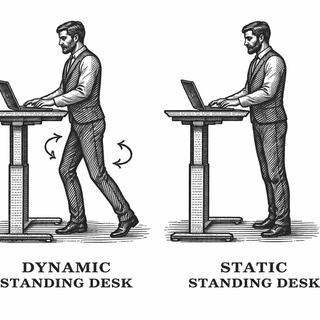
The trial, listed as NCT07543861, is a pilot study exploring a new type of standing desk for people with Parkinson's disease. In this early phase, researchers are looking closely at the user experience and whether dynamic standing might help gait function more than static standing or simply sitting. It is Phase 1 of a two-phase project, and that matters. This is the part where science rolls up its sleeves, kicks the tires, and asks, "Does this seem workable for actual human beings?"
Why Parkinson's research like this matters
Parkinson's disease is a neurological condition that affects movement, balance, and coordination. Many people know about tremor, but Parkinson's can also bring slowness, stiffness, difficulty walking, and problems with posture. Those changes can chip away at independence over time. Getting around the house, shopping, working, and staying socially connected can all become harder.
From a public health perspective, mobility is not just a clinical detail. It is a quality-of-life issue and, very often, an equity issue. People with fewer resources may have less access to specialty care, physical therapy, safer housing, adaptive equipment, and transportation. So when research looks for practical ways to support movement, I pay attention. Sometimes the most meaningful innovation is not flashy. Sometimes it is a better way to help someone stay steady enough to keep living their life.
What this trial is actually testing
According to the study summary, participants will complete 12 sessions lasting 4 hours each. The main idea is to compare three conditions:
- Dynamic standing
- Static standing
- Control sitting
The primary hypothesis is that dynamic standing will improve gait function compared with the other two conditions. This first phase is open-label, meaning everyone knows which condition is being used. Later, Phase 2 will move into an in-lab randomized controlled pilot study.
That design makes sense. Before researchers run a more rigorous comparison, they need to learn how people tolerate the setup, whether the sessions are feasible, and what the user experience is like. In plain English, they are checking whether this is promising science or an expensive way to annoy people with a fancy desk.
What is "dynamic standing," and why might it help?
Static standing is exactly what it sounds like. You stand in one place. Dynamic standing suggests some form of movement or shifting while upright. Even without every technical detail, the concept is easy enough to grasp: the body is not a lamp. It usually functions better when posture, muscles, and balance systems are gently engaged rather than frozen in place.
For people with Parkinson's, gait problems are often tied to more than leg strength alone. Balance, timing, coordination, posture, and sensory feedback all matter. A dynamic standing setup may encourage subtle adjustments that keep the nervous system more engaged. Think of it less like "just standing" and more like giving the brain and body a quiet rehearsal for movement.
That is what makes this trial intriguing. It is not promising a miracle. It is testing whether a change in how people spend upright time could support walking function. That is a grounded, useful question.
Why this could matter in the real world
If this approach works, even modestly, the payoff could be larger than it first appears. Gait function is tied to falls, confidence, independence, and participation in daily life. Helping people walk better can ripple outward into work, exercise, social connection, and mental well-being.
I am especially interested in what happens if an intervention like this proves practical outside a research lab. A tool that is simpler, lower burden, and easier to integrate into daily routines could potentially reach more people than highly specialized therapies alone. That matters for rural communities, lower-income patients, older adults with transportation barriers, and anyone juggling a chronic condition with the rest of life. Public health loves a scalable idea, even if it arrives wearing office furniture.
There is also something refreshing here about meeting people where they are. Not everyone can commit to intense exercise programs or frequent clinic visits. A well-designed standing intervention might offer a middle path between inactivity and highly demanding therapy.
The challenges this study is trying to solve
Parkinson's care has a stubborn problem: movement symptoms are complex, and there is no one-size-fits-all answer. Medications can help, but they do not solve everything. Rehabilitation helps too, but access is uneven and benefits may depend on regular participation.
Researchers are also dealing with a practical challenge. An intervention can look brilliant on paper and still fail in the real world if it is tiring, uncomfortable, confusing, or simply too inconvenient. That is why user experience matters so much here. A tool only helps if people can actually use it.
This is where pilot studies earn their keep. They are not built to settle every question. They are built to tell us whether the big question is worth chasing. That may sound humble, but humble science is often the kind that holds up best later.
A realistic kind of optimism
I do not think every new device should be greeted like the second coming of sliced bread. Medical research has enough hype already, and sliced bread, for the record, never had to pass an ethics review. But I do think this trial points in a smart direction.
It treats mobility as something that can be supported through thoughtful design, not just medication alone. It focuses on function people actually care about. And it recognizes that the path from lab idea to public benefit starts with figuring out whether people can live with the intervention, not just whether it looks good in a spreadsheet.
That is the kind of realism I trust. If dynamic standing improves gait, and if it proves usable in everyday settings, it could become one more tool for helping people with Parkinson's preserve independence. For underserved communities, even incremental gains can matter a great deal. Better movement can mean fewer barriers to work, care, family life, and simply getting through the day with less strain.
Science does not always arrive with trumpets. Sometimes it shows up quietly, asks people to stand for a while, and changes the conversation anyway.
Learn more
- Clinical trial record: https://clinicaltrials.gov/study/NCT07543861
- Table view: https://clinicaltrials.gov/study/NCT07543861?tab=table
Disclaimer: This article is for educational purposes only and is not medical advice. Clinical trials are research studies, and early-phase results may not translate into proven treatments. Patients should discuss care decisions with a qualified clinician.
Citation: ClinicalTrials.gov. A Pilot Study of In-lab Dynamic Standing in Parkinson's Disease. Record ID: NCT07543861. Available at: https://clinicaltrials.gov/study/NCT07543861