
Imagine if your smartwatch could not only count your steps but also monitor your blood flow and tissue health in real time. Sounds like something out of a sci-fi movie, right? Well, hold onto your hats (or lab coats), because the future is knocking at our door. A recent study titled "Wearable Laser Doppler Flowmetry and Fluorescence Spectroscopy Devices: Instrumentation and Methodology of Application in Clinical and Space Research" explores groundbreaking wearable technology designed to keep tabs on our health - whether we're on Earth or floating around in space like a caffeinated squirrel.
The Tech Behind the Trend
This study, published in the Journal of Biophotonics by a team from Orel State University and the Yu.A. Gagarin Research and Test Cosmonaut Training Center, dives deep into two fascinating technologies: laser Doppler flowmetry (LDF) and fluorescence spectroscopy (FS). While these terms may sound like they're straight out of a sci-fi dictionary, they're essentially innovative ways to monitor blood flow and analyze tissue health.
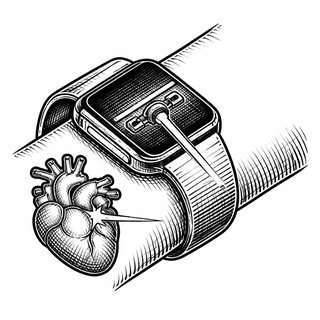
Think of LDF as a high-tech stethoscope that uses lasers instead of sound waves. It measures how much blood is flowing through your veins, which can tell us all sorts of things about our cardiovascular health. On the other hand, FS is akin to a super-sleuth for your cells, assessing their health by studying the light they emit when excited by a higher-energy source. When combined, these tools could provide a comprehensive look at our well-being.
Wearable Wonders: Real-World Applications
So, why should you care about the latest gadgets in the world of biophotonics? For starters, these devices have the potential to revolutionize healthcare. Imagine being able to wear a device that continuously monitors vital physiological parameters, alerting you and your doctor if something's amiss. It’s like having a personal healthcare assistant that never takes a lunch break!
In clinical settings, these wearables can monitor patients with chronic illnesses, helping doctors make timely interventions. Perhaps you’re at a doctor’s appointment, and instead of just taking your blood pressure, your physician could review a real-time assessment of your blood flow and tissue health. This would provide a richer tapestry of information to help tailor treatments specifically to you - no more one-size-fits-all approaches.
Sky-High Research: Space Applications
But wait, there’s more! The study also highlights the potential of these wearables in space research. Astronauts face unique challenges, like exposure to microgravity, which can affect their physiological parameters. Using LDF and FS devices, researchers can monitor astronauts in real time during pre-flight training, tracking how their bodies respond to the stresses of overloads, hypoxia, and other space-related conditions. It’s like giving astronauts a really fancy Fitbit, but one that can keep them safe while they float around in zero gravity.
Imagine a scenario where an astronaut feels unwell during a mission. With these devices, their team back on Earth could immediately assess their health status and make informed decisions - maybe even saving lives with timely interventions. Now that’s what I call high-stakes health care!
A Bright Future for Wearable Tech
As the research team discusses, the possibilities don’t stop at clinical and space applications. These wearables could be the key to personalized medicine, allowing for more tailored health plans and proactive health management. For you, the everyday person, this could mean less waiting around for lab results and more peace of mind knowing that your health is being monitored continuously.
In the future, we might see these devices integrated into our daily lives. Picture walking into a café and sipping your favorite brew while your wearable runs diagnostics on your body’s needs - like having an expert nutritionist at your side. Talk about a better way to stay healthy while you caffeinate!
Wrapping It Up
The exploration of wearable LDF and FS devices is a promising step toward smarter health monitoring and more effective care for both Earthlings and astronauts. This research opens doors to endless possibilities that could enhance our quality of life, offering a glimpse into a future where health data is at our fingertips - literally!
So, keep your eyes peeled and your health gadgets charged; the future of medicine is not just on the horizon - it’s already landing in our backyards.
Disclaimer: This blog post is for informational purposes only and should not be considered medical advice. Always consult a healthcare professional for medical concerns. Images and graphics are for illustrative purposes only and do not depict actual medical devices, procedures, mechanisms, or research findings from the referenced studies.
Citation: Zharkikh EV, Loktionova YI, Yanushin VS, Kireev KS, Sidorov VV, Dunaev AV. Wearable Laser Doppler Flowmetry and Fluorescence Spectroscopy Devices: Instrumentation and Methodology of Application in Clinical and Space Research. J Biophotonics. 2025 Dec 26:e70209. doi: 10.1002/jbio.70209.