
Have you ever watched a magician pull a rabbit out of a hat and thought, “I wish I could do that?” Well, what if I told you that scientists are using light to create materials that can change the landscape of medicine, engineering, and sustainability? Yes, you heard it right! A recent study titled “Light-Based 3D Printing of Polyesters: From Synthesis to Fabrication” dives into the enchanting world of 3D printing, where polyesters are the stars of the show. Let's explore how this research can transform the way we think about materials and their applications in everyday life.
What Are Polyesters and Why Should We Care?
Polyesters are not just a fancy term for those stretchy pants you wear on lazy weekends. They are a class of materials that can be biodegradable and biocompatible - think of them as the environmentally friendly superheroes of the material world. Thanks to their mechanical tunability and versatility, polyesters are making waves in tissue engineering, biomedical applications, and even in soft robotics.
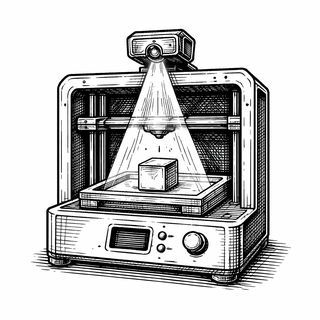
Imagine a world where medical implants dissolve naturally in your body, or drug delivery systems work precisely as needed, releasing medication at just the right time. That’s the kind of magic polyesters can deliver! And with light-based 3D printing, we can create these materials with precision that’s almost like having a personal sculptor - minus the beret and easel.
The Science Behind the Sparkle: Light-Based 3D Printing
So, how exactly does light fit into this polyester puzzle? Light-based 3D printing allows scientists to take raw materials and transform them into functional structures with incredible detail. It’s like turning a pancake batter into a perfectly shaped pancake using a special mold - but instead of batter, we’re using photoresins made from polyesters.
The research paper discusses the steps involved in this fascinating process, starting from the synthesis of polyesters to the functionalization methods that make them suitable for printing. By introducing photoreactive groups into the polyester network, scientists can control how the material behaves when exposed to light. This fine-tuning impacts everything from the print resolution (how sharp the details are) to how the material degrades over time (which is crucial for things like resorbable implants).
Real-World Applications: More Than Just Science Fiction
You might be wondering, “Okay, this sounds cool, but how does it affect me?” Great question! The implications of this research are vast and touch various aspects of our lives.
-
Medical Marvels: Imagine having a medical implant that simply dissolves after it has done its job, leaving no trace behind. This is a game-changer for surgeries and recovery processes, reducing risks of complications and the need for additional procedures.
-
Sustainable Manufacturing: In a world increasingly concerned about sustainability, these advanced polyesters can help reduce plastic waste by providing biodegradable options. It’s like swapping your non-recyclable cup for a reusable one - small changes can make a big impact!
-
Smart Devices: With the advent of soft robotics and stimuli-responsive materials, we could see robots and devices that adapt to our environment. Picture a robot that changes its shape based on the task at hand - like a Swiss Army knife but without the awkward pocket bulk.
Challenges Ahead: The Road Less Traveled
Of course, like any great adventure, this journey into light-based 3D printing comes with its own set of challenges. The researchers discuss the limitations of current photochemical approaches, such as the need for specific wavelengths of light and the complexity in formulating the right photoresins. It’s a bit like trying to bake a soufflé - if you don’t get the ingredients and timing just right, it can collapse.
However, the ongoing advancements in this field are promising. With scientists diligently working to overcome these hurdles, the future of polyester printing looks brighter than a well-lit holiday display!
The Bottom Line: Why This Matters to You
In a nutshell, the innovative use of light-based 3D printing of polyesters is paving the way for a future where materials are not only functional but also tailored to meet specific needs. Whether it's in healthcare, manufacturing, or robotics, these advancements could lead to products that are safer, more efficient, and environmentally friendly.
So, the next time you hear about a “light-based” process, don’t just think of a fancy arts project. Think about how this technology could revolutionize your life - turning complex ideas into reality, much like that magician pulling a rabbit out of a hat.
Have a coffee, put on your thinking cap, and let your imagination run wild - because the future is here, and it’s shining bright!
Disclaimer: This blog post is for informational purposes only and does not constitute medical advice. Images and graphics are for illustrative purposes only and do not depict actual medical devices, procedures, mechanisms, or research findings from the referenced studies.

Citation: Thijssen Q, Quaak A, Bijleveld B, et al. Light-Based 3D Printing of Polyesters: From Synthesis to Fabrication. Chem Rev. 2025 Dec 23. doi: 10.1021/acs.chemrev.5c00611.