
Dear medical establishment, we need to talk.
You keep asking for materials that are selective, sturdy, biocompatible, cheap-ish, and less environmentally embarrassing. In other words, you want the Swiss Army knife of molecular recognition without the usual pile of petrochemical baggage and lab drama. Fair enough. A recent PubMed review on polysaccharide-based molecularly imprinted polymers, or PS-MIPs, suggests we may be inching toward exactly that. Not a miracle. Not magic. Just smart chemistry doing its job without setting the furniture on fire.
At the center of this story is a simple idea: build a material that can recognize one specific molecule the way a lock recognizes a key. Molecularly imprinted polymers are made by shaping a polymer around a target molecule, then removing that target and leaving behind a matching cavity. Think of it as making a custom parking spot for one very particular car. If the wrong car shows up, tough luck.
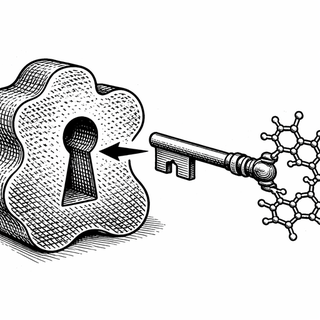
The twist here is the backbone. Instead of relying only on standard synthetic polymers, researchers are using natural polysaccharides such as chitosan, alginate, cellulose, and starch. These are sugar-based biological materials with lots of useful chemical handles, good water compatibility, and a reputation for playing nicer with living systems. For medicine, diagnostics, and environmental monitoring, that matters. Water is where biology does its grubby little masterpieces. If your fancy recognition material only works in pristine organic solvents, it is about as clinically useful as a stethoscope made of spaghetti.
Why Polysaccharides Are Getting Attention
Conventional molecularly imprinted polymers can be impressively selective, but they often stumble in watery environments. That is a problem because blood, urine, food samples, wastewater, and most things we care about are not floating around in dry acetonitrile waiting to be admired.
Polysaccharides help because they are naturally hydrophilic. They like water. They also carry functional groups that make them chemically flexible. Chitosan, for example, brings amino and hydroxyl groups to the party. Alginate contributes carboxyl groups. Cellulose is sturdy and modifiable. Starch is abundant and easy to work with. None of these materials are exotic. They are renewable, broadly available, and less likely to make sustainability officers clutch their pearls.
That mix of traits gives PS-MIPs a practical advantage. They can be built to recognize molecules in the wet, messy conditions where real samples live. That makes them appealing for sensors, adsorbents, separation systems, diagnostic tools, and drug delivery platforms.
What These Materials Actually Do
The review covers several design strategies that make PS-MIPs more useful and less fussy.
One is surface imprinting. Instead of hiding recognition sites deep inside a chunky polymer brick, researchers place them near the surface. That makes target molecules easier to reach, which improves speed and usability. In emergency medicine terms, it is the difference between having the defibrillator in the room and having it locked in a basement closet behind three mop buckets.
Another is ion imprinting, which tunes materials to recognize specific metal ions. That matters for environmental cleanup, industrial processes, and analytical chemistry, where selective capture can be the whole ballgame.
Then there is hybridization with nanomaterials, which sounds like something dreamed up at 2 a.m. by a postdoc powered entirely by instant noodles and professional anxiety. Done properly, though, it can improve mechanical strength, signal response, and accessibility of binding sites. Pairing a biopolymer with nanostructures can turn a good recognition material into a much more capable one.
How Researchers Judge Whether These Things Are Any Good
A shiny concept is nice. Data are better. The paper emphasizes several performance measures that help compare PS-MIPs across studies.
There is binding capacity, meaning how much of a target the material can capture. There is the imprinting factor, which compares the imprinted material with a non-imprinted control to show whether the custom binding sites actually add value. There are selectivity coefficients, which ask whether the material truly prefers the intended target over close chemical impostors. Because in chemistry, as in hospital administration, look-alikes can cause trouble.
The review also looks at adsorption isotherms and kinetic models, which help describe how binding happens and how fast equilibrium is reached. Then there is reusability, because nobody wants a high-performance material that collapses emotionally after one use.
This kind of standardized reporting matters. Right now, one of the field’s recurring headaches is that papers do not always report performance in a way that makes clean comparison possible. That slows progress. Science can survive many things, but inconsistent methods are how simple questions become committee meetings.
Why Sustainability Is More Than Decorative Window Dressing
One of the more interesting parts of the review is its focus on sustainability, including discussion of the AGREEMIP metric tool. That framework tries to evaluate how green a molecular imprinting process really is. Not green as in a lab poster with leaves on it. Green as in solvents, energy use, waste, renewability, and the overall environmental bill.
This is where polysaccharides have a real edge. They are renewable and often biodegradable or at least less ecologically grim than some conventional materials. That does not automatically make every PS-MIP process saintly. Synthesis routes still matter. Crosslinkers, solvents, purification steps, and scale-up decisions can all ruin a nice eco-friendly headline. But the starting point is better, and that counts.
Where PS-MIPs Could Matter in the Real World
The applications are broad enough to make a triage board look tidy.
In environmental monitoring, PS-MIPs can help detect pollutants or selectively remove contaminants from water. In biomedical diagnostics, they may improve sensors that need to detect biomolecules accurately in complex fluids. In pharmaceutical analysis, they can help isolate or measure drugs and related compounds. In food safety, they may identify residues, contaminants, or adulterants. In agriculture and industrial catalysis, they offer selective recognition with the added bonus of more sustainable material choices.
What makes this interesting is not just that PS-MIPs can bind things. Lots of materials bind things. Wet paper towels bind things. The appeal is selective recognition in aqueous settings, with tunable chemistry and multiple possible uses. That combination is where the field starts looking less like a neat bench trick and more like a platform technology.
The Catch, Because There Is Always a Catch
Before anyone starts printing “revolutionary” on conference lanyards, the review is clear about the remaining problems.
First, reporting standards need work. If every paper uses different benchmarks, comparing performance becomes an interpretive dance. Second, scalable synthesis remains an issue. Something that works beautifully in a small academic batch may become a complete nuisance when manufactured at scale. Third, long-term stability still needs improvement. A recognition material that performs like a champion for a week and then ages like supermarket lettuce is not ready for prime time.
So no, this is not a finished clinical or industrial solution wrapped in a bow. It is a promising toolkit. A better set of building materials for selective recognition systems that may behave more sensibly in real-world conditions.
And frankly, that is enough to be interesting. In medicine and biotech, progress often looks less like a Hollywood montage and more like incremental improvements that quietly remove one stubborn obstacle after another. Less glamorous, more useful. My favorite kind.
This blog post discusses research findings and should not be taken as medical advice. If you have concerns about a specific health condition, please consult a healthcare provider. Research discussed here represents ongoing scientific investigation and clinical validation is still in progress.
All images used in this post are decorative illustrations only and do not represent or reflect the accuracy, reality, or correctness of the referenced research.
Primary Source: Polysaccharide-based molecularly imprinted polymers: Design, synthesis, sustainability, characterization, and applications. PubMed. https://pubmed.ncbi.nlm.nih.gov/41679820/