
Getting smell-loss research to patients currently requires an oddly primitive process: ask people what they can smell, hand them odor tests, and then squint thoughtfully at the results like a mechanic diagnosing engine trouble by listening to the hood. This could change that.
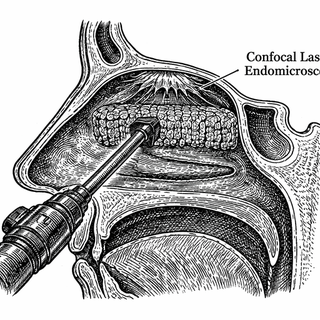
The clinical trial NCT07546617 is trying to do something both simple and surprisingly overdue: actually look at the olfactory epithelium in living people. That is the specialized tissue in the nose responsible for detecting odors, which is a pretty important assignment for a patch of anatomy that most of us ignore until allergy season. The investigators plan to use confocal laser endomicroscopy, or CLE, a high-resolution imaging technique originally developed for brain tissue, to visualize this smell-sensing area directly in people with and without olfactory impairment.
That is interesting because smell loss has long lived in a diagnostic gray zone. Patients know something is wrong. Clinicians often know something is wrong. But seeing the underlying problem in real time has been much harder. Medicine does love a measurable thing, and smell disorders have often been forced to survive on indirect evidence and patient reports. Useful, yes. Satisfying, not exactly.
Why Smell Loss Is Such a Stubborn Problem
Loss of smell can sound minor until you actually think about what smell does. It helps us enjoy food, detect smoke, notice gas leaks, and participate in one of humanity's stranger social rituals, which is pretending we are not constantly reacting to the scents around us. When smell goes missing, quality of life can take a real hit. Meals flatten out. Safety cues disappear. People often feel detached from daily life in a way that is hard to explain to anyone whose nose is still on speaking terms with their brain.
The problem is that smell loss is not one disease. It is a symptom with many possible causes. Infection, inflammation, trauma, and other disruptions can interfere with the system. So when a patient says, "I cannot smell," that is the start of the conversation, not the end of it. Right now, much of the assessment depends on symptom history and smell testing rather than direct imaging of the smell-detecting tissue itself.
That is the gap this study is trying to narrow.
What This Trial Is Actually Doing
According to the study summary, the researchers want to better characterize the olfactory epithelium by imaging it in vivo, meaning in living human participants rather than in removed tissue or laboratory models. They will use confocal laser endomicroscopy to identify tiny structures in this region and compare what they see in people with olfactory impairment versus those without it.
The basic idea is elegant. If you can visualize the microscopic architecture of the smell-detecting tissue, you may be able to spot patterns associated with dysfunction. Instead of inferring damage from a person's test score or symptom description, you might be able to see structural differences directly. For a field that has spent a lot of time reading tea leaves through the nostrils, this is a notable upgrade.
The primary ClinicalTrials.gov listing is here: https://clinicaltrials.gov/study/NCT07546617
The table view is here: https://clinicaltrials.gov/study/NCT07546617?tab=table
Why CLE Makes This More Than a Gadget Story
Confocal laser endomicroscopy is not just a fancy camera with a name that sounds like it bills by the syllable. It is designed to provide microscopic, near-cellular imaging in living tissue. In other settings, technologies like this have helped physicians inspect anatomy with a level of detail that bridges the gap between gross examination and pathology.
Applied to the olfactory epithelium, CLE could give researchers a way to study living smell tissue without relying solely on guesswork, symptom diaries, or after-the-fact samples. That matters because smell disorders are notoriously difficult to pin down. Patients may have the same complaint but very different underlying biology. A tool that helps separate those patterns could make research cleaner and clinical care smarter.
And there is a pleasing irony here. We have spent years building exquisite imaging technologies for the brain, only to realize the nose might also like a turn under the good microscope. The olfactory system has been doing front-line sensory work this whole time with far less glamour and funding than it deserves. Very middle child of the skull.
What Success Could Mean in the Real World
If this approach works, the payoff is not just prettier pictures. The real value would be a better map between symptoms and tissue-level changes.
That could matter in several ways:
A more direct window into the olfactory epithelium could improve diagnosis. Instead of labeling smell loss broadly, clinicians might be better able to distinguish types of injury or dysfunction.
It could help track disease over time. If the tissue changes can be seen and measured, researchers may be able to monitor progression or recovery more objectively.
It could make treatment studies better. Any future therapy for smell loss needs a way to show whether it is changing the actual tissue, not merely nudging a questionnaire score in a favorable direction.
It could also help validate patients' experiences. This should not be underestimated. People with smell loss are sometimes treated as though their problem is vague or secondary because it is harder to display on a scan or a lab report. A technique that reveals visible, biological differences can shift that conversation in a useful direction.
The Catch, Because There Is Always a Catch
Early imaging studies are rarely the final answer. Even if CLE can visualize structures in the olfactory epithelium, the next questions arrive immediately and with excellent timing, as they always do in research. Which findings are normal variation? Which are disease-specific? How reproducible are the images? How practical is this outside specialized centers? Can what looks abnormal on microscopy be linked reliably to real symptoms and outcomes?
Those are not objections so much as the price of admission for doing serious science.
Still, this trial has the right kind of ambition. It is not trying to leap straight to a miracle cure. It is trying to improve visibility into the biology of smell loss itself. That may sound modest, but in medicine, seeing clearly is often the step that finally lets the rest of the field stop wandering around bumping into furniture.
Why This One Caught My Eye
I like this study because it aims at a neglected problem with a concrete tool. It does not promise to restore smell by next Tuesday. It tries to solve a more basic problem first: we need to understand what is happening in the relevant tissue while the patient is sitting in front of us, alive, symptomatic, and understandably uninterested in being reduced to a multiple-choice smell test.
There is something refreshing about that. Good clinical research often starts by replacing hand-waving with better observation. In this case, better observation may arrive by way of a microscopic look at one of the most mysterious and underappreciated surfaces in the human body.
For a sense that shapes appetite, memory, and safety, smell has spent a long time being evaluated with methods that are useful but incomplete. If NCT07546617 helps turn the olfactory epithelium from an inferred culprit into an observable one, that is real progress. Not flashy, perhaps. But then again, neither is the sense of smell until it disappears.
Disclaimer: This post is for educational purposes only and is not medical advice. It is based solely on the ClinicalTrials.gov study summary information provided for NCT07546617 and does not add external literature review.
Citation: ClinicalTrials.gov. In Vivo Imaging of Olfactory Epithelium in Humans With Olfactory Impairment Using Confocal Laser Endomicroscopy (NCT07546617). Available at: https://clinicaltrials.gov/study/NCT07546617