
Your eye has a secret, and scientists just figured it out. The back of the eye is a bit like a heavily guarded VIP room: plenty going on, very picky about what gets in, and not especially interested in making life easy for doctors, patients, or worried parents. That is why this new PubMed-listed paper on thermoresponsive hydrogels caught my attention. Anything that promises more controlled drug delivery to one of the fussiest places in the body is worth a closer look.
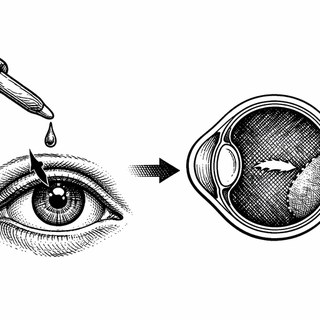
And yes, "thermoresponsive hydrogel" sounds like something assembled by a committee with a deep love of syllables. In plain English, we are talking about a water-rich material that changes behavior with temperature. The big idea is simple: make something that can be handled one way before it goes into the body, then settle into a gel once it gets warm enough. For the eye, that could matter a lot.
Why the back of the eye is such a headache
The back of the eye includes structures like the retina, which do incredibly delicate work and are not easy to reach with medication. If a disease is affecting that area, getting enough drug to the right place for long enough can be a real challenge. Eye drops usually do not get there well. Pills and bloodstream-delivered drugs can be inefficient or cause side effects elsewhere. Repeated injections can work, but nobody hears "more needles near the eye" and thinks, "What a relaxing Tuesday."
That practical problem is what makes delivery systems so interesting. Sometimes the bottleneck is not the drug itself. Sometimes the problem is how to keep it where it needs to be, at the right dose, for the right amount of time.
So what is this gel supposed to do?
Hydrogels are three-dimensional polymer networks that hold a lot of water. That makes them attractive for medical use because they can be biocompatible and can release drugs gradually instead of dumping everything all at once. The paper's focus is on thermoresponsive hydrogels for controlled drug delivery to the back of the eye, along with a data-driven guide to formulation design.
That last part matters. This is not just "here is a goo and we hope for the best." It is about understanding how to design these gels so they behave predictably. If a formulation is too runny, too stiff, too irritating, or releases medication too quickly, it is not much use. A data-driven approach suggests the researchers are trying to move formulation work from educated guesswork toward something more systematic. In medicine, that usually means fewer dead ends and a better shot at making the technology actually usable.
The appeal is easy to see. A thermoresponsive hydrogel could potentially be administered in a manageable form, then respond to body temperature and form a depot that slowly releases medication over time. Less burst, more control. Less "fire hose," more "drip irrigation."
Why a parent would care about this
When I read research, I always come back to the same question: will this help my kid, or someone else's kid, in a way that shows up in real life? Not in a lab brochure. Not in a conference slide with three arrows and the word "promising." Real life.
For eye disease, real life means fewer procedures if possible, steadier treatment if possible, and less stress around every visit if possible. Even when a study is not specifically pediatric, the logic still matters. A delivery system that reduces treatment burden could matter for children, teens, and adults who need ongoing care for retinal or other posterior eye conditions. Families know the difference between a treatment that works in theory and one that a person can actually live with.
That does not mean this paper is announcing a cure or a ready-for-clinic product. It is not. It is a formulation and design paper. But those "under the hood" papers are often where useful medicine quietly gets built.
What makes this research interesting
A lot of medical progress is not flashy. It is not always a brand-new drug with a dramatic name and a commercial during a football game. Sometimes it is a smarter container, a better release profile, or a material that behaves nicely enough to give an existing therapy a better chance to succeed.
That is what makes this work intriguing. The research sits at the intersection of materials science, drug delivery, and eye care. It is trying to solve a stubborn logistics problem inside the body. And frankly, logistics problems run half of modern life. We are all one delayed pharmacy refill away from respecting supply chains a little more.
A data-driven guide also suggests a broader payoff. If researchers can identify what formulation traits lead to better performance, that knowledge may help future teams design ocular drug delivery systems more efficiently. In other words, the value may not be just one gel. It may be a roadmap.
The hard part nobody should skip over
This is where I put on my responsible grown-up hat and ruin the party slightly.
A delivery material for the eye has to clear a very high bar. It must be safe, stable, comfortable enough, and predictable. It has to avoid damaging delicate tissues. It has to release medication at the intended rate, not too fast and not too slowly. It also has to be manufacturable in a consistent way, which is less glamorous than science headlines but absolutely essential.
The eye is not a forgiving place to improvise. A material can sound elegant on paper and still stumble on irritation, durability, sterilization, storage, or variability between patients. That is why formulation design matters so much here. Tiny changes can have outsized consequences.
So while this research is interesting, it is still part of a longer road. The promise is real, but so is the work left to do.
The bottom line
What I like about this paper is that it tackles a practical medical problem with a practical scientific tool. Delivering drugs to the back of the eye is hard. A thermoresponsive hydrogel that can help place medicine where it is needed and release it in a controlled way is a smart concept, especially if researchers can design it systematically rather than by trial and error.
What I do not want to oversell is the timeline. This kind of work is a platform, not a finish line. It helps build the bridge between good ideas and treatments patients can actually receive. That bridge matters. Families do not need more buzzwords. They need therapies that are safer, less burdensome, and better at protecting vision.
If follow-up development goes well, this kind of research could contribute to a future where treating diseases in the back of the eye becomes more precise and less disruptive. For anybody who has ever tried to keep a child calm in a medical setting, that is not a small thing. That is the difference between a treatment plan and a family ordeal.
This blog post discusses research findings and should not be taken as medical advice. If you have concerns about back-of-the-eye or retinal conditions, please consult a healthcare provider. Research discussed here represents ongoing scientific investigation and clinical validation is still in progress.
All images used in this post are decorative illustrations only and do not represent or reflect the accuracy, reality, or correctness of the referenced research.
Primary Source: Thermoresponsive hydrogels for controlled drug delivery to the back of the eye: a data-driven guide to formulation design. PubMed record 42046948. PubMed link