
The good news: Restless Legs Syndrome (RLS) is finally getting the kind of research attention it deserves after decades of being dismissed as "just fidgety legs." The bad news: the medications we have for it can stop working over time, cause a nasty phenomenon called augmentation (where your symptoms actually get worse from treatment), and aren't exactly handing out restful nights like candy on Halloween. So when a wearable device straps onto your legs and says "I got this" - with actual clinical data to back it up - you better believe people are paying attention.
A new individual participant data meta-analysis just dropped examining tonic motor activation, or TOMAC, a non-drug wearable treatment for moderate-to-severe RLS. And the results? Pretty darn encouraging, whether patients used it alongside their existing medications or flew solo.
Wait, What Even Is TOMAC?
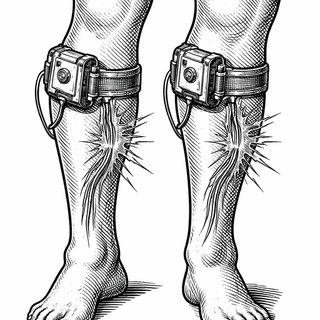
Picture a bilateral wearable device that sits on your legs and delivers high-frequency electrical stimulation to the peroneal nerve - that's the nerve running along the outside of your lower leg, just below the knee. The idea is to create a sustained, low-level muscle activation that essentially tells your restless legs to calm down and act like they've had a good cup of chamomile tea.
What makes TOMAC clever is the balancing act: enough stimulation to engage the therapeutic mechanism, but not so much that it keeps you awake. Because the last thing someone with RLS needs is another reason they can't sleep. That would be like prescribing a trampoline for insomnia.
The Study: Going Deeper Than Averages
Previous meta-analyses had looked at TOMAC using aggregate data - basically averaging everyone together into one big statistical smoothie. This new systematic review, registered on PROSPERO (CRD420251005571), took a different approach. The researchers extracted individual participant data from studies found across Web of Science, Scopus, and PubMed through March 2025. This allowed them to do something the earlier work couldn't: break the data apart by subgroups and actually see if TOMAC works differently depending on age, sex, disease severity, when your RLS started, or how high the stimulation was cranked.
They identified five studies from the United States, including three randomized controlled trials with 252 participants - 69 using TOMAC as monotherapy (device only, no meds) and 183 using it as adjunctive therapy (device plus their existing medications).
The Results: It Works Both Ways
Here's where things get genuinely exciting, especially for the health equity crowd (hi, that's me).
Compared to sham devices, TOMAC significantly reduced scores on the International RLS Study Group Rating Scale (IRLS) - the gold standard for measuring RLS severity. As adjunctive therapy, the mean difference was 3.39 points (p = 0.0001). As monotherapy? Even better at 3.80 points (p = 0.0047).
Sleep improved too. The Medical Outcomes Study Sleep Problem Index II (MOS-II) scores dropped by 8.23 points with adjunctive therapy (p = 0.0006) and 9.65 points with monotherapy (p = 0.0236). For people who spend their nights involuntarily auditioning for Riverdance, those are meaningful improvements.
And here's the kicker that makes my public health heart sing: the subgroup analyses showed no significant differences based on age, sex, RLS severity, age of onset, or stimulation amplitude. Translation? TOMAC appears to work similarly well regardless of who you are. In a world where treatment efficacy often varies dramatically across demographics - and where older adults, women, and people with more severe disease frequently get the short end of the therapeutic stick - this kind of equitable response is refreshing.
Why This Matters for Underserved Populations
RLS affects an estimated 5-10% of adults, with higher prevalence among women and older adults. It's associated with iron deficiency, kidney disease, and pregnancy - conditions that disproportionately affect lower-income populations. The primary medications (dopamine agonists like pramipexole and ropinirole) carry real risks: augmentation occurs in up to 70% of long-term users, impulse control disorders can emerge, and the medications aren't always accessible or affordable.
A non-pharmacological option that works as a standalone treatment could be transformative for patients who can't tolerate medications, those experiencing augmentation, or communities where access to specialist prescribers is limited. Rural clinics that struggle to provide ongoing medication management could potentially offer a device-based solution. Patients who are already managing complex medication regimens for comorbid conditions could skip adding yet another pill to the lineup.
The Safety Picture
The abstract reports mild device-related adverse events - and while the full safety data wasn't completely included in the truncated abstract available, the fact that the researchers describe adverse events as "mild" in a meta-analysis covering 252 participants across multiple trials is reassuring. No treatment is risk-free, but "mild discomfort from a leg device" sits in a very different risk category than "you might develop a gambling addiction from your RLS medication."
The Fine Print
Before we all start doing victory laps, some caveats. All five studies came from the United States, so we don't yet know how these findings generalize globally. The total sample of 252 participants, while reasonable for a meta-analysis of a newer device, is still relatively modest. And individual participant data meta-analyses, while more powerful than aggregate approaches, are still only as good as the underlying trials.
The monotherapy group (69 participants) was notably smaller than the adjunctive group (183 participants), so those monotherapy results, while statistically significant, deserve confirmation in larger dedicated trials. We also need longer-term data to understand durability of response - does TOMAC keep working at month 12 the way it does at month 3?
The Bottom Line
TOMAC represents something genuinely valuable in the RLS treatment landscape: a non-drug option with evidence supporting its use both alongside medications and on its own. The equitable response across demographic subgroups is particularly promising for ensuring this technology could benefit diverse patient populations - not just the participants who tend to show up in clinical trials.
For the millions of people whose legs apparently didn't get the memo that nighttime is for sleeping, a wearable nerve stimulator might just be the calm, quiet hero they've been waiting for. No pills required.
This blog post discusses research findings and should not be taken as medical advice. If you have concerns about Restless Legs Syndrome, please consult a healthcare provider. Research discussed here represents ongoing scientific investigation and clinical validation is still in progress.
All images used in this post are decorative illustrations only and do not represent or reflect the accuracy, reality, or correctness of the referenced research.
Primary Source: Efficacy and safety of tonic motor activation (TOMAC) for restless legs syndrome as adjunctive and monotherapy: An individual participant data systematic review and meta-analysis. PubMed. 2025. PMID: 41581285