
CPMX3’s dating profile would read something like this: “Compact handheld probe seeks meaningful connection with a tiny vein above the eye. Loves ultrasound, integrated pressure sensing, and non-invasive conversations about intracranial pressure. Not into needles, skull drilling, or making pediatric patients miserable.” As a biomedical engineer, I have to respect the confidence. This feasibility study, listed as NCT07550361, is testing whether a device can estimate intracranial pressure, or ICP, by measuring pressure in the periorbital vein and comparing it with invasively obtained ICP in pediatric patients. That is a very bold first date.
Why brain pressure is such a big deal
Intracranial pressure is exactly what it sounds like: the pressure inside the skull. The brain, blood, and cerebrospinal fluid all share a rigid space, which means small shifts can become big problems fast. When ICP rises, clinicians worry about brain injury, swelling, hydrocephalus, bleeding, and a whole list of neurological nightmares no one wants starring in their child’s medical chart.
The catch is that the best-established ICP measurements are invasive. That usually means a monitor placed inside the skull or brain-related spaces. These tools can be lifesaving and accurate, but they are not casual gadgets you whip out like a TV remote. They come with procedural burden, infection risk, bleeding risk, and the obvious fact that “let’s put in a cranial monitor” is not anyone’s idea of a low-stress afternoon.
That is why non-invasive ICP estimation has been a kind of holy grail in neuro-monitoring. Plenty of methods have tried to audition for the role. Some have looked promising, some have been inconsistent, and some have had the scientific equivalent of a guest appearance cancelled after one season.
What this study is actually testing
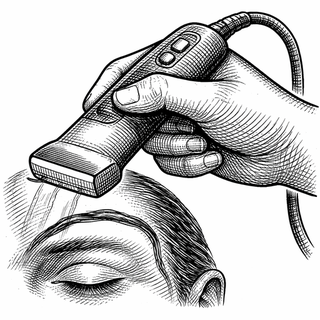
According to the trial summary, the device under evaluation combines a linear ultrasound array and an integrated pressure sensor into a single handheld probe, called the ICP Probe. The broader system is referred to as CPMX3. The idea is to estimate blood pressure non-invasively in a superficial vein that sits over a hard structure. In this case, the target is the periorbital vein on the forehead above the eye.
Now, this is where the anatomy gets interesting in the very nerdy, very satisfying way. The periorbital vein is considered an emissary vein, meaning it communicates with the intracranial venous system through valveless vessels. No valves means pressure information may travel more directly than it would in a more isolated pathway. In theory, if you measure the venous occlusion pressure at the right place and right moment, you may catch a meaningful reflection of what is happening inside the skull.
The trial’s twist is a pneumatic mask that can briefly occlude the measurement site from the rest of the superficial facial venous network. That matters because veins like to share pressure information with their neighbors. Left alone, the signal you care about might get diluted into the broader facial circulation like a juicy plot point getting lost in a bloated streaming series. The mask creates a more controlled local setup, so the measured venous occlusion pressure might correlate more cleanly with true ICP.
The study then compares these CPMX3 measurements with invasively obtained ICP values. That comparison is the whole ballgame. If the non-invasive estimate tracks well with invasive measurement, you have something genuinely exciting on your hands.
Why pediatric use makes this especially compelling
This is a feasibility study in pediatric patients, and that is important. Kids are not just smaller adults with better cartilage and stronger opinions about stickers. Pediatric monitoring has its own clinical and ethical demands. Anything that reduces invasiveness while still giving actionable information gets my attention fast.
For children with neurological disease, a tool that can estimate ICP without piercing the skull could change the tone of care in a big way. It could lower procedural burden, reduce some risks, and potentially make repeated assessments easier. It could also help clinicians decide who truly needs invasive monitoring and who may be safely followed in a less aggressive way.
Feasibility is the key word here. This trial is not promising a miracle. It is asking a disciplined engineering question: can this signal be captured reliably enough, in real patients, to mean something useful? That is exactly how good medical technology should grow up.
The engineering challenge hiding in plain sight
The concept sounds elegant, but elegance in biomedical devices usually arrives carrying a backpack full of technical headaches. Measuring pressure in a tiny superficial vein near the eye is not trivial. Pediatric anatomy varies. Patient motion is real. Probe positioning matters. Soft tissue can be uncooperative. Venous pressure signals are subtle. And once you bring in ultrasound, pressure sensing, and transient occlusion, the system has to behave like an orchestra, not a garage band.
The forehead location is also fascinating because it turns anatomy into a measurement strategy. Instead of trying to read the brain directly from the outside, the device is essentially listening to a vascular messenger at the edge of the castle wall. That is not magic. It is fluid mechanics, anatomy, and signal acquisition trying very hard to become friends.
As someone who spends a lot of time admiring medical instrumentation, I like this study because it does not pretend the body is a simple machine. It uses a weird, specific anatomical route because weird, specific anatomical routes are often where innovation actually lives.
What success could look like
If CPMX3 works well, the real-world impact could be substantial. A validated non-invasive ICP estimation method could help in emergency settings, pediatric neurology, neurocritical care, and research contexts where clinicians need more information before committing to invasive procedures. It might improve screening, monitoring cadence, and bedside decision-making.
It would not necessarily replace invasive ICP monitoring overnight. Medicine is not a superhero reboot where a new gadget swings in and everyone claps. More likely, it would begin as an adjunct: a faster, safer, more accessible way to gather signal before or alongside invasive confirmation. That alone could be a major step.
It could also widen access to ICP-related assessment in places where invasive monitoring is less available. Handheld tools have a habit of reshaping workflows when they prove reliable. The phrase “non-invasive” gets tossed around so often it can sound like marketing wallpaper, but in pediatrics it really can mean a different care experience.
Why this trial is worth watching
The study title calls this a validation and feasibility trial, which tells me the investigators are asking the right early questions. Is the measurement technically achievable? Does it correlate with invasive ICP? Can it be used in the intended pediatric setting? Those are not flashy questions, but they are the ones that separate a clever concept from an actual clinical tool.
I also appreciate that the trial is focused on comparison against invasive ICP rather than vague promises of “better monitoring.” If you want to change practice, you need to line your method up against the standard that clinicians already trust. That is the biomedical device version of bringing receipts.
For now, the main intrigue is simple: can a handheld probe, aimed at a forehead vein and helped by a pneumatic mask, give us a meaningful window into pressure inside the skull? If yes, this could be one of those elegant little advances that ends up mattering a lot. Not flashy. Not cinematic. More like the smart supporting character who quietly saves the mission while everyone else is busy making speeches.
Disclaimer: This post is for educational purposes only and is not medical advice. It is based on the supplied ClinicalTrials.gov study summary and should not be used to guide diagnosis or treatment decisions.
Citation: ClinicalTrials.gov. Validation of Non-Invasive Intracranial Pressure Estimation Using CPMX3 in the Periorbital Vein: A Feasibility Study in Pediatric Patients (NCT07550361). Available at: https://clinicaltrials.gov/study/NCT07550361 and https://clinicaltrials.gov/study/NCT07550361?tab=table