
*You know the moment - the bell-ringing, the last chemo session, the tearful hugs in the oncology waiting room. We celebrate cancer survivorship (as we absolutely should), but then millions of people walk out of the hospital and quietly deal with the aftermath: chronic pain, bone-deep fatigue, anxiety that hums like a refrigerator you can't unplug, and a gut that has simply given up trying to behave.
So when I stumbled across a clinical trial proposing to tackle all of that by gently zapping people's ears at home, I did what any reasonable public health nerd would do. I made a fresh pot of coffee and read everything I could find.
The Trial That Caught My Attention
The study in question is NCT07500012, a triple-blinded randomized controlled pilot trial investigating transcutaneous auricular vagus nerve stimulation - mercifully abbreviated as taVNS - for pain and symptom management in breast cancer survivors. You can browse the full details in the table view.
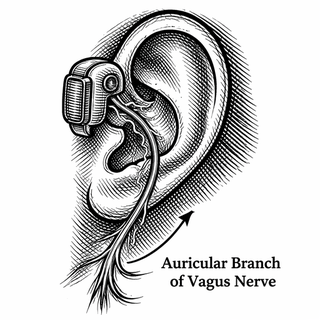
Here's the pitch: a small, non-invasive device clips onto the outer ear and delivers mild electrical pulses to the auricular branch of the vagus nerve. Participants use it at home, on their own schedule, without needing to drive to a clinic, find parking in a hospital garage that was clearly designed by someone who hates joy, or sit in a waiting room watching daytime television.
The primary goal is to evaluate whether this home-based approach is even feasible and acceptable - basically, will people actually do it, and will they tolerate it? The secondary outcomes are where it gets really exciting: the researchers are measuring effects on pain, anxiety, depression, fatigue, and something called the brain-gut axis (BGA). More on that spicy little connection in a moment.
Wait, Why the Ear?
Your vagus nerve is the longest cranial nerve in your body, wandering (the word "vagus" literally means "wandering" in Latin) from your brainstem all the way down to your abdomen, chatting with your heart, lungs, and digestive tract along the way. It's the backbone of your parasympathetic nervous system - your body's "okay, everyone calm down" department.
Surgically implanted vagus nerve stimulators have been FDA-approved for epilepsy and depression for years. But surgery is expensive, invasive, and not exactly something you squeeze in between school pickup and grocery shopping. Researchers discovered that a small branch of the vagus nerve surfaces at the outer ear - specifically at a region called the cymba conchae - making it accessible to external stimulation. No scalpel required.
A 2020 critical review in Frontiers in Neuroscience mapped out the translational challenges and promise of transcutaneous vagus nerve stimulation, noting that while early results are encouraging, rigorous RCTs are still needed to pin down optimal protocols and patient populations (Yap et al., 2020; DOI: 10.3389/fnins.2020.00284). This trial seems to be answering that call directly.
The Brain-Gut Axis: Your Body's Group Chat
One of the more fascinating secondary outcomes in this trial is the brain-gut axis. If you've ever felt nauseous before a big presentation or experienced "butterflies" when nervous, congratulations - you've felt the BGA in action. The vagus nerve is the primary information highway between your brain and your gut microbiome, ferrying signals back and forth like a very dedicated postal worker.
Breast cancer treatments - chemotherapy, radiation, hormonal therapies - can absolutely wreck this communication system. Research has shown that cancer treatment-related dysbiosis (a fancy way of saying your gut bacteria are having a bad time) contributes to fatigue, mood disorders, and even pain sensitization (Loman et al., 2023; DOI: 10.1007/s10549-023-06995-7). Stimulating the vagus nerve may help restore some of that disrupted signaling, essentially turning the volume back up on a connection that got knocked offline.
A systematic review examining vagus nerve stimulation's anti-inflammatory properties found that VNS can modulate cytokine production and reduce systemic inflammation - a mechanism that could address multiple survivorship symptoms simultaneously (Bonaz et al., 2021; DOI: 10.3389/fnins.2021.650971). That's treating the root cause rather than playing pharmaceutical whack-a-mole with each symptom individually.
Why This Matters for Health Equity
Here's where my public health heart starts beating faster. Breast cancer survivorship is not an equal-opportunity experience. Black women in the United States are 40% more likely to die from breast cancer than white women, and survivors from underserved communities face disproportionate barriers to post-treatment care - fewer pain management referrals, less access to mental health support, longer travel times to specialty clinics (Giaquinto et al., 2022; DOI: 10.3322/caac.21754).
A home-based intervention flips the traditional model on its head. Instead of requiring patients to come to the healthcare system (which, let's be honest, isn't always thrilled to meet them halfway), this approach brings the treatment to the patient's living room. The device is portable. It doesn't require a specialist to administer. And if the pilot data support it, the cost profile could be dramatically lower than repeated clinic visits for multimodal symptom management.
That "feasibility and acceptability" primary outcome? It's not just a methodological checkbox. It's asking the question that matters most: can real people, living real lives, actually use this thing?
The Bigger Picture
We're currently witnessing a quiet revolution in neuromodulation - the use of targeted electrical or magnetic stimulation to tweak nervous system activity. taVNS sits at the intersection of several exciting trends: wearable health technology, patient-centered self-management, and a growing understanding that the nervous system, immune system, and gut microbiome are less like separate departments and more like three raccoons in a trenchcoat pretending to be one organism.
A recent meta-analysis of taVNS for chronic pain found moderate effect sizes across multiple pain conditions, with a favorable safety profile and minimal side effects - mostly mild tingling or skin irritation at the electrode site (Tan et al., 2023; DOI: 10.1016/j.neuroscience.2023.01.008). Nobody is claiming this is a miracle cure. But for a population that's been told to essentially "tough it out" after treatment ends, even a modest, safe, accessible tool could be genuinely life-changing.
What I'm Watching For
This is a pilot study, which means it's designed to test the waters before a larger trial. The triple-blinded design (participants, clinicians, and outcome assessors are all blinded) is methodologically reassuring - nobody's thumb is on the scale. If the results show that participants actually stick with the protocol, tolerate the device, and show promising trends in pain and symptom scores, the door opens for a full-scale RCT that could change how we approach breast cancer survivorship care.
And honestly? The idea that a small clip on your ear, used from the comfort of your own couch, could help quiet the storm of post-cancer symptoms is the kind of creative, patient-friendly thinking our healthcare system desperately needs more of.
I'll be watching this one closely. My ear is to the ground. Pun very much intended.
Disclaimer: This blog post is for educational and informational purposes only and does not constitute medical advice. Always consult your healthcare provider before starting any new treatment. Clinical trial participation should be discussed with your medical team.
Clinical Trial Reference:
Home-based Pain and Symptom Management for Breast Cancer Survivors: a Triple-Blinded RCT Pilot Study of Transcutaneous Auricular Vagus Nerve Stimulation (taVNS). ClinicalTrials.gov Identifier: NCT07500012
Sources Cited:
1. Yap, J.Y.Y., et al. (2020). Critical Review of Transcutaneous Vagus Nerve Stimulation: Challenges for Translation to Clinical Practice. Frontiers in Neuroscience, 14, 284. DOI: 10.3389/fnins.2020.00284
2. Loman, B.R., et al. (2023). Gut microbiome and breast cancer survivorship. Breast Cancer Research and Treatment. DOI: 10.1007/s10549-023-06995-7
3. Bonaz, B., et al. (2021). Anti-inflammatory properties of the vagal nerve. Frontiers in Neuroscience. DOI: 10.3389/fnins.2021.650971
4. Giaquinto, A.N., et al. (2022). Breast Cancer Statistics, 2022. CA: A Cancer Journal for Clinicians. DOI: 10.3322/caac.21754
5. Tan, C., et al. (2023). Transcutaneous auricular vagus nerve stimulation for chronic pain: A meta-analysis. Neuroscience. DOI: 10.1016/j.neuroscience.2023.01.008