
Seeking: Something that can take a stretch, bounce back from heartbreak (literally), and stick around through thick and thin. Loves long walks in sub-zero temperatures. Transparent about intentions. Must be comfortable in wet environments and willing to let wounds breathe. Borax-positive a plus.
If this sounds like the dating profile of an overachieving biomaterial, congratulations - you've just met the TG-G-B hydrogel, and honestly, it might be more relationship material than most of my exes.
The Problem With Being Skin (And Why We Need Better Fake Skin)
Here's the thing about human skin: it's absolutely incredible at its job until it isn't. Burns happen. Wounds occur. Chronic conditions develop. And suddenly our largest organ needs backup. The biomedical world has been chasing the dream of electronic skin, smart wound dressings, and wearable health monitors for years, but there's always been a catch.
Most hydrogels - those squishy, water-loving materials we've been trying to use - have been a bit like that friend who's great at one thing but absolutely useless at everything else. Stretchy but falls apart. Sticky but opaque. Self-healing but freezes solid the moment temperatures drop. It's been a frustrating game of biomaterial whack-a-mole.
Enter a research team who apparently decided they were tired of compromise.
Three Ingredients, One Overachiever
The recipe sounds almost suspiciously simple: tragacanth gum, glycerol, and borax. That's it. Three ingredients that sound more like they belong in a Victorian-era cold remedy than cutting-edge biomedical research.
Tragacanth gum is a natural plant-derived polysaccharide - basically, tree sap's cooler cousin. Glycerol is that stuff that keeps your skin moisturizer from turning into chalk. And borax? Yes, the same borax your grandmother probably used for laundry. Sometimes the best innovations come from looking at old friends with new eyes.
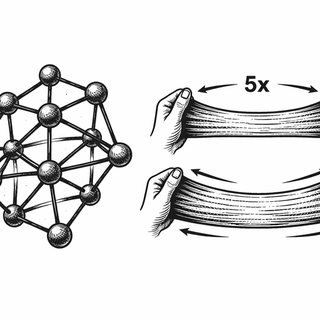
The magic happens in how these three components interact. The glycerol forms strong hydrogen bonds with the tragacanth gum, while the borax acts as a dynamic cross-linker, creating what the researchers call a three-dimensional network. Think of it like molecular-level Velcro that can unhook and rehook itself on demand.
The Numbers That Made Me Do a Double-Take
Let me throw some stats at you, because this is where things get genuinely wild.
Stretchability: 480%
This hydrogel can stretch to nearly five times its original length. For context, that's like taking a one-inch piece of material and pulling it to almost five inches before it gives up. Most of us can't even touch our toes, and this hydrogel is out here doing the molecular equivalent of contortionism.
Swelling ratio: 300%
It can absorb water like a champion and swell to three times its size while maintaining structural integrity. This matters enormously for wound dressings, where managing moisture is half the battle.
Transparency: 132%
Wait, how can something be more than 100% transparent? The researchers measured light transmission, and at optimal borax concentrations, the hydrogel actually transmits more light than the reference. It's not just see-through; it's actively showing off.
Water vapor transmission: 2,324 g/m²
For wound dressings, this is the "can it breathe" metric. A wound that can't exchange moisture with the environment becomes a bacterial party venue. This hydrogel keeps the door open for vapor while maintaining its protective barrier.
The Self-Healing Trick (No Magic Wand Required)
Here's where I started mentally drafting investment pitches. This hydrogel can heal itself. Autonomously. Without intervention.
Cut it in half, put the pieces back together, wait a bit, and the dynamic borax cross-links reform. The material essentially remembers what it's supposed to look like and knits itself back together. This isn't science fiction - it's chemistry doing what chemistry does when you design the right molecular architecture.
For wearable devices and electronic skin applications, this is transformative. Every time you bend your elbow, flex your wrist, or simply exist as a moving human being, you're stressing any material attached to you. Self-healing means longevity. Longevity means practicality. Practicality means this might actually make it out of the lab and onto actual humans.
The Antifreeze Feature Nobody Asked For (But Everyone Needs)
Most hydrogels have an embarrassing secret: they're water-based, which means they freeze. Try wearing a smart wound dressing in Minnesota in January, and you'll quickly discover that frozen hydrogel is about as useful as a chocolate teapot.
The glycerol in this formulation acts as a built-in antifreeze. The material maintains its flexibility and function even when temperatures plummet. This isn't just a nice-to-have - it's the difference between a lab curiosity and a product that works in the real world where people live in places that occasionally experience winter.
Where This Could Actually Go
Let me put on my "excited startup founder" hat for a moment, because the commercial potential here is genuinely compelling.
Electronic skin and wearable sensors: The combination of transparency, stretchability, and self-healing makes this ideal for the next generation of health monitors. Imagine a patch that can track your vitals, move with your body, repair minor damage, and work whether you're in Phoenix or Fairbanks.
Advanced wound dressings: The water vapor transmission rate, adhesion properties, and biocompatibility (it's made from natural materials) position this for serious wound care applications. Chronic wound management alone is a multi-billion dollar market with plenty of room for innovation.
Flexible electronics: As we move toward bendable phones, rollable displays, and wearable tech that actually conforms to human bodies, materials like this become essential infrastructure.
The Fine Print (Because There's Always Fine Print)
Before anyone starts planning their hydrogel empire, let's acknowledge what we don't know yet. This research demonstrates impressive properties in laboratory conditions, but the journey from "works in a lab" to "approved for human use" is long, expensive, and littered with the corpses of promising materials that didn't quite make the cut.
We need long-term biocompatibility studies. We need manufacturing scalability data. We need clinical trials. We need regulatory approval processes that can take years. The science is exciting, but the path to your medicine cabinet is a marathon, not a sprint.
Why I'm Watching This Space
Every few months, a paper comes across my desk that makes me sit up straighter. This is one of them. Not because it's guaranteed to succeed - nothing is - but because it elegantly solves multiple problems simultaneously using accessible, natural materials.
The biomedical materials field is full of exotic solutions requiring rare earth elements, complex synthesis procedures, or materials that cost more per gram than gold. A hydrogel made from plant gum, the stuff in your moisturizer, and a laundry additive? That's the kind of practical innovation that actually scales.
Sometimes the future of medicine looks less like science fiction and more like clever chemistry. And honestly? I find that more exciting than flying cars anyway.
This blog post discusses research findings and should not be taken as medical advice. If you have concerns about wound healing, skin conditions, or wearable medical devices, please consult a healthcare provider. Research discussed here represents ongoing scientific investigation and clinical validation is still in progress.
All images used in this post are decorative illustrations only and do not represent or reflect the accuracy, reality, or correctness of the referenced research.
Primary Source: Dynamic borax-crosslinked transparent and antifreezing tragacanth gum-glycerol hydrogel for biomedical use. PubMed. 2025. PMID: 41317604