
Ever tried to catch a fleeting moment, like the second before your coffee spills or just as your favorite tune hits that perfect note? Time can play tricks on us, especially when it comes to how we perceive sounds. If you've ever pondered why some tones feel longer or shorter than others, you're not alone. A fresh study from McMaster University dives into this auditory rabbit hole, investigating how our ears interpret duration, especially with those complex sounds all around us.
The Sound of Duration: More Than Just Beeps
For years, researchers have been focused on how we perceive sound durations, primarily honing in on the humble "beep." You know, those sharp, flat tones that appear in everything from microwaves to medical devices? While they serve their purpose, they don't capture the rich, textured sounds we encounter in our daily lives. This study sheds light on a fascinating aspect of sound: how the shape of a sound's amplitude envelope - essentially, its rise and fall - can influence our perception of time.
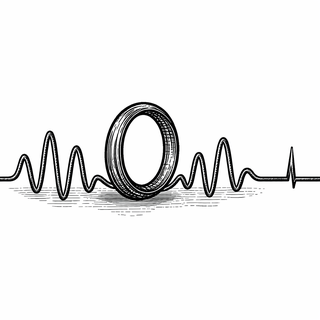
Imagine you're at a concert. The gradual buildup of a drumroll hits that sweet spot before the main act. Your anticipation builds, and suddenly, the music blasts. That swell and decay create a sense of duration that a simple beep just can't match. The scientists behind this research wanted to understand the difference between these complex, decaying sounds (think of a cymbal crash or a piano chord fading away) and those abrupt, flat tones.
What’s in a Wave? Understanding Amplitude Envelopes
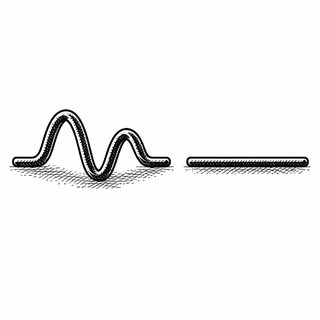
So, what exactly is an amplitude envelope? Picture it as a sound's “shape” over time. It starts from silence, rises to a peak, and then gradually falls back into silence. This shape matters because it affects how we perceive the length of a sound.
The researchers conducted three experiments, asking participants to determine which of two tones sounded longer. In the first experiment, they used tones that matched in amplitude envelope - so two sounds that rose and fell similarly. In the second experiment, they mixed things up with different types of tones. The results revealed some interesting insights into how we process these auditory signals.
If you’re anything like me, you may picture sound waves as rollercoasters - some thrilling and spiraling, while others are short and abrupt. The rollercoaster analogy isn't too far off; the way a sound “rides” its wave can impact how long you think it lasts.
The Science Behind the Sounds: Key Findings
The researchers found that the point where listeners perceived flat and percussive tones as equal in duration was best described by a linear equation. In simpler terms, there’s a mathematical relationship between different sound types that tells us how our brains interpret time in sound. The study's data suggest that individual differences - like your unique hearing ability or sound sensitivity - play a significant role in how we measure sound duration.
Now, you may be thinking, "That’s all well and good, but what does it mean for me in real life?" Well, let’s break it down into some relatable scenarios.
Real-World Impact: Why This Research Matters
Have you ever been jolted awake by an annoying alarm clock or felt anxious at the sound of hospital machinery? Those flat tones are everywhere, and they might not be doing our mental state any favors. Understanding how complex sounds are perceived can have practical applications.
For instance, hospitals often use beeping alarms that can sound harsh and abrupt. By applying these research findings, medical teams could design alarms that mimic more natural sounds, potentially reducing anxiety and improving patient experiences.
Consider this: if a soothing sound can provide the same alertness as a jarring beep, maybe we can help patients feel a little more at ease during their hospital stay. Or think about your car’s alert system - what if those beeps could be transformed into sounds that are not only effective but also less stressful?
Even in music therapy, where sound plays a crucial role in healing, understanding how we perceive duration can guide therapists in selecting the right sounds for their clients.
Wrapping It Up: The Melody of Time
So, there you have it! Our ability to perceive time in sound is more complex than we might have thought. This research opens up a world of possibilities for how we can better design sounds that fit seamlessly into our daily lives - whether at the doctor's office, in a concert hall, or even in our cars.
Next time you listen to your favorite song, pay attention to how the sounds flow and change. You might just find yourself tuning into the intricate dance of sound and time that surrounds us all.
Disclaimer: The information provided in this blog post is based on the findings of the research paper “Amplitude envelope and subjective duration: Quantifying the role of decaying offsets in timing perception” and should not be used as a substitute for professional medical advice. Images and graphics are for illustrative purposes only and do not depict actual medical devices, procedures, mechanisms, or research findings from the referenced studies.
For more details, check out the original research here.
Citation: Wessel, C., Zhang, C., & Schutz, M. (2025). Amplitude envelope and subjective duration: Quantifying the role of decaying offsets in timing perception. Attention, Perception & Psychophysics, 88(1), 35. doi: 10.3758/s13414-025-03186-4.