
Walking is supposed to be automatic. One foot, then the other, like your body is running a program in the background while your brain worries about groceries, emails, or whether you really need that third cup of coffee. But for people with peripheral neuropathy, that program gets glitchy. The feet stop sending clear signals, balance gets shaky, and a simple walk across the room can feel less like a stroll and more like trying to dribble a basketball with oven mitts on.
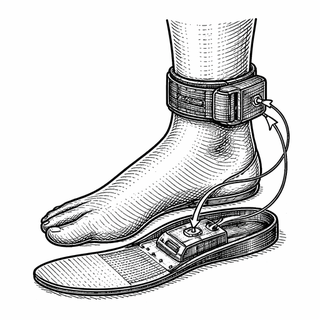
That is why the clinical trial NCT07554443 grabbed my attention. It is testing whether a wearable neuroprosthesis called Walkasins can help people with peripheral neuropathy move more, walk better, and maybe feel steadier doing ordinary daily life stuff.
What this study is actually testing
At its core, this trial is asking a very practical question: if the nerves in your feet are not giving your brain good information anymore, can a device step in and supply some of that missing feedback?
Walkasins is the device being studied. It has two main parts: an insole that goes inside the shoe and a strap that wraps around the ankle. The idea is that it delivers sensory stimulation in a way that helps the user better understand where their body is in space. In plain English, it is trying to give the brain a cleaner set of signals so walking is less guesswork.
That matters because peripheral neuropathy is not just a buzzkill for comfort. It can mess with balance, coordination, confidence, and activity levels. When walking feels unpredictable, people often move less. That can start a nasty cycle where less movement leads to weaker muscles, lower endurance, and even less confidence. Bodies, annoyingly, are very much a "use it or lose it" operation.
What participants have to do
This is not one of those studies where someone gets handed a gadget and everybody just hopes for the best. The trial design looks at how people function before, during, and after using the device.
Participants first go through sensation and balance testing to see if they qualify. They also answer questions about medical history, physical function, balance confidence, and sleep. That last one is smart, because when your walking is off, sleep and stress often join the party whether invited or not.
They also perform balance and walking tasks on three separate occasions. One test involves walking for six minutes without a cane or walker. As someone who used to watch patients brace themselves mentally for hallway walking tests, I can tell you six minutes can feel a lot longer when your feet do not quite feel like your feet.
On top of that, participants wear an activPAL activity monitor for ten days on three separate occasions. That lets researchers track what people do in the real world, not just what they can do under fluorescent lights with a clipboard nearby. Then they wear Walkasins for ten weeks as part of normal daily life.
That last part is what makes this study especially interesting. It is not just asking, "Can someone do a little better in a test?" It is asking, "Do they actually move more when they go home?" That is a much tougher and much more meaningful question.
Why this is more interesting than it sounds
I know, "wearable sensory prosthesis" is not exactly a phrase that screams party conversation. But the concept is sneaky-good.
A lot of mobility research hits the same wall: people can improve in a clinic and still struggle in the messy obstacle course known as regular life. Floors are uneven. Sidewalks are rude. Dogs appear out of nowhere. Humans turn while carrying laundry and immediately regret every life choice that led to that moment.
So when a study focuses on habitual activity patterns, that is worth paying attention to. More daily movement is not just a number on a chart. It can mean more independence, fewer near-falls, better endurance, and less fear about doing basic things like shopping, walking the block, or getting out of a chair and heading to the kitchen without doing that cautious penguin shuffle.
The trial also looks at gait quality, which is a fancy way of saying how well someone walks. Not just whether they can move forward, but whether the movement is coordinated, stable, and efficient. There is a big difference between getting from point A to point B and getting there without looking like your legs are negotiating separate peace treaties.
The real problem this research is trying to solve
Peripheral neuropathy creates a brutal mismatch between intention and feedback. A person may want to move normally, but if sensory information from the feet is reduced or distorted, the body has to improvise. That can lead to slower walking, altered step patterns, poor balance, and lower confidence.
Confidence sounds soft, but it is not. When people stop trusting their bodies, they often stop doing things. They skip walks. They avoid stairs. They say no to outings. They move less to stay safe, and ironically that can make them less safe over time.
This study targets that exact gap. Instead of only strengthening muscles or coaching movement, it tries to restore useful sensory input. That is a different angle, and a smart one. Walking is not just muscle power. It is also timing, feedback, correction, and a brain that knows what the feet are up to.
What success could look like in the real world
If Walkasins works the way researchers hope, the payoff could be pretty tangible.
It could help people become more active in daily life, not just in rehab settings. It could improve walking quality enough that movement feels less effortful and less nerve-racking. It could increase balance confidence, which is one of those invisible wins that changes everything. When people trust their legs more, they usually do more.
That does not mean this is a magic insole that turns everyone into a weekend pickleball menace. Let us keep our helmets on. But even modest improvements can matter a lot here. A steadier walk, a few more minutes of activity each day, fewer close calls, more willingness to leave the house - that is real quality-of-life territory.
And because the device is wearable and built into daily routine, it has a better shot at fitting actual human behavior. That counts. The best rehab idea in the world is useless if it lives in a drawer next to expired coupons and mystery charging cables.
The details we still need
This is a clinical trial, not a victory lap. The big thing missing right now is outcome data. The study is designed to test whether Walkasins improves physical activity and gait in adults with peripheral neuropathy, but until results are reported, we do not know how strong the effect will be, who benefits most, or whether gains hold up over time.
The public summary also points readers to the full ClinicalTrials.gov record for operational details such as status, eligibility specifics, outcome measures, and sponsor information. That is where the nuts and bolts live.
Still, the basic idea is solid enough to be worth watching. When research tries to bridge the gap between lab performance and real-world movement, my ears perk up. Probably a paramedic habit. Years in emergency medicine teach you fast that function matters more than theory. Can the person safely move through their day? That is the ballgame.
Why I will be keeping an eye on this one
This study is interesting because it treats walking like the sensory-motor teamwork problem it is. Not just strength. Not just willpower. Not just "be more careful." It is trying to patch missing information in a system that depends on information.
That is a practical idea with very human stakes. For people with peripheral neuropathy, better walking is not about chasing athletic glory. It is about ordinary freedom. Crossing a parking lot. Taking the dog out. Going to the store. Living life without every step feeling like a low-budget trust fall.
Disclaimer: This article is for educational purposes only and is based on the publicly provided summary of a clinical trial listing. It is not medical advice, and the study does not yet prove that the device works. For personal care decisions, talk with a qualified clinician.
Citation: ClinicalTrials.gov. Wearable Sensory Prostheses to Improve Neuromuscular Coordination, Walking Function, and Real-World Physical Activity (NCT07554443). Available at: https://clinicaltrials.gov/study/NCT07554443 and https://clinicaltrials.gov/study/NCT07554443?tab=table