
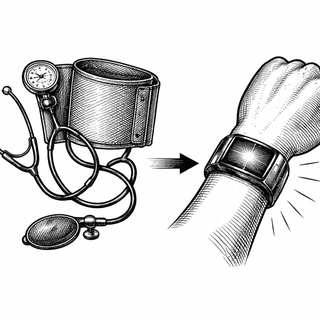
Psssshhhhhh. That's the sound of a blood pressure cuff strangling your bicep like an overly enthusiastic boa constrictor. You've heard it at every doctor's visit since childhood. Now imagine replacing that entire ritual with a wristband that blinks a tiny green light at your skin and says, "Yeah, I got your numbers." That's more or less the pitch from Swiss medtech company Aktiia, and their latest clinical trial - codenamed PANDA2026 - is about to put that pitch to a very serious test.
What Exactly Is Being Tested Here?
The trial, registered as NCT07507903 on ClinicalTrials.gov (table view), is a multicenter, prospective study evaluating the Aktiia Periodic Awake Optical Blood Pressure Monitoring (OBPM) device - specifically a model called product-G1-US, which sounds like a code name a spy agency would give a prototype wristwatch. Which, honestly, kind of fits.
The device uses photoplethysmography (PPG) - the same optical sensor technology that tracks your heart rate on a fitness watch - but Aktiia claims it can extract blood pressure readings from those pulsing green LEDs pressed against your wrist. The PANDA2026 study pits this wrist gadget against the venerable gold standard: double auscultation, which is just a fancy way of saying a trained human with a stethoscope and a manual cuff takes your BP reading twice.
At least 85 participants will wear the device over two visits spanning seven days, having their blood pressure checked while assuming various body positions. This is a pivotal trial, meaning its results are intended to support regulatory clearance - almost certainly FDA submission for the US market.
Why Should Anyone Care About Cuffless Blood Pressure?
Here's where things get genuinely important. Hypertension affects roughly 1.3 billion people worldwide, according to the World Health Organization, and it's the single largest modifiable risk factor for cardiovascular disease and stroke. The catch? It's a notoriously sneaky condition. About half of people with high blood pressure don't even know they have it, partly because you need to actually measure it to find it - and most people don't sit around with a cuff on their arm between doctor visits.
A wrist-worn device that passively or periodically monitors blood pressure throughout the day could fundamentally change how we detect and manage hypertension. Instead of getting a single snapshot reading at the clinic (while you're already anxious because your doctor is about to ask you about your vegetable intake), you'd have a rolling week-long dataset showing your BP in real life - at your desk, on the couch, after that third espresso.
The European Society of Hypertension (ESH) acknowledged this potential in a 2023 position statement, while simultaneously noting that most cuffless BP devices hadn't been rigorously validated against established standards (Stergiou et al., J Hypertens, 2023; DOI: 10.1097/HJH.0000000000003483). In other words: cool concept, show us the data.
Let's Pump the Brakes a Little
And this is where the skeptic in me reaches for the emergency brake handle. The promise of cuffless BP monitoring has been floating around for over a decade. A foundational review by Mukkamala et al. (2015) laid out the theoretical basis for deriving blood pressure from pulse transit time and PPG signal features, and the physics absolutely checks out (DOI: 10.1109/TBME.2015.2441951). The problem has never been theory. It's been accuracy in practice.
PPG-based blood pressure estimation relies on subtle changes in the shape, timing, and amplitude of optical pulse waves. These signals are influenced by skin tone, wrist hair, ambient temperature, how tightly you're wearing the device, whether you just moved your arm, and roughly seventeen other variables that make signal processing engineers break out in hives. The relationship between these optical features and actual arterial pressure isn't a simple equation - it's a complex, person-specific mapping that can drift over time.
Some things about the PANDA2026 design are encouraging. Testing across multiple body positions is smart, because a device that only works when you're sitting perfectly still with your arm at heart level isn't going to cut it in the real world. Comparing against double auscultation rather than an automated oscillometric cuff is the right call for a pivotal trial - it's the comparator that regulators want to see.
But let's talk numbers. A minimum of 85 participants across multiple centers is... not a lot. To be fair, this aligns with standards like AAMI/ESH/ISO 81060-2 for blood pressure device validation, which require a minimum of 85 subjects. So the study isn't underpowered by regulatory standards. But cardiovascular physiology varies enormously across populations, and demonstrating accuracy in a "cohort representative of the US population" - across age ranges, skin tones, BMIs, and comorbidities - with 85 people is going to stretch the meaning of "representative" pretty thin.
Also, the seven-day monitoring window matters a lot here. PPG-based devices typically require an initial calibration against a cuff, and their accuracy tends to degrade over time as cardiovascular conditions, hydration, and a dozen other physiological parameters shift. Seven days will tell us whether the device holds up through a workweek and a weekend, but it leaves the longer-term drift question unanswered.
The Bigger Picture
Despite these caveats, what Aktiia is attempting is genuinely exciting. If cuffless wrist-worn BP monitoring can be validated to clinical accuracy standards, it opens the door to something that could meaningfully dent the global hypertension crisis: ubiquitous, passive blood pressure screening that doesn't require a clinic visit, a bulky cuff, or a patient who remembers to actually use their home monitor (looking at you, everyone who shoved their cuff in a closet after two weeks).
Samsung, Google, and Apple have all been eyeing this space, and several smaller companies like Biobeat and Valencell have published validation data of varying quality. Aktiia has an advantage in focus - this is their core product, not a side feature on a smartwatch that also counts your steps and judges your sleep habits.
The PANDA2026 results, when they come, will be scrutinized intensely. If the device meets AAMI/ESH accuracy criteria across a genuinely diverse subject pool and multiple positions, that's a meaningful milestone. If it falls short, it'll join a long line of optical BP devices that looked great in controlled lab conditions and wobbled in the real world.
Either way, we'll be watching. With appropriately calibrated expectations.
Disclaimer: This blog post is for informational and educational purposes only and does not constitute medical advice. Clinical trial details are based on publicly available registration data and may be updated as the study progresses. Always consult a qualified healthcare provider regarding blood pressure monitoring and cardiovascular health.
Citations:
- ClinicalTrials.gov Identifier: NCT07507903
- Stergiou GS, et al. "Cuff-less blood pressure measuring devices: review and statement by the European Society of Hypertension Working Group on Blood Pressure Monitoring and Cardiovascular Variability." J Hypertens. 2023;41(6):919-928. DOI: 10.1097/HJH.0000000000003483
- Mukkamala R, et al. "Toward Ubiquitous Blood Pressure Monitoring via Pulse Transit Time: Theory and Practice." IEEE Trans Biomed Eng. 2015;62(8):1879-1901. DOI: 10.1109/TBME.2015.2441951
- World Health Organization. "Hypertension Fact Sheet." WHO, 2023.