
Picture this: You've just spent a few days in the hospital. The food was questionable, the gown was drafty, and someone woke you up at 4 AM to check your vitals. But hey, at least your blood sugar was under control - there was an entire medical team monitoring it like hawks watching a particularly interesting mouse.
Then comes discharge day. You're handed a stack of papers, a prescription, and a cheerful "take care of yourself!" And suddenly, you're back home with your diabetes, a finger-prick device, and the vague memory of what your doctor said about "consistent carbohydrate meals." It's like being handed the controls of an airplane after watching someone else fly it for a week.
This is exactly the problem that clinical trial NCT05360056 is tackling, and honestly, it's about time someone did.
The Great Glucose Disconnect
Here's a fun fact that isn't fun at all: up to 20% of patients with type 2 diabetes end up back in the hospital within 30 days of discharge due to early unplanned complications. That's one in five people doing an unwanted hospital encore. The reason? Managing diabetes at home is wildly different from managing it in a facility where trained professionals handle everything.
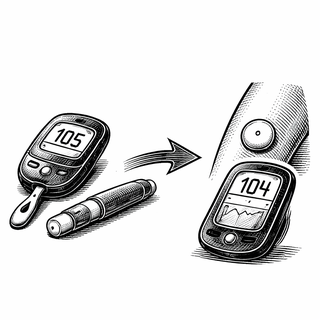
The traditional approach involves pricking your finger several times a day to check blood sugar levels. It works, but it's like trying to understand a movie by watching random screenshots - you get bits and pieces, but you miss the whole story. Your glucose doesn't just hang out at one level; it goes on adventures. It spikes after meals, dips during exercise, and does mysterious things at 3 AM when you're sleeping.
Enter continuous glucose monitoring, or CGM - the technology that's about to become your diabetes buddy.
What's This Study Actually Doing?
The trial, sponsored by DexCom, Inc., is a 12-week prospective observational cohort study. In non-medical speak, that means researchers are watching what happens when insulin-requiring patients with type 2 diabetes leave the hospital wearing a Dexcom G6 continuous glucose monitor instead of relying on traditional finger pricks.
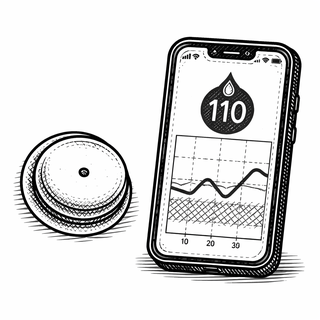
These tiny sensors - about the size of two stacked quarters - stick to your arm or abdomen and measure glucose levels every five minutes. That's 288 readings per day compared to the maybe four to six you'd get from finger pricks. Instead of snapshots, you get the entire movie, complete with every plot twist and surprise ending.
But here's where it gets clever: the CGM data syncs to a smartphone app, and customized reports with decision support are sent directly to each patient's diabetes provider. So when you're struggling to understand why your glucose went haywire after Tuesday's lunch, your doctor has the same data and can actually help.
The Numbers That Matter
The study is measuring several key outcomes, and they all come down to one question: how much time are you spending in the "good zone"?
The primary target is something called Time in Range, or TIR - the percentage of time your glucose stays between 70-180 mg/dl. Think of it as your glucose GPA. Researchers are also tracking time below 70 mg/dl (hypoglycemia - the "I'm sweaty and confused" zone) and time above 180 mg/dl (hyperglycemia - the "I feel terrible and my body is unhappy" zone).
They're also looking at severe hypoglycemic events, which are exactly as scary as they sound, and using the Diabetes Treatment Satisfaction Questionnaire to see if patients actually feel better about managing their condition.
Why This Matters More Than You Think
Recent research paints a compelling picture of CGM's potential. A 2024 randomized clinical trial comparing CGM to capillary glucose testing found that CGM users showed improved glycemic control, reduced hypoglycemia, and decreased glucose variability. That's the trifecta of diabetes management.
Real-world data from a study of over 79 million people revealed that those who switched from traditional blood glucose monitoring to CGM had fewer hospital stays and emergency department visits. One analysis found A1c improvements of 0.25% to 3.0% and time in range improvements of 15% to 34%.
For context, every 1% reduction in A1c is associated with significant reductions in diabetes-related complications. These aren't small numbers - they're life-changing.
The Hospital-to-Home Gap
Here's the thing about hospital discharge: it's like being kicked out of the diabetes spa. In the hospital, you had nurses adjusting your insulin, dietitians planning your meals, and doctors reviewing your numbers. At home, you've got Netflix tempting you toward snacks and a refrigerator full of unpredictable carbohydrates.
The study addresses this by providing patients with "survival skills education" at discharge - basically, the CliffNotes version of diabetes management covering glucose targets, consistent carbohydrate meals, and basal insulin titration. But the real game-changer is the CGM itself, which provides immediate feedback on how every decision affects your glucose.
Ate that leftover pizza? You'll see the spike in real-time. Went for a walk after dinner? Watch your glucose gently decline. It's like having a diabetes coach on your arm 24/7, except it doesn't judge you - it just reports the facts.
The Bigger Picture
CGM has evolved from fancy optional tech to what many clinical guidelines now consider standard of care. The American Diabetes Association recommends it for patients on intensive insulin therapy, and research supports its use across the type 2 diabetes spectrum.
But here's the catch: CGM is still underutilized, especially in the type 2 diabetes population. Cost, insurance coverage, and the perceived complexity of getting started create barriers. Studies like NCT05360056 are building the evidence base to change that, demonstrating that transitioning patients to CGM at hospital discharge is both practical and beneficial.
What Happens Next
The study includes an extension phase where participants continue using CGM for an additional 12 weeks without the provider reports. This will show whether the benefits persist when patients become their own primary glucose interpreters - a critical question for long-term diabetes self-management.
Results from this trial could influence hospital discharge protocols nationwide. If the data shows significant improvements in glycemic control and patient satisfaction, expect to see CGM included in standard discharge packages for diabetic patients - alongside those gloriously unhelpful brochures about "eating healthy."
The Bottom Line
Managing diabetes is hard. Managing it during the chaotic transition from hospital to home is harder. Continuous glucose monitoring offers a bridge across that gap, providing real-time data that empowers patients and their healthcare providers to make better decisions.
Will a little sensor on your arm solve all your diabetes problems? No. You still have to make choices, take medications, and occasionally resist the siren call of the office donut box. But having continuous feedback transforms diabetes management from a guessing game into something approaching science.
And really, after everything diabetes throws at you, don't you deserve some good data on your side?
Clinical Trial Registration: NCT05360056 - ClinicalTrials.gov
Related Research:
- Impact of continuous glucose monitoring on hospitalizations and glucose control - Diabetes, Obesity and Metabolism (2024)
- Randomized Study Comparing CGM and Capillary Glucose Testing After Hospital Discharge - PubMed
- Acceptance and Effect of CGM on Discharge - PMC
Disclaimer: This blog post is for informational purposes only and does not constitute medical advice. Always consult with qualified healthcare providers regarding diabetes management and treatment decisions. Clinical trial results may vary, and individual outcomes depend on numerous factors. Images and graphics are for illustrative purposes only and do not depict actual medical devices, procedures, mechanisms, or research findings from the referenced studies.