
Getting a topical drug through the skin or into the eye currently requires a lot of educated guessing about how those tissues will behave mechanically - how they'll stretch, compress, resist, and spring back. If you want to design a drug patch, an ocular implant, or a controlled-release system, you need to know exactly how stiff or floppy the target tissue is at the microscale. And right now? We're measuring that with a grab bag of techniques that each tell you something slightly different, like asking ten different mechanics to diagnose the same engine noise. A new comprehensive review just mapped out the entire landscape of these measurement tools, and it might finally give researchers a common playbook.
The Problem: Jell-O Doesn't Follow the Rules
Here's the thing about biological tissue that makes engineers lose sleep: it doesn't behave like steel, concrete, or any of the nice predictable materials we learned about in school. Skin and eyes are what we politely call "complex soft biological materials," which is engineering-speak for "these things are an absolute nightmare to characterize."
Your skin alone is a multilayered sandwich of epidermis, dermis, and subcutaneous fat, each with wildly different mechanical properties. It's anisotropic, meaning it behaves differently depending on which direction you poke it. Its water content fluctuates. Its stiffness changes depending on how fast you deform it. Traditional linear models - the kind where stress is proportional to strain - fall apart faster than a first-year resident's confidence during their first code blue.
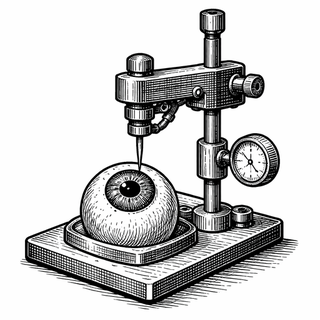
The eye is even worse. You've got the cornea, sclera, retina, and vitreous humor, all layered together like some kind of biological parfait that nobody asked for. Each layer has its own mechanical personality, and they all change behavior depending on whether you're measuring them in a living patient or in a lab dish.
Why Any of This Matters for Your Next Eye Drop
You might be wondering why anyone cares about the exact squishiness of your cornea. Fair question. The answer is drug delivery.
Skin and eyes are the two most accessible barriers for topical drug delivery. Every eye drop, every transdermal patch, every contact lens loaded with medication - they all need to interact with these tissues mechanically. How a drug-loaded hydrogel conforms to your cornea, how deeply a microneedle penetrates your skin, how a sustained-release implant behaves over weeks inside the eye - all of this depends on understanding tissue mechanics at scales measured in micrometers.
Get it wrong, and your fancy drug delivery system either doesn't deliver enough drug or delivers it to the wrong tissue layer. Neither outcome is going to win you any awards.
The Measurement Toolbox: A Field Guide
The review, published recently and covering the state of the art in soft tissue mechanical characterization, breaks the available techniques into two broad categories: ways to see what's happening and ways to poke things.
The Looking Tools
On the visualization side, researchers have an impressive (and sometimes intimidating) array of options:
- Optical imaging and interferometry for surface-level deformation tracking
- Digital image correlation (DIC) - essentially tracking thousands of tiny speckles on a tissue surface to map strain fields in real time
- Optical coherence microscopy - think of it as an ultrasound that uses light instead of sound, giving you cross-sectional views of tissue deformation at micrometer resolution
- Acoustic imaging - actual ultrasound-based techniques that can probe deeper tissue layers
Each has its sweet spot. Some give you beautiful spatial resolution but can't keep up with fast deformations. Others are lightning-quick but only tell you about surface behavior.
The Poking Tools
Then there are the actuation methods - the ways researchers actually apply forces to tissue and measure the response:
- Indentation - the oldest trick in the book. Push something into tissue, measure how hard it pushes back. Simple in concept, surprisingly tricky in practice when your tissue is a few hundred micrometers thick.
- Cavitation rheology - inflate a tiny bubble inside the tissue and measure the pressure required. It's like checking tire pressure, except the tire is your dermis and the stakes are considerably higher.
- Flow elastography - use fluid flow to deform tissue while imaging the response. Particularly promising for in vivo work because you can do it without cutting anyone open.
The Scorecard Approach
What makes this review particularly useful is that it doesn't just catalog techniques - it benchmarks them against the parameters that actually matter for drug delivery applications. Spatial resolution, acquisition rate, invasiveness, and strain rate are all compared across methods.
This is the equivalent of a consumer reports guide for tissue mechanics instruments. Instead of asking "which refrigerator should I buy," researchers can now ask "which technique gives me sub-micron resolution at physiological strain rates without requiring a tissue biopsy?" and actually get a structured answer.
For skin applications, you might need a technique that works through the epidermis to characterize dermal stiffness at the scale relevant to microneedle design. For ocular applications, you might need something that can characterize corneal biomechanics in a living patient without touching the eye (patients tend to prefer this approach, for some reason).
The Bigger Picture
This review isn't just relevant to dermatologists and ophthalmologists. The techniques discussed here apply to anyone working with soft complex materials - and that includes physicists studying polymer networks, chemists designing responsive hydrogels, and tissue engineers building replacement organs.
The field of personalized medicine is pushing hard toward patient-specific treatment design, where your drug delivery system is tuned to your tissue mechanics, not some population average. That future requires reliable, reproducible mechanical characterization at the microscale. And right now, the biggest barrier isn't a lack of tools - it's a lack of consensus on which tool to use when.
By mapping the entire landscape in one place, this review gives the field something it badly needed: a shared vocabulary and a decision framework. It won't solve every measurement debate overnight, but it's a solid step toward researchers at least arguing from the same set of data.
And in biomedical engineering, getting everyone to argue from the same data is basically a breakthrough.
This blog post discusses research findings and should not be taken as medical advice. If you have concerns about skin or eye conditions, drug delivery options, or tissue engineering, please consult a healthcare provider. Research discussed here represents ongoing scientific investigation and clinical validation is still in progress.
All images used in this post are decorative illustrations only and do not represent or reflect the accuracy, reality, or correctness of the referenced research.
Primary Source: A strategic guide of techniques for biomedical and tissue engineering applications to measure mechanical properties of soft matter, eye and skin. PubMed. 2026. PMID: 41628861