
Raise your hand if you've ever had that terrifying moment where a word you use every single day just... vanishes from your brain. You're mid-sentence, reaching for "refrigerator" or "Wednesday," and your brain serves up nothing but static. Now imagine that happening constantly, progressively, until language itself becomes a foreign country you're being slowly deported from.
That's the reality for people living with Primary Progressive Aphasia (PPA), and a new clinical trial is using artificial intelligence and personalized brain zapping to fight back. Yes, you read that correctly. AI. Brain zapping. Personalized. This isn't science fiction anymore, folks.
What Exactly Is Primary Progressive Aphasia?
PPA is a type of dementia that specifically attacks language. Unlike Alzheimer's, which tends to go after memory first, PPA is like a targeted missile aimed at your ability to find words, form sentences, or understand speech. It's caused by degeneration in the brain regions responsible for language processing, and it's absolutely heartbreaking to watch someone slowly lose their ability to communicate with the people they love.
Currently, treatment options are... well, let's just say the toolkit is pretty sparse. Speech therapy helps, but there's no cure, and the condition marches forward relentlessly. Which is why researchers are getting creative with approaches that sound like they belong in a cyberpunk novel.
Enter the Brain DJ: Closed-Loop Stimulation
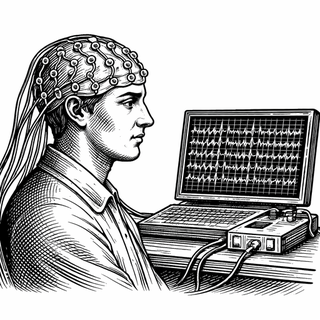
The clinical trial (NCT07511179) is testing something called "closed-loop EEG-tES" - and before your eyes glaze over at the acronym soup, let me translate. EEG (electroencephalogram) reads your brain waves. tES (transcranial electrical stimulation) sends tiny electrical currents into your brain through electrodes on your scalp. "Closed-loop" means these two systems are talking to each other in real time.
Think of it like this: instead of a DJ who picks songs randomly, you've got one who reads the crowd and adjusts the playlist based on what's actually happening on the dance floor. Traditional brain stimulation protocols use generic, one-size-fits-all settings. This study says "nope" to that approach and instead customizes everything - electrode placement, stimulation intensity, frequency - based on what each individual patient's brain actually needs.
The secret sauce? Artificial intelligence analyzing real-time brain data to figure out exactly which regions are misfiring and how to nudge them back toward normal function.
Why Personalization Matters (A Lot)
Here's the thing about brains: they're snowflakes. Not in the sensitive millennial way, but in the "no two are alike" way. The exact pattern of neurodegeneration in PPA varies wildly from person to person. Stimulating Region A might help Patient 1 but do absolutely nothing for Patient 2, whose problem areas are in Regions C and D.
Previous studies using generic brain stimulation protocols for PPA have shown... inconsistent results, to put it diplomatically. Some patients improved, others didn't, and researchers were left scratching their heads about why. This trial is essentially saying, "Maybe we need to stop treating brains like identical widgets rolling off an assembly line."
By using AI to identify each participant's specific areas of abnormal signaling, the researchers can target their interventions with precision that was impossible just a few years ago. It's the difference between carpet bombing and a guided missile - except, you know, the missiles are gentle electrical impulses designed to help you remember the word "carpet."
The Study Design: Six to Eight Weeks of Brain Training
Participants in this trial will undergo the personalized EEG-tES intervention paired with computerized cognitive training over a 6-8 week period. The researchers are measuring improvements in learning, memory, and something called "functional connectivity" - basically how well different brain regions communicate with each other.
But here's where it gets really interesting: the study isn't just asking "does this work?" It's also trying to identify which patients are most likely to benefit and whether this technology could eventually be used at home under remote supervision.
The Home Therapy Dream
Let's talk about that last point for a second, because it's potentially huge. Brain stimulation therapies currently require patients to travel to medical centers, often repeatedly over weeks or months. For people with progressive neurological conditions, that's exhausting, expensive, and sometimes simply impossible.
If this technology can be adapted for home use with remote monitoring, it could democratize access to brain stimulation therapy. A patient in rural Montana could potentially receive the same cutting-edge treatment as someone living next door to a major research university. The study explicitly mentions evaluating the "viability of transitioning this low-cost, non-invasive technology into a remotely supervised, home-based therapy setting."
Low-cost. Home-based. For a currently untreatable neurodegenerative condition. That's the kind of sentence that makes researchers and patients alike sit up straighter.
The Bigger Picture: When AI Meets Neuroscience
This trial is part of a larger trend in medicine that gets me genuinely excited - the use of AI not to replace human judgment, but to personalize interventions in ways that human analysis alone couldn't achieve. Our brains generate enormous amounts of data every second, and AI can process that data, identify patterns, and suggest adjustments far faster than any human could.
We're moving from an era of "this treatment works for most people with this condition" toward "this specific treatment configuration works for you, with your unique brain, right now." That's a paradigm shift, and trials like this one are writing the playbook.
What Success Would Mean
If this trial shows positive results, the implications ripple outward in several directions. First, obviously, it could offer real hope to the millions of people affected by PPA and their families. Second, it would validate the personalized closed-loop approach, potentially opening doors for similar treatments in other neurological conditions. Third, it would demonstrate that AI-assisted brain therapies can be practical, affordable, and accessible outside of major medical centers.
That's a lot of "ifs" and "coulds," of course. We're still in the feasibility stage here, not ready to declare victory. But the questions this research is asking are exactly the right ones, and the technology they're using to answer them is genuinely novel.
Why You Should Care (Even If Your Brain Is Functioning Fine, Thanks)
Neurodegenerative diseases will touch most of our lives eventually, whether personally or through someone we love. Research like this represents humanity's refusal to accept "there's nothing we can do" as a final answer. It's scrappy, creative problem-solving applied to some of the hardest challenges in medicine.
Plus, and I cannot stress this enough, we're literally using AI to create personalized brain playlists delivered through scalp electrodes. If that doesn't make you at least a little excited about the future, I'm not sure what will.
Disclaimer: This blog post is for informational purposes only and does not constitute medical advice. Clinical trials are experimental by nature, and participation should be discussed with qualified healthcare providers. The trial discussed is ongoing, and results are not yet available.
Citation:
ClinicalTrials.gov. Personalized Closed-Loop Brain Stimulation for Patients With Primary Progressive Aphasia. ClinicalTrials.gov Identifier: NCT07511179. Available at: https://clinicaltrials.gov/study/NCT07511179