
Here’s what you need for bone repair surgery: a broken bone, a fixation device, a polymer that politely disappears over time, a ceramic with a name that sounds like a Victorian geologist, and just enough antibacterial ambition to keep microbes from treating the implant like an Airbnb. That, more or less, is the setup behind a new PubMed-listed study on polylactic acid, or PLA, composites enhanced with hardystonite.
The paper looks at a very practical problem in regenerative medicine: biodegradable implants sound great on paper, but real bones are not grading on enthusiasm. Internal fixation devices need to do several jobs at once. They have to support healing tissue, behave well inside the body, and ideally avoid turning into a landing pad for infection. Standard PLA already checks a few boxes. It is biocompatible, biodegradable, and widely studied. The catch is that "biocompatible and biodegradable" is not the full wish list when you are asking a material to help stabilize tissue inside a moving, stressed, bacteria-filled human body.
That is where the numbers-minded logic of composite materials enters the chat.
Why PLA Alone Is Not the Endgame
PLA has become one of the best-known biodegradable polymers in biomedical engineering. If we were scoring implants like a decathlon, PLA would post respectable marks in safety and breakdown profile, then lose points when the events switch to mechanical performance and biological multifunctionality. For internal fixation and tissue reconstruction, those missing points matter.
A fixation implant does not get to be good at one thing. It needs a portfolio. Strength matters. Surface behavior matters. Biological response matters. Resistance to infection matters. The implant world is not looking for a one-trick pony. It is looking for a Swiss Army knife that does not irritate surrounding tissue and eventually exits without drama.
This study takes that portfolio problem seriously by blending PLA with low-crystalline hardystonite powder, with and without 5 percent sodium doping.
What Hardystonite Brings to the Table
Hardystonite is a calcium-zinc-silicate bioceramic. Even without a deep materials-science dive, that combination should get your attention. Calcium and silicon often show up in biomaterials conversations because of their roles in mineralized tissue environments. Zinc adds another interesting dimension because it is biologically active and often discussed in relation to antimicrobial behavior and tissue processes.
So the basic hypothesis here is elegant: if PLA is a useful biodegradable base but not fully equipped for next-generation fixation devices, maybe a carefully chosen ceramic additive can upgrade the package. Think less "plastic implant" and more "engineered composite with a better résumé."
The sodium-doped version adds another variable. In materials science, tiny compositional tweaks can produce outsized changes in surface chemistry, crystallinity, ion release, biological interactions, or antibacterial effects. Biology, annoyingly and fascinatingly, tends to care about details that look small on a spreadsheet until they absolutely do not.
The Pattern the Study Is Chasing
The title telegraphs the goal clearly: "multifunctions." That word is doing real work here.
This is not just about making PLA stronger. It is about building a biodegradable implant material that can potentially:
- Support internal fixation
- Encourage a friendlier biological response
- Address implant-associated infection risk
- Improve suitability for tissue reconstruction
That last point matters because infection is one of the recurring headaches in implanted devices. A biodegradable implant that heals tissue but invites bacterial colonization is solving one problem while opening another. Biomedical engineering has plenty of examples where the first draft of a clever idea runs into a very old enemy wearing a biofilm.
By incorporating hardystonite, with or without sodium doping, the researchers are trying to push PLA from "acceptable scaffold material" toward "smarter fixation platform."
Why Anti-Infection Features Change the Conversation
If this approach works in follow-up studies, the anti-infection angle may be the most interesting part.
Traditional fixation devices often force a tradeoff mindset. You optimize for structure, then separately worry about infection control through surgical technique, coatings, systemic antibiotics, or post-operative monitoring. A material that bakes some anti-infective potential into the implant itself changes the architecture of the problem. It is the difference between hiring a security guard and designing the building with fewer unlocked side doors.
That does not mean the material becomes a magic shield. It means the implant may become less passive. And that is a big shift. The field has been moving toward biomaterials that do more than merely exist inside the body without causing trouble. The new expectation is activity: promote healing, modulate cells, resist microbes, degrade predictably.
In other words, the implant should contribute, not just occupy space like an expensive paperweight for bones.
What Makes This Research Interesting
From a data-science perspective, the appeal here is the way several variables are being tuned at once.
You have:
- A biodegradable polymer base
- A ceramic additive
- A low-crystalline formulation
- A sodium-doping condition
- A target application where mechanics, biology, and infection pressure all intersect
That is a multidimensional optimization problem, which is a polite way of saying nobody gets to improve one feature for free. Materials that gain antibacterial activity can become harsher on surrounding cells. Materials that degrade nicely can lose strength too soon. Materials that bond better with tissue can become harder to manufacture consistently. Every gain tends to send the bill somewhere else.
The interesting promise of this paper is that hardystonite may help rebalance that equation in PLA composites. The title itself suggests the outcome was favorable enough to position these materials as candidates for "next-generation fixation implants," which is strong language in a field that usually prefers understatement and error bars.
The Real-World Upside, If Development Holds Up
Suppose later testing confirms that these composites really do improve biological performance while offering some anti-infection benefit. The downstream implications are easy to imagine.
A better biodegradable fixation implant could mean fewer concerns about permanent hardware in certain applications. It could mean materials that better match the healing process rather than simply surviving it. It could also reduce the burden of implant-related complications, especially if microbial attachment or infection risk can be lowered at the material level.
That matters for surgeons, device developers, and patients alike. Nobody wants the implant to become the most memorable part of recovery.
There is also a broader design lesson here. Biomaterials are increasingly being engineered as ecosystems, not objects. Instead of asking, "Is this material safe enough?" researchers are asking, "How many useful behaviors can this material coordinate at once?" That is a much more ambitious question, and frankly, a more honest one.
The Catch: Early Promise Is Still Early
The study is intriguing, but it is not a final clinical verdict. The summary provided points to material development and favorable multifunctional properties, not proof that these composites are ready to replace existing fixation implants tomorrow morning.
Before anything like this becomes routine in patients, the usual gauntlet still applies: more mechanical testing, biological validation, degradation profiling, infection studies, manufacturing considerations, and eventually clinical evaluation. Biomedical innovation is less like flipping a switch and more like passing increasingly annoying exams.
Still, this is the kind of work that moves the field forward. It takes a familiar biodegradable polymer, identifies where it falls short, and tries to upgrade it with a ceramic partner that may add both biological and antimicrobial value. That is the sort of pattern worth paying attention to.
For now, the headline is simple: PLA is useful, but not enough on its own for every fixation job. Hardystonite may help turn it into something more capable. And in biomaterials, "more capable" is often where the future starts.
This blog post discusses research findings and should not be taken as medical advice. If you have concerns about bone healing, orthopedic implants, or infection risk after surgery, please consult a healthcare provider. Research discussed here represents ongoing scientific investigation and clinical validation is still in progress.
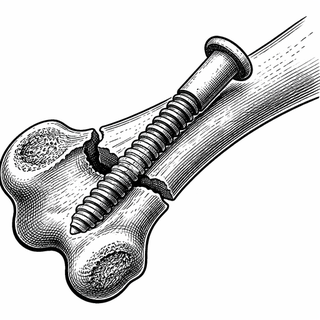
All images used in this post are decorative illustrations only and do not represent or reflect the accuracy, reality, or correctness of the referenced research.
Primary Source: Hardystonite bioceramic-endowed multifunctions of polylactic acid-based composites favourable for developing next-generation fixation implants. PubMed. https://pubmed.ncbi.nlm.nih.gov/41805048/