
Things are about to get weird: one of the more intriguing cancer trial ideas on the table right now is not a flashy new drug, but a smartwatch. Not the sort that nags you to stand up while you are already standing, but a device that might help researchers understand how patients are actually doing between clinic visits. That is the premise behind NCT07541365, a pilot study looking at wearable sensors and electronic patient-reported outcomes, or ePROs, in early phase oncology trials. Science has officially invited your wrist into the research team.
What this trial is actually testing
Let us pump the brakes right away. This study is not testing whether a smartwatch treats cancer. It does not. It is testing whether it is practical and acceptable to use wearable devices and app-based symptom reporting during Phase I cancer trials.
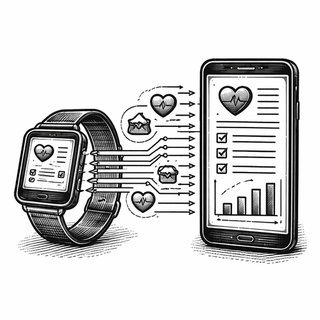
That distinction matters. Early phase oncology trials are usually about safety, dosing, side effects, and basic feasibility. They are where medicine asks, with admirable caution, "Can we do this without setting the room on fire?" In this case, the question is whether researchers can reliably collect useful digital health data from people already enrolled in early phase cancer studies.
According to the trial summary, this is a single-arm, prospective, unblinded pilot study at the Cleveland Clinic Novel Therapeutics Clinic. Participants are offered a smartwatch that works with their phone, helped through setup of a free study app, and then monitored using wearable sensor data plus ePROs. People who already own a compatible smartwatch may use their own device, which is practical and also a nice way to avoid turning the study into an accidental consumer electronics distribution program.
Primary study page: https://clinicaltrials.gov/study/NCT07541365
Table view: https://clinicaltrials.gov/study/NCT07541365?tab=table
Why this is interesting
Cancer treatment, especially in early phase trials, can be rough, unpredictable, and full of symptoms that do not politely wait for the next scheduled appointment. A patient may feel worse on Tuesday, somewhat better on Thursday, and be sitting in clinic the following week trying to summarize the whole experience from memory. Human memory is many things, but a high-resolution symptom sensor it is not.
That is where wearables and ePROs become interesting. A smartwatch can passively track things like activity, sleep, heart rate, and perhaps patterns that hint at fatigue or declining function. ePROs let patients report symptoms directly through an app, ideally closer to when those symptoms happen. In theory, that gives a richer, more real-time picture of what treatment is doing to a person outside the clinic walls.
And that "outside the clinic walls" part is the whole game. Traditional trial data often arrive in snapshots. Digital tools promise more of a continuous film reel. If that works, it could make side effect monitoring less dependent on memory, timing, and whether someone had the energy to describe a miserable weekend in a ten-minute appointment.
The sensible reasons to be skeptical
This is where the study earns points for asking a modest question first. Feasibility and acceptability are exactly the right places to start.
Because the hard part is not imagining the benefits. The hard part is whether patients will actually wear the device, keep the app running, complete symptom reports, deal with charging, syncing, notifications, software quirks, and the occasional cold indifference of Bluetooth. Any digital health idea that skips this part is basically writing checks that a battery percentage cannot cash.
There are also real scientific limitations built into this design. It is a pilot study. It is single-arm, so there is no comparison group. It is unblinded, which is not unusual here, but it does mean people know they are being monitored and may change behavior. Participants also need a compatible phone and enough comfort with technology to use the system. That introduces selection bias right out of the gate.
In other words, even if this study goes well, it will not prove that wearable monitoring improves survival, reduces hospitalizations, or transforms cancer care by next Tuesday. It will show whether the approach is workable enough to deserve bigger, more rigorous testing. That may sound less glamorous, but it is exactly how serious research is supposed to behave.
What problem this study is trying to solve
The problem is not a lack of data. Oncology has data coming out of its ears. The problem is that some of the most meaningful patient experience data are messy, intermittent, or easy to miss.
If a person in a Phase I trial is losing sleep, walking far less, feeling wiped out, or developing symptoms between visits, standard monitoring may catch that late or only partially. ePROs can fill in some gaps by letting patients report directly. Wearables might add passive context, especially when people are too exhausted to narrate every wobble in their day.
That combination could matter because side effects are not just laboratory events. They are lived experiences. A scan cannot tell you someone now needs a nap after folding one towel. A smartwatch might at least notice the pattern. Not perfect, not magical, but possibly useful.
What success would look like in the real world
If this pilot succeeds, the immediate impact is not "every cancer patient gets a smartwatch." The more realistic outcome is that future studies could build on this model to see whether remote monitoring helps clinicians spot trouble earlier, reduces unnecessary visits, or improves how side effects are captured in trials.
That could make trial data more patient-centered and maybe a bit more honest. Cancer treatment does not happen in neat little clinic boxes. It spills into kitchens, bedrooms, parking lots, and those 3 a.m. stretches when symptoms feel louder than they do under fluorescent office lights. A monitoring system that reflects real life has obvious appeal.
But here too, caution is healthy. More data are not automatically better care. Data need to be accurate, interpretable, and connected to action. If a smartwatch notices a patient is moving less, what then? Does the care team intervene? Is the signal meaningful, or did the person just binge-watch a detective series for six hours? The technology only helps if the clinical system around it knows what to do.
The bottom line
I like this study precisely because it is not overselling itself. The registry summary describes a careful pilot trying to answer a practical question: can wearable sensors and app-based symptom reporting fit into the already demanding world of early phase cancer trials?
That is a good question. It is timely, patient-focused, and grounded in the annoying realities of implementation. It also comes with enough caveats to keep the hype machine on a short leash. We should want that. Digital health has a long history of arriving with trumpets and leaving with password reset emails.
Still, if researchers can show that patients find this approach workable, and that the data are meaningful enough to support larger studies, this could become one small but useful step toward more responsive cancer trial care. Not a revolution. Not a cure. Just a smarter way of listening. In medicine, that can be a bigger deal than it sounds.
Disclaimer: This post is for educational purposes only and is based on the publicly provided summary of a clinical trial listing. It is not medical advice, and this study is evaluating feasibility and acceptability of monitoring tools, not proving treatment benefit.
Citation: ClinicalTrials.gov. Feasibility and Acceptability of Wearable Sensors and ePROs in Early Phase Clinical Trials (NCT07541365). Available at: https://clinicaltrials.gov/study/NCT07541365