
The most promising delivery system for brain drugs wasn't designed in a lab - it was designed by evolution, and it's been operating inside your skull this entire time.
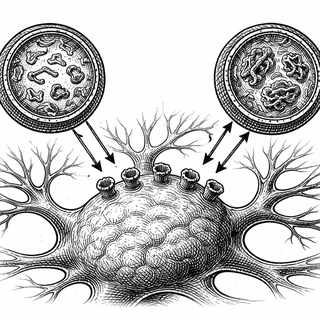
Meet small extracellular vesicles, or sEVs. These are teensy membrane-bound bubbles, roughly a thousand times smaller than a human hair, that your brain cells use to send molecular mail to each other. Think of them as the brain's internal postal service: neurons, astrocytes, microglia, and other neural residents constantly package up proteins, RNA, and other molecular cargo into these little lipid envelopes and ship them to neighboring cells. It's intercellular communication at its finest, and scientists are now figuring out how to hijack the system for medicine.
The Good, the Bad, and the Bubbly
Here's the twist that makes sEVs so fascinating - and a little terrifying. These tiny vesicles are double agents.
In neurodegenerative diseases like Alzheimer's and Parkinson's, sEVs appear to be part of the problem. They help spread toxic, misfolded proteins (like amyloid-beta and alpha-synuclein) from cell to cell, essentially acting as disease delivery trucks. It's like finding out the postal service has been distributing anthrax along with your birthday cards.
But flip the coin, and those same biological properties - the ability to cross the blood-brain barrier, target specific brain regions, and fuse seamlessly with neural cells - make sEVs extraordinarily attractive as drug delivery vehicles. A comprehensive new review published in 2025 lays out the case for why neural cell-derived sEVs might be the next great platform for treating the very diseases they help propagate (PubMed: 41937703).
Why "Neural" sEVs Are Having Their Moment
You might be wondering: haven't scientists already been studying extracellular vesicles for drug delivery? Yes, absolutely. Mesenchymal stem cell-derived sEVs (from bone marrow, fat tissue, and similar sources) have been the darlings of the field for years. But there's growing evidence that sEVs from actual brain cells might be significantly better at the job.
It makes intuitive sense. If you want to deliver a package to a house in a specific neighborhood, you'd rather use the local mail carrier who knows every address than a courier from three states away. Neural stem cells, neurons, astrocytes, microglia, oligodendrocytes, and brain endothelial cells all produce sEVs with molecular "return addresses" that the brain recognizes. This means better targeting, better uptake, and potentially better therapeutic outcomes.
Each cell type brings its own flavor to the table. Astrocyte-derived sEVs carry neuroprotective factors. Microglial sEVs play roles in immune regulation. Oligodendrocyte-derived vesicles carry myelin-related proteins. It's like having a fleet of specialized delivery trucks, each stocked with exactly the cargo a particular situation demands.
Crossing the Moat: The Blood-Brain Barrier Problem
One of the biggest headaches in neurology (pun intended) is getting drugs past the blood-brain barrier (BBB). This biological fortress protects the brain from toxins and pathogens, but it also keeps out roughly 98% of small-molecule drugs and virtually all large-molecule therapeutics. It's the reason so many promising Alzheimer's drugs work beautifully in a petri dish and then faceplant in clinical trials.
Neural cell-derived sEVs come pre-equipped with the molecular keys to cross this barrier. They've been doing it naturally as part of normal brain physiology. The review highlights multiple mechanisms by which these vesicles traverse the BBB and the blood-cerebrospinal fluid barrier, offering a biological shortcut that synthetic nanoparticles have spent decades trying to replicate with limited success.
Engineering a Better Bubble
Scientists aren't content to just use sEVs as nature made them. The field is now deep into engineering strategies to supercharge these vesicles. There are two main approaches:
Endogenous engineering involves modifying the parent cells (the cells that produce the sEVs) so they naturally load specific therapeutic cargo into their vesicles. You're essentially reprogramming the factory.
Exogenous engineering takes already-produced sEVs and loads them with drugs, RNA therapies, or other molecules after the fact. Think of it as intercepting the mail and stuffing something extra into the envelope before it gets delivered.
Both approaches are showing promising results in preclinical models of Alzheimer's and Parkinson's disease, with researchers reporting improved targeting precision and enhanced therapeutic performance.
Why This Matters for Health Equity
Neurodegenerative diseases don't affect everyone equally. Communities of color, rural populations, and low-income groups face disproportionate barriers to early diagnosis and treatment. Current Alzheimer's therapies like the newer anti-amyloid antibodies require specialized infusion centers, regular brain imaging for monitoring, and carry price tags that would make a Wall Street banker wince.
If sEV-based therapies eventually prove viable, they could offer several equity advantages. Biological vesicles are inherently biocompatible, potentially reducing the adverse effects that disproportionately burden patients with limited access to follow-up care. Their natural targeting ability could mean fewer doses and less intensive monitoring. And unlike antibody therapies that require cold-chain infrastructure, engineered sEVs might eventually offer more flexible storage and delivery options.
We're still years away from any of this reaching patients, but the foundational science is pointing in a direction that could democratize neurodegenerative disease treatment in ways current approaches simply cannot.
The Reality Check
Let's pump the brakes for a moment, because science communication without honesty is just advertising. The review is candid about the significant translational challenges that remain. Scaling up sEV production to pharmaceutical levels is hard. Standardizing quality control across different cell sources is harder. And navigating the regulatory landscape for a therapy that is, essentially, a biological package containing other biologicals? That's a bureaucratic puzzle that would stump a Rubik's cube champion.
There are also basic science questions still unanswered. How do you ensure consistent cargo loading? How do you prevent off-target effects? How long do therapeutic sEVs remain functional after administration? These aren't trivial concerns - they're the difference between a brilliant concept and an actual medicine.
Looking Forward
What makes this review particularly valuable is that it doesn't just catalog what we know - it maps out what we need to figure out. By integrating mechanistic biology with therapeutic engineering, the authors make a compelling case that neural cell-derived sEVs represent a "biologically informed and versatile platform" for next-generation neuro-nanomedicine.
Translation: the brain already has a perfectly good delivery system. Maybe we should stop trying to reinvent the wheel and start learning to drive the one that's already there.
This blog post discusses research findings and should not be taken as medical advice. If you have concerns about neurodegenerative diseases, please consult a healthcare provider. Research discussed here represents ongoing scientific investigation and clinical validation is still in progress.
All images used in this post are decorative illustrations only and do not represent or reflect the accuracy, reality, or correctness of the referenced research.
Primary Source: Small Extracellular Vesicles from Neural Cells: Physiological and Pathological Roles, and Potential in Neurodegenerative Therapy. 2025. PubMed: 41937703