
Once upon a time in a school district not so far away, administrators noticed something alarming: the mean comments didn't stop when the final bell rang. They followed kids home, pinged on their phones during dinner, and popped up at 2 AM when teenagers should have been sleeping. And sometimes, those digital daggers cut deep enough to make kids think about not being around anymore. This isn't a fairy tale, and there's no magic wand to make cyberbullying disappear. But there might be something almost as good: a digital intervention called Flourish that researchers are now testing in actual schools.
The Problem: When Your Bully Fits in Your Pocket
Here's what makes cyberbullying particularly nightmarish compared to traditional schoolyard bullying. You can't escape it. Back in the day (wow, I sound old), getting bullied meant surviving the school day and finding refuge at home. Now? Your tormentor has 24/7 access to you through your phone. The same device you use to talk to friends, watch videos, and occasionally pretend to do homework is also the delivery mechanism for relentless harassment.
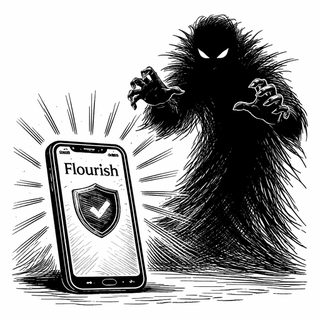
And the statistics are genuinely sobering. Studies show that cyberbullying victimization is associated with increased risk of suicidal thoughts, depression, and anxiety among adolescents. We're talking about middle and high school students, kids whose brains are still developing, trying to navigate the already-chaotic waters of adolescence while dealing with strangers (or worse, classmates) telling them the world would be better without them.
The traditional approach to suicide prevention in schools has typically involved school counselors, crisis hotlines, and reactive interventions after someone raises a red flag. These are absolutely necessary and save lives. But they often require a student to actively seek help, which, let's be honest, is like asking a teenager to voluntarily eat vegetables. It happens, but not as often as we'd like.
Enter Flourish: Digital Problems Meet Digital Solutions
This is where things get interesting. Researchers have developed Flourish, a digital suicide prevention intervention specifically designed for youth experiencing cyberbullying. The beauty of this approach is almost poetic: using technology to combat problems created by technology. It's like fighting fire with fire, except less destructive and more therapeutic.
The current study (NCT07506525, for you clinical trial nerds out there) is testing whether Flourish can actually work within the school environment. Not in a controlled university lab setting where everything is optimized and perfect, but in actual schools with actual teenagers who have actual lives full of homework, sports practice, and TikTok scrolling.
The intervention is being tested with middle and high school students who are experiencing both cyberbullying and suicide risk factors. The researchers want to know two main things: First, does it work? Do students actually feel better, experience less psychological distress, and have fewer suicidal thoughts? Second, can schools actually implement this? Will students use it regularly, and will schools have the resources and buy-in to make it happen?
Why This Matters (And Why I'm Genuinely Excited)
What makes this study particularly compelling is the feasibility component. The research team isn't just asking "does it work in theory?" They're asking "can we actually do this in the real world?" They're setting concrete benchmarks: 80% recruitment and retention rates, 80% of youth using Flourish at least weekly. These aren't pie-in-the-sky aspirations. They're saying, "If we can't hit these numbers, we need to know why and fix it."
The researchers are also conducting exit interviews and surveys with school personnel. Translation: they're actually listening to the teachers, counselors, and administrators who would need to implement this program. Anyone who's worked in or near schools knows that getting buy-in from overworked, underpaid, already-overwhelmed school staff is half the battle. A brilliant intervention that sits unused because nobody has time to implement it helps exactly zero students.
The Bigger Picture: Meeting Kids Where They Are
There's something almost radical about this approach when you think about it. For decades, we've been telling kids to put down their phones, disconnect, log off. And yes, digital detoxes have their place. But this intervention acknowledges a simple truth: teenagers are going to use their phones. Period. End of discussion. You can confiscate devices, you can set screen time limits, you can give impassioned speeches about the dangers of social media. They're still going to be online.
So instead of fighting that reality, Flourish works within it. If kids are going to have their phones with them constantly anyway, why not use that constant access for good? Why not deliver mental health support through the same medium where they're experiencing the harm?
The three-month follow-up period is also smart. Mental health interventions aren't like antibiotics where you take them for ten days and boom, problem solved. The researchers want to see if improvements in psychological distress and suicidal thoughts persist over time. Are we looking at a temporary band-aid or genuine healing?
What Success Could Look Like
Imagine if this works. Imagine schools across the country having a proven, feasible tool to help students who are being cyberbullied and experiencing suicidal thoughts. Imagine students being able to access support without having to walk into the counselor's office (which, let's face it, can feel like social suicide in some schools). Imagine reducing the burden on overwhelmed school mental health staff by providing students with evidence-based digital tools they can use independently.
We're potentially looking at scalable suicide prevention for one of the most vulnerable populations: adolescents experiencing online victimization. The digital nature means it could theoretically be deployed quickly and broadly once proven effective. No need to hire thousands of additional counselors (though we should do that too). No need for expensive infrastructure. Just phones that kids already have, delivering help when they need it.
The Road Ahead
Of course, we don't know yet if Flourish will meet its effectiveness and feasibility benchmarks. That's why we do research instead of just assuming things will work. But the fact that researchers are testing this in real-world school settings, with built-in feasibility assessments and stakeholder feedback mechanisms, makes me genuinely optimistic.
The intersection of cyberbullying and suicide risk is one of those modern problems that didn't exist a generation ago. We're still figuring out how to address it. Studies like this one represent our best hope: rigorous research, real-world testing, and a willingness to meet young people where they actually are rather than where we wish they'd be.
For more details about this clinical trial, visit: https://clinicaltrials.gov/study/NCT07506525 or check out the table view at https://clinicaltrials.gov/study/NCT07506525?tab=table
Disclaimer: This blog post is for informational and educational purposes only and is not intended as medical advice. The clinical trial described is ongoing, and results are not yet available. If you or someone you know is experiencing suicidal thoughts, please contact the National Suicide Prevention Lifeline at 988 or seek immediate help from a healthcare professional.
Source: ClinicalTrials.gov Identifier NCT07506525