
“You’re telling me someone artificially aged dental fillings and then checked whether gum cells were annoyed?”
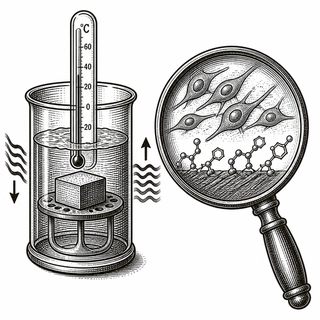
Yes. That is exactly what happened. Science occasionally sounds like a dental materials spa day run by a statistician with a clipboard. In this study, researchers compared three types of dental composites: conventional light-cured composite, CAD/CAM milled composite, and 3D printed composite. Then they put them through simulated aging and asked a very practical question: after wear, heat changes, and time-like stress, which materials still behave politely around human gum cells?
The short version: all three cleared the basic biological safety bar in this lab setting, but the 3D printed composite looked the most consistently cell-friendly. The light-cured material was more of a wildcard. The milled material sat somewhere in the middle, quietly stable, like the spreadsheet tab nobody notices because it never breaks.
The Setup: Three Materials Enter the Thermocycler
Dental composites are the tooth-colored materials used to restore, repair, or fabricate dental structures. They are not all made the same way.
Light-cured composites are shaped directly and hardened with a curing light. CAD/CAM milled composites are carved from pre-made industrial blocks. 3D printed composites are built layer by layer using digital manufacturing.
That manufacturing difference matters because dental materials are chemistry wearing a tiny lab coat. How completely the material polymerizes, how much unreacted monomer remains, and how its surface changes over time can affect how surrounding tissues respond.
To test this, the study used four aging stages:
- T0: unaged
- T1: 5,000 thermocycles
- T2: 10,000 thermocycles
- T3: 30,000 thermocycles
Thermocycling means repeatedly exposing the material to temperature changes, mimicking the thermal stress of daily oral life. Coffee, ice water, soup, repeat. The mouth is basically a tiny climate simulator with opinions.
What They Measured
The researchers used human gingival fibroblasts, which are connective tissue cells from the gums. These cells are a useful early signal for whether a dental material is behaving acceptably near soft tissue.
They measured several biological markers:
Cell viability: Were the cells still alive and functioning?
Live/dead microscopy: A visual check on cell survival.
Inflammation: Levels of interleukin-6, or IL-6, and prostaglandin E2, or PGE2.
Oxidative stress: Total antioxidant status, total oxidant status, and oxidative stress index.
Surface chemistry and degree of conversion: Measured with FTIR spectroscopy, which helps estimate how completely the resin chemistry hardened.
That last metric, degree of conversion, is especially interesting. In resin-based materials, higher conversion generally means more monomer units have joined the polymer network. Lower conversion can leave more unreacted components behind, and cells tend not to send thank-you notes when exposed to irritating leftovers.
The Big Number: Cell Viability Stayed Above 70%
All tested materials showed acceptable cell viability, defined here as greater than 70 percent. That is the first key data point.
So this was not a “one material is biologically disastrous” story. It was more subtle and more useful: all passed the broad viability threshold, but they did not perform identically once aging entered the equation.
The light-cured composite showed the greatest variability in biological performance, especially after artificial aging. Variability matters. In data terms, a material with an acceptable average but wide swings can still be less reassuring than one that behaves consistently across stress conditions.
The CAD/CAM milled composite showed moderate but stable biological behavior. It did not dominate every category, but it also did not seem to wobble dramatically.
The 3D printed composite had the most favorable profile in this specific study: highest cell viability, lowest inflammatory markers, and lowest oxidative stress markers.
That is a clean pattern. Not a clinical verdict, not a universal ranking of every dental material on Earth, but a notable signal.
Inflammation and Oxidative Stress: The Cell Complaint Department
Inflammatory markers like IL-6 and PGE2 are useful because they tell us whether cells are acting irritated. Oxidative stress markers add another layer, showing whether the cellular environment is shifting toward chemical stress.
In this study, the 3D printed composite was associated with lower inflammatory and oxidative stress signals compared with the other tested materials. That suggests the cells had fewer biochemical reasons to wave tiny red flags.
The light-cured composite, again, was the more unpredictable one after aging. That does not mean light-cured composites are bad as a category. It means this tested material, under these lab conditions, showed more variable biological behavior.
This is where the data scientist brain starts tapping the table: average performance is helpful, but stability across simulated time is where the plot gets interesting.
Why Manufacturing Method Matters
The FTIR findings help connect the biological results to material chemistry. The 3D printed and milled composites showed higher and more consistent degree-of-conversion values than the light-cured composite.
That matters because incomplete polymerization can increase the chance of residual monomer release. Residual monomers are not automatically catastrophic, but they can influence cytotoxicity, inflammation, and oxidative stress. Think of polymerization like baking bread: fully baked is predictable; underbaked leaves questions. Nobody wants a restoration with a soggy middle, chemically speaking.
CAD/CAM blocks are often industrially polymerized under controlled conditions, which can make their structure more consistent. 3D printed materials depend heavily on resin chemistry, printer settings, post-curing, and workflow. In this paper, the tested printed material did well, but the researchers are careful about the broader implication: newly developed 3D printed materials are not interchangeable. A different resin or printing protocol could produce a different biological profile.
That caveat is not academic throat-clearing. It is the map legend.
Why This Research Is Interesting
Dental materials have to be strong, aesthetic, workable, and biologically acceptable. That is already a demanding job description for something smaller than a popcorn kernel.
As digital dentistry expands, more restorations and appliances are being milled or printed. These methods offer precision and workflow advantages, but the biological side cannot be assumed. A restoration that looks great on a scan still has to get along with living tissue.
This study adds useful comparative data. It suggests that, at least for the materials tested, digital manufacturing methods may offer more stable biological behavior after aging than a conventional light-cured composite. The 3D printed material’s performance is especially notable because 3D printing is moving fast in dentistry, and fast-moving technologies have a habit of arriving with both promise and fine print.
What This Does Not Prove
This was an in vitro study, meaning it happened in a controlled lab environment, not inside patients. Human gingival fibroblasts are relevant, but the mouth is more complex. Saliva, enzymes, bacteria, chewing forces, pH changes, hygiene habits, and restoration shape all join the party.
Artificial aging is useful, but it is still a model. Thirty thousand thermocycles can simulate aspects of aging, but it cannot reproduce every variable in years of oral use.
Also, the findings apply to the specific materials tested. “3D printed composite” is not one single thing. It is a whole category with different chemistries, printers, curing protocols, and manufacturer instructions. Treating all printed composites as identical would be like ranking all soups based on one excellent bowl of tomato bisque.
The Practical Takeaway
The numbers say all three tested dental composite types maintained acceptable cell viability above 70 percent. But when the study looked beyond survival into inflammation, oxidative stress, and polymerization efficiency, the 3D printed composite showed the most favorable biological pattern. The milled composite looked stable. The light-cured composite showed more variability after aging.
For clinicians, researchers, and dental material developers, the useful message is not “printing wins forever.” It is sharper than that: manufacturing method and material chemistry can measurably affect biological behavior, especially after aging stress.
For patients, the takeaway is even simpler. The materials used in modern dentistry are being evaluated not just for how they look or how long they last, but for how surrounding cells respond to them over time. That is a good direction for the field, even if the road there involves many small resin disks being thermally tortured for the greater good.
This blog post discusses research findings and should not be taken as medical advice. If you have concerns about dental restorations, dental materials, or oral tissue reactions, please consult a qualified dental professional. Research discussed here represents ongoing scientific investigation and clinical validation is still in progress.
All images used in this post are decorative illustrations only and do not represent or reflect the accuracy, reality, or correctness of the referenced research.
Primary Source: Evaluation of biological properties of the light-cured, CAD/CAM milled, and 3D printed dental composites after artificial aging - an in vitro study. PubMed Record ID: 41500851. PubMed