
A good hydrogel is a bit like a perfectly cooked noodle: soft, flexible, full of water, and very unhappy when frozen solid. Leave pasta in the freezer without a plan and dinner gets weird. Leave a biomedical material in freezing conditions without protection and sensors can crack, tissues can suffer, and delicate cells may not survive the icy drama. That is where antifreezing hydrogels enter the kitchen, wearing a tiny lab coat and politely asking ice crystals to calm down.
A recent review, “Antifreezing hydrogels for biomedical applications from design strategies to emerging multifunctionality,” looks at how scientists are designing water-rich gels that stay flexible, conductive, and biologically friendly even below freezing. That may sound niche, but cold is not rare in health care. It shows up in cryopreservation, transplant logistics, wearable devices used in harsh climates, tissue engineering, and future bioelectronics that may need to work outside cozy room-temperature labs.
For communities with fewer resources, this kind of materials science could matter more than it first appears. Cold-chain failures, limited access to specialized storage, extreme weather exposure, and long transport distances can all widen health inequities. If better materials help preserve cells, tissues, medicines, or diagnostic tools more reliably, the benefits could reach far beyond high-tech hospitals.
Why Hydrogels Freeze Like Tiny Water Balloons
Hydrogels are networks of polymers that hold large amounts of water. That makes them useful in biomedical work because they can resemble soft tissue, carry biological molecules, conduct signals when designed properly, and interact gently with living systems.
The downside is right there in the water. When temperatures drop, water forms ice crystals. In a living cell or soft material, ice is not just inconvenient. It can puncture structures, disrupt chemistry, reduce flexibility, and block electrical performance. Imagine trying to use a smartphone after replacing its circuits with peanut brittle. The warranty department would have questions.
Traditional cryoprotective agents can help reduce freezing injury, but they may bring toxicity, handling challenges, or performance limits. Antifreezing hydrogels aim to solve the problem at the material level by controlling how water behaves inside the gel.
How Scientists Teach a Gel Not to Freeze
The review describes several design strategies, and the common theme is clever molecular crowd control.
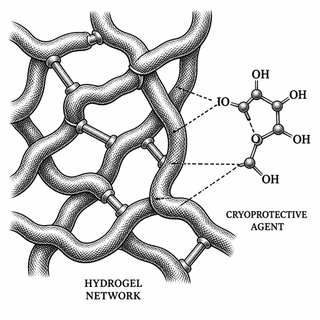
One approach is adding cryoprotective agents, substances that interfere with ice formation and help keep water from organizing into damaging crystals. Another is polymer network engineering, where researchers adjust the structure of the gel itself so water is held, distributed, or bonded in ways that make freezing harder.
Crosslinking also matters. Crosslinks are the bridges that connect polymer chains. By changing these bridges, scientists can tune softness, strength, stretchiness, and stability. Some hydrogels use dynamic or supramolecular bonds that can break and reform, giving the material self-healing behavior. In plain language: the gel can take some abuse and patch itself up, which is a skill many of us would appreciate after a Tuesday.
The most exciting part is that antifreezing is no longer the only trick. Newer hydrogels may also sense strain, respond to temperature, conduct electrical signals, or support biosensing. A material that stays soft in the cold and also tracks movement or physiology could become very useful in wearable health technologies.
Cold-Weather Wearables and Health Equity
Wearable sensors are often designed as if every patient lives in a climate-controlled brochure. Real life is messier. Outdoor workers, unhoused people, rural patients, military personnel, older adults in poorly heated homes, and people living in Arctic or high-altitude regions may face cold exposure that makes conventional flexible electronics less reliable.
Cold-adaptive hydrogel bioelectronics could help create wearable sensors that continue working when temperatures fall. These could monitor movement, temperature, pressure, hydration, or other health signals. For people with chronic conditions, remote monitoring can reduce travel burdens and help clinicians catch problems earlier.
That matters for equity. A wearable that only works well in ideal conditions is not really universal. It is a fair-weather friend with a charging cable. Materials that tolerate cold could help health tools work in more places, for more people, with fewer assumptions about the environment.
Cryopreservation: Keeping Cells Safe for the Long Trip
Cryopreservation is another major area discussed in the review. This is the process of preserving cells, tissues, or biological samples at very low temperatures. It is central to fertility care, regenerative medicine, stem cell research, biobanking, transplant science, and vaccine or biologic storage.
The challenge is ice. Antifreezing hydrogels may help suppress ice nucleation, reduce intracellular ice formation, and better preserve biological function. In the long run, that could improve how fragile biological materials are stored and transported.
The equity angle is significant. Advanced therapies often cluster around wealthy urban medical centers. If preservation technology becomes more robust, it may become easier to transport biological materials safely over longer distances. That could help smaller clinics, rural hospitals, and regional labs participate in care models that currently require expensive infrastructure.
This is not a magic fix. Cost, manufacturing, regulation, and training all matter. But better materials can remove one stubborn barrier from the pile, and in public health, removing barriers is basically cardio.
Tissue Engineering in the Deep Chill
Tissue engineering tries to build or repair tissues using cells, biomaterials, and biochemical signals. Hydrogels are already widely studied here because they can mimic soft biological environments. Antifreezing properties could expand what these materials can survive during storage, transport, or use in cold-exposed settings.
For engineered tissues or cell-laden scaffolds, maintaining structure and cell viability is everything. If antifreezing hydrogels can reduce ice damage while staying biocompatible and degradable, they may help make advanced tissue products more practical.
Still, the road from promising material to clinical tool is long. Researchers need to show safety, durability, reproducibility, and meaningful performance in biological systems. A hydrogel that looks heroic in the lab still has to behave under real-world clinical conditions, where the paperwork alone could freeze a lesser substance.
What Still Needs Work
The review is optimistic, but it does not pretend the field is finished. Antifreezing hydrogels remain relatively underexplored. Several questions still need strong answers.
Biocompatibility is a major one. Materials intended for biomedical use must avoid toxicity, inflammation, or unwanted immune effects. Degradability also matters, especially for implanted or tissue-facing applications. Long-term stability is another challenge. A material may survive one freeze-thaw cycle, but clinical reality may demand repeated stress, storage, sterilization, transport, and use.
There is also the issue of multifunctionality. Combining antifreezing behavior with conductivity, stretchability, sensing, self-healing, and biological compatibility is a lot to ask from one gel. At some point the material may want to unionize. Researchers will need to balance these properties carefully so one feature does not undermine another.
Why This Research Is Worth Watching
The promise of antifreezing hydrogels is not just that they resist cold. It is that they could help biomedical tools become more resilient. In health equity terms, resilience matters because fragile systems often fail first for people who already face the biggest access barriers.
A more cold-tolerant biosensor could support patients in harsh climates. A better cryopreservation material could make cell-based therapies easier to move. A flexible low-temperature circuit could support health monitoring in workplaces or communities where conventional devices struggle. Better storage and transport materials could reduce waste and improve reliability across long supply chains.
This is early-stage science, especially for clinical translation. But it points toward a future where advanced biomedical technologies do not need perfect conditions to function. That is a public health goal worth taking seriously, even if the star of the show is a squishy gel with impressive winter survival skills.
This blog post discusses research findings and should not be taken as medical advice. If you have concerns about cold exposure, tissue preservation, wearable sensors, or related medical technologies, please consult a healthcare provider. Research discussed here represents ongoing scientific investigation and clinical validation is still in progress.
All images used in this post are decorative illustrations only and do not represent or reflect the accuracy, reality, or correctness of the referenced research.
Primary Source: Antifreezing hydrogels for biomedical applications from design strategies to emerging multifunctionality. PubMed Record ID: 41551757. PubMed