
Note to self: when a metal alloy starts sounding more emotionally available than half the oncology drug pipeline, pay attention. In this new PubMed-indexed study, researchers examined magnesium-related alloys for hepatocellular and pancreatic cancer, and one aluminum-magnesium alloy emerged as the standout candidate. That is not a sentence I expected to write before coffee, yet here we are, watching a degradable metal behave like a tiny therapeutic dinner guest: polite enough to break down, but apparently willing to make the tumor uncomfortable while it is there.
Why Liver and Pancreatic Cancers Need New Ideas
Hepatocellular carcinoma, the most common form of primary liver cancer, and pancreatic cancer are both notoriously difficult diseases. They are often diagnosed late, resist treatment with impressive stubbornness, and have clinical outcomes that make oncologists stare quietly at walls between clinic visits.
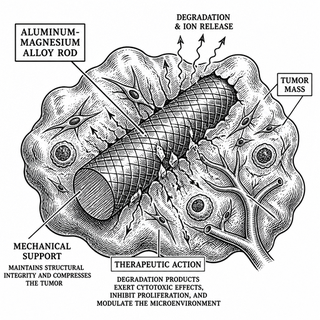
Part of the difficulty is anatomical. Tumors in the liver, bile ducts, pancreas, and pancreatic duct region can obstruct important drainage pathways. In real-world practice, stents are often used to keep ducts open, reduce jaundice, improve symptoms, and allow other treatments to proceed. But stents are usually mechanical helpers. They are the traffic cones of medicine: useful, necessary, and rarely accused of having a rich inner life.
This is where biodegradable magnesium-based materials become interesting. Magnesium alloys have already attracted attention for medical devices because they can be biocompatible, mechanically useful, and degradable over time. In theory, a stent made from such material might support a duct when needed and then gradually disappear, rather than settling in like an unwanted houseguest with a lease.
The twist in this study is that the alloy may not merely sit there. It may have antitumor activity.
The Study in Plain English
The researchers systematically tested a panel of magnesium-related alloy powders, looking at their physical and chemical behavior as well as their anticancer effects. Among the tested materials, an aluminum-magnesium alloy showed the strongest antitumor activity.
The study then compared aluminum-magnesium rods with pure magnesium. According to the abstract, the Al-Mg rods had stronger antitumor efficacy and more controllable degradation than pure Mg.
That second part matters. In biodegradable metals, degradation is not a minor detail. If a device dissolves too fast, it may fail mechanically or produce an overly intense local chemical reaction. If it dissolves too slowly, the whole “biodegradable” pitch starts sounding like a gym membership purchased in January. Controllable degradation is the boring-sounding engineering feature that may decide whether a material can ever become clinically useful.
What Does “Metabolic Reprogramming” Mean?
Cancer cells do not merely grow. They remodel their metabolism to support growth, invasion, survival, and resistance to stress. A tumor cell is less like a normal cell with bad manners and more like a factory that has rerouted its power grid, supply chain, and waste disposal system to maximize production.
“Metabolic reprogramming” refers to changing those altered energy and nutrient pathways. If a material can disrupt the metabolic habits cancer cells rely on, it may weaken them or make them more vulnerable to other therapies.
The abstract does not give all mechanistic details, so we should avoid pretending we have the full symphony when we have been handed the program notes. Still, the phrase suggests that the Al-Mg alloy may alter the tumor environment or cellular metabolism in ways that suppress cancer cell survival. That is biologically interesting because local devices, such as stents, sit directly in the neighborhood where tumors are causing trouble.
Why a Stent With Antitumor Effects Would Be a Big Deal
For pancreatic and biliary cancers, stents are often placed because tumors compress or invade ducts. Current stents can relieve obstruction, but they do not generally treat the cancer itself. A stent that also exerts local antitumor pressure would be a different category of tool.
Imagine replacing a passive roadblock support with a scaffold that keeps the duct open while making nearby tumor cells question their life choices. Medicine is full of combination strategies, but this one is especially appealing because it could pair mechanical function with local biological activity.
Potential advantages, if later studies support them, could include:
- Localized treatment effect near the tumor
- Reduced need for permanent implanted material
- Better control over device breakdown
- Possible compatibility with existing endoscopic or interventional approaches
- A new platform for treating duct-involving cancers
That said, “if later studies support them” is doing a lot of work in that sentence. Biomedical research has a long and distinguished history of making mice look cured and humans look unimpressed. The translational road is not short.
The Aluminum Question
Some readers may reasonably pause at the word “aluminum.” Magnesium sounds wholesome, almost nutritional. Aluminum sounds like cookware, airplanes, and internet arguments.
In alloy form, however, materials behave differently than their individual elements in isolation. Medical biomaterials are judged by their chemistry, degradation products, local tissue effects, mechanical performance, and safety profile. The relevant question is not whether aluminum exists in the alloy, but whether the alloy releases components in a controlled, safe, and therapeutically useful way.
This is precisely why degradation behavior matters. A promising alloy needs to be strong enough, predictable enough, and biologically tolerable enough to survive the awkward transition from laboratory curiosity to medical device candidate.
What We Still Need to Know
The abstract reports a strong candidate and promising antitumor effects, but many questions remain.
How durable is the effect across different tumor models? How does the alloy behave in living tissue over time? What degradation products are produced, and at what concentrations? Does the immune system help, hinder, or complicate the antitumor response? Could this material be formed into clinically practical stents for biliary and pancreatic ducts? And, naturally, can it do all of that without irritating surrounding tissue like a guest who brought a trumpet to a dinner party?
We also need to know whether the antitumor effect is selective enough. Many cancer therapies fail not because they cannot hurt cancer cells, but because they hurt normal tissue with similar enthusiasm. A local biodegradable alloy may help focus the effect, but safety testing will be central.
Why This Research Is Intriguing
What makes this study compelling is not just that an Al-Mg alloy showed antitumor activity. It is the combination of properties: anticancer effect, metabolic impact, and more controlled degradation than pure magnesium.
That pairing hints at a future device that is not merely structural. In oncology, we often separate tools into categories: surgery cuts, drugs poison, radiation burns, stents prop things open. Biology, being rude to our filing system, does not always respect those categories. A degradable alloy with therapeutic behavior blurs the boundary between device and treatment.
For patients with hepatocellular or pancreatic cancer, any future impact would depend on years of further development. But the concept is attractive: a locally placed material that supports anatomy while interfering with tumor biology. That is the sort of practical elegance clinicians tend to like, even if we pretend to be too serious to say so.
The Bottom Line
This study identifies an aluminum-magnesium alloy as a promising magnesium-related material with antitumor effects in hepatocellular and pancreatic cancer models, along with more controllable degradation than pure magnesium. The research is early, but it raises a genuinely interesting possibility: future biodegradable stents or local implants that do more than provide structural support.
For now, this is not a treatment patients can request, and it is not evidence that metal stents cure cancer. It is a strong preclinical signal worth following, which in science is the closest thing we get to a cliffhanger without violating a grant reporting deadline.
This blog post discusses research findings and should not be taken as medical advice. If you have concerns about liver cancer, pancreatic cancer, biliary obstruction, or pancreatic duct obstruction, please consult a healthcare provider. Research discussed here represents ongoing scientific investigation and clinical validation is still in progress.
All images used in this post are decorative illustrations only and do not represent or reflect the accuracy, reality, or correctness of the referenced research.
Primary Source: A promising magnesium-related alloy with metabolic reprogramming and antitumor effects in hepatocellular and pancreatic cancer. PubMed Record ID 41536919. https://pubmed.ncbi.nlm.nih.gov/41536919/