
Choose your own nanomedicine future. In one timeline, drug delivery is a messy courier network where particles wander the body like tourists without cell service. In the other, scientists tune tiny rod-shaped viral particles with the precision of a spreadsheet filter, adjusting length, shape, and surface chemistry until the delivery route starts looking much less chaotic. The review “Strategies for controlled assembly of rod-shaped viral particles” is about pushing us toward that second timeline, where the nanoscale logistics department finally gets a dashboard.
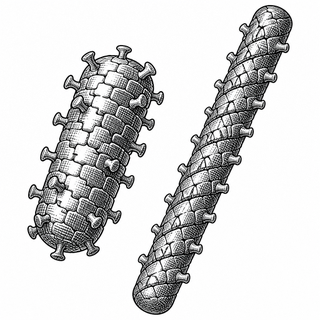
Nanoparticles already have a strong medical pitch: they are small, customizable, and capable of carrying therapeutic cargo into biological spaces that ordinary drugs may struggle to reach. But the actual numbers game is unforgiving. Size changes how particles circulate. Shape changes how cells notice them. Surface chemistry changes what tissues they interact with. A few nanometers here or a different charge pattern there, and the whole biodistribution map can start behaving like a toddler with a marker.
That is why rod-shaped viruses and virus-like particles, or VLPs, are so interesting. They offer something synthetic nanoparticles often struggle to guarantee: uniformity. In data terms, they are closer to a tight distribution than a noisy scatterplot. And in medicine, tight distributions are lovely because biology already supplies enough variance without the materials adding extra drama.
Why Rod-Shaped Particles Get So Much Attention
Synthetic nanoparticles can be powerful, but they often bring baggage: toxicity concerns, inconsistent batches, biocompatibility problems, and manufacturing variability. Naturally derived particles can sometimes start with better baseline stats. Viral particles evolved to assemble efficiently, interact with biological systems, and form repeatable structures. That does not mean they are automatically safe or ready for the clinic, but it does mean researchers are not starting from zero.
Rod-shaped viruses and VLPs add another useful feature: geometry. A sphere is simple. A rod is directional. That directional shape can affect how particles move through tissues, how long they remain in circulation, and how cells take them up. Aspect ratio, the relationship between length and width, becomes more than a shape descriptor. It becomes a control knob.
For a data scientist, this is the fun part. You can think of each particle as a feature vector: length, diameter, surface charge, cargo capacity, coating, stiffness, and biological identity. Change one variable, measure the output, repeat. Somewhere in that matrix may be a better drug carrier, imaging agent, vaccine platform, or tissue-targeting tool.
Assembly Is the Real Control Panel
The review focuses on strategies for controlled assembly. That phrase sounds tidy, but the underlying challenge is wonderfully fussy. Viral particles assemble through molecular interactions among coat proteins, genetic material, and the surrounding chemical environment. Researchers want to steer that process without breaking the very properties that make these particles useful.
One strategy is genetic modification of coat proteins. Coat proteins are the repeating units that form the particle shell. By altering them, scientists may influence how particles assemble, how long they become, or what molecules can be attached to their surface. This is a little like changing the shape of individual Lego bricks and hoping the final spaceship still looks intentional.
Another strategy is RNA scaffold engineering. Many rod-shaped viral structures assemble around nucleic acid templates. If the RNA scaffold helps determine particle length or organization, then engineering that scaffold gives researchers another route to tune the final architecture. Instead of only changing the outer shell, you adjust the internal guide.
A third strategy involves physicochemical conditions: pH, ionic strength, temperature, concentration, and other solution variables. These may sound like background details, but at nanoscale they can be the difference between elegant rods and molecular confetti. Assembly is not just “mix ingredients and wait.” It is more like running a very small, very opinionated manufacturing line.
The Nanomedicine Payoff
So why care whether these particles assemble into controlled rods instead of slightly less controlled rods? Because shape and composition influence what happens in the body.
Nanoparticle accumulation depends on circulation, tissue penetration, immune recognition, cellular uptake, and clearance. Each step filters particles based on physical and biochemical traits. A tunable rod-shaped VLP could, in theory, be optimized for a specific job: carry a drug, display an immune-stimulating molecule, target a tissue, or avoid rapid removal.
The review highlights that rod-shaped VLPs are relatively easy to functionalize on their surfaces. That matters because targeting molecules, therapeutic payloads, imaging agents, or immune cues can potentially be attached in organized ways. In a field where “close enough” can mean “the liver got most of it again,” surface control is not cosmetic. It is part of the performance model.
There is also the matter of monodispersity, which means particles are very similar in size and shape. This may not sound glamorous, but it is the kind of boring excellence that makes experiments interpretable. If every particle in a batch is a different size, analyzing results becomes like trying to calculate average commute time for cars, bicycles, helicopters, and one suspiciously fast skateboard.
What the Numbers Actually Want
The big pattern here is that nanomedicine keeps moving from “can we make a particle?” to “can we make the same particle, on purpose, with the properties we intended?” That shift is a measurement problem, an engineering problem, and a biology problem all at once.
Controlled assembly lets researchers ask sharper questions. Does a longer rod accumulate differently than a shorter one? Does a modified coat protein change cellular uptake? Does one RNA scaffold produce a more useful morphology than another? These are testable comparisons, and testable comparisons are where science stops waving its arms and starts producing useful plots.
The review does not claim that rod-shaped VLPs are a finished clinical solution. Rather, it maps the available assembly strategies and points out where the field still needs better tools. Current methods can tune morphology, aspect ratio, and composition, but translating those capabilities into reliable nanomedicine is still a work in progress.
That gap matters. The body is not a clean test tube with polite boundaries. It is a crowded, wet, immune-surveilled environment where nanoparticles encounter proteins, cells, barriers, enzymes, and clearance systems. Any platform intended for therapy has to survive that gauntlet and still do something useful at the end. Biology grades on a curve, but not a generous one.
The Challenges Ahead
Several issues remain. Safety has to be evaluated carefully, especially when using particles derived from viral systems, even if they are virus-like and not infectious. Manufacturing must be scalable and reproducible. Cargo loading needs to be efficient. Targeting must work in living systems, not just in beautiful microscopy images. And immune responses can be either the point, as in vaccines, or the problem, as in repeated drug delivery.
There is also the optimization trap. When a system has many adjustable variables, it becomes tempting to tune everything at once. That can produce impressive-looking complexity and very little clarity. The better path is systematic: change defined parameters, measure biological outcomes, build models, validate them, and resist the urge to name every nanoparticle formulation like it is a racehorse.
Still, the direction is promising. Rod-shaped VLPs sit at a useful intersection: biologically compatible architecture, controllable assembly, surface programmability, and tunable geometry. If researchers can connect assembly rules to in vivo behavior, these particles could become more predictable tools for targeted delivery and other medical applications.
A Small Shape With a Large Parameter Space
What makes this review intriguing is not that rod-shaped viral particles are tiny. Lots of things are tiny. The interesting part is that their smallness comes with structure, repeatability, and knobs researchers can actually turn.
In practical terms, controlled assembly could help transform rod-shaped VLPs from fascinating biological objects into programmable nanomedicine platforms. That is the long game: not just making particles, but making particles whose behavior can be predicted, optimized, and trusted.
For now, the field is still building the map. But the coordinates are getting better: coat protein engineering, RNA scaffold design, solution-condition tuning, morphology control, and biological testing. The spreadsheet is not complete yet, but at least the columns are starting to make sense.
This blog post discusses research findings and should not be taken as medical advice. If you have concerns about treatments involving nanoparticles, drug delivery systems, or viral particle-based technologies, please consult a healthcare provider. Research discussed here represents ongoing scientific investigation and clinical validation is still in progress.
All images used in this post are decorative illustrations only and do not represent or reflect the accuracy, reality, or correctness of the referenced research.
Primary Source: “Strategies for controlled assembly of rod-shaped viral particles.” PubMed. https://pubmed.ncbi.nlm.nih.gov/41621496/