
The clock is ticking, the lab benches are roaring, and hyaluronic acid has the ball. It slips past immune rejection, pivots around poor drug absorption, eyes the CD44 receptor, and launches a controlled-release shot from the hydrogel line. The crowd, composed mostly of polymer chemists and one very intense pipette, goes wild.
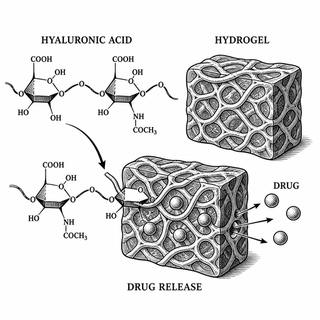
That is roughly the energy behind a new review on hyaluronic acid-based control and target delivery systems. The paper pulls together how this familiar biological molecule is being turned into a surprisingly versatile delivery platform for medicine, tissue repair, skin delivery, nutraceuticals, and even food science. Not bad for a substance many people mostly know from skincare bottles and joint injections.
Hyaluronic acid, or HA, is a natural polysaccharide found throughout the body, especially in connective tissue, skin, joints, and the extracellular matrix. It helps tissues stay hydrated, flexible, and structurally organized. In everyday terms, it is part cushion, part sponge, part molecular logistics coordinator. Biology loves a multitasker.
Why HA Makes Scientists Lean Forward
Drug delivery is one of medicine’s great annoyances. A treatment may work beautifully in a dish but behave like a lost tourist once it enters the body. It can break down too soon, spread where it should not, fail to cross barriers, irritate tissues, or require doses high enough to make side effects stomp into the room wearing boots.
HA helps address several of these problems at once.
First, it is biocompatible. Because the body already knows HA, it is less likely to treat it like an intruder. Second, HA has useful physical behavior. The review highlights its shear-thinning properties, meaning HA-based gels can become less viscous under force. That matters for injectables. A material can pass through a needle more easily, then regain structure once placed in tissue. A tiny bit like ketchup, except more elegant and less likely to ruin your shirt.
Third, HA can help with targeting. Many cells express a receptor called CD44, which binds HA. Some cancer cells overexpress CD44, making HA an attractive carrier for therapies intended to find tumors more precisely. The dream is not just “drug goes in body.” The dream is “drug goes where needed, hangs around long enough, and does not cause needless drama elsewhere.”
The Delivery Toolbox
The review describes HA-based systems in several forms, each with a different job.
Hydrogels are one major category. These water-rich networks can hold drugs, cells, or bioactive molecules and release them over time. HA-based hydrogels are being studied for targeted cancer therapy and bone defect repair. In bone regeneration, a good delivery material needs to provide structure, support healing signals, and then politely step aside as new tissue forms. It is less construction worker, more temporary scaffolding with excellent manners.
Some of these hydrogels can be 3D printed. That opens the door to responsive structures shaped for specific tissue defects or drug-delivery needs. A printed HA hydrogel might be designed to release a therapy in response to local conditions, such as pH, enzymes, temperature, or other biological cues. This is where materials science starts looking suspiciously like a tiny programmable pharmacy.
Microneedles are another route. HA microneedles can help deliver actives through the skin without relying on traditional injections. They are small enough to reduce discomfort, but structured enough to cross the skin barrier. For transdermal delivery, that is a big deal. Skin is excellent at its job, which is to keep outside things outside. Unfortunately, medicines are often outside things.
The review also points to HA nanoemulsions, which can improve transdermal absorption. Nanoemulsions are mixtures where tiny droplets help carry compounds that might otherwise have poor solubility or limited penetration. In plain language, they can help difficult ingredients travel better.
Injectable HA hydrogels also remain important for soft tissue augmentation. HA is already well known in dermatology and aesthetic medicine, but the review frames this area as part of a broader controlled-delivery landscape, including possible nutraceutical uses. That word can cover a wide terrain, so the scientific caution flag should stay visible. Preferably neon.
Cancer, Bone, Skin, and the Food Aisle
One of the most interesting parts of the review is how widely HA systems are being explored.
In cancer therapy, HA carriers may help direct drugs toward CD44-rich tumor cells. This does not magically solve cancer treatment, of course. Tumors are not passive targets sitting nicely under a spotlight. They evolve, resist, hide, and generally behave like bad roommates. Still, targeted delivery could reduce off-target toxicity and improve local drug concentration if the systems perform well in clinical settings.
For bone defects, HA-based hydrogels and 3D-printed materials may support regeneration by creating a favorable microenvironment. Bone healing is not just mineral replacement. It involves cells, signaling molecules, blood vessels, matrix remodeling, and mechanical forces. A smart HA scaffold may help organize some of that biological choreography.
For skin delivery, microneedles and nanoemulsions could improve how actives cross the outer skin barrier. This has implications for therapeutics, wound care, cosmetics, and possibly vaccines or biologics, depending on future development.
Then comes the food industry, where HA is being tested in microcapsules and emulsions. HA-gelatin layer-by-layer microcapsules may help probiotics survive stressful conditions and improve antioxidant capacity. That matters because probiotics have a hard commute. Stomach acid is not exactly a spa retreat.
HA-based Pickering emulsions may also improve curcumin stability, digestibility, and bioavailability. Curcumin, the yellow compound associated with turmeric, is famous for looking promising in lab studies and then being awkwardly difficult for the body to absorb. Delivery systems are one way researchers try to narrow that gap.
The “Goalkeeper” Future
The review describes future HA delivery systems in a “goalkeeper” style. It is a useful metaphor. A smart delivery platform should let the right molecules through at the right time, block premature release, respond to local signals, and protect its cargo until the moment matters.
That could mean multifunctional HA systems that combine targeting, controlled release, imaging, tissue support, and responsiveness in one package. It could also mean localized and sustained gene delivery. Gene-based therapies often need careful delivery because nucleic acids are fragile, charged, and prone to degradation. They also need to reach the right cells without causing a body-wide alarm.
Localized sustained delivery is especially appealing. Many therapies would be safer and more effective if they acted mainly at the disease site. A treatment that stays local can sometimes use less drug, reduce systemic side effects, and maintain useful concentrations longer. The body appreciates subtlety, even if it rarely sends a thank-you note.
The Catch, Because Biology Always Adds One
HA is promising, but not automatically safe in every new format. The review stresses that safety assessments need careful attention for emerging HA-based systems.
That caution matters. A material can be biocompatible in one context and behave differently when chemically modified, printed into a scaffold, loaded with drugs, made into nanoparticles, or paired with other polymers. Size, charge, degradation rate, dose, route of delivery, and immune effects all matter. The phrase “natural material” should not be treated as a permission slip from the universe.
There are also manufacturing questions. Can these systems be made reproducibly? Can drug release be controlled batch after batch? Do they remain stable in storage? Can they scale? Can regulators evaluate them clearly when they combine device-like, drug-like, and biologic-like features?
These are not small details. They are the difference between a clever laboratory platform and something that can help actual patients.
Why This Review Matters
The appeal of HA-based delivery systems is not one single breakthrough. It is the pattern. HA keeps showing up wherever researchers need a carrier that is friendly to tissues, tunable, injectable, printable, targetable, or able to protect delicate cargo.
That makes this field worth watching. The most exciting future is not HA as a lone miracle material. It is HA as a backbone for smarter systems: hydrogels that respond to tissue signals, microneedles that improve skin delivery, microcapsules that help probiotics survive digestion, and targeted carriers that give cancer drugs better directions.
In the championship broadcast of biomaterials, HA is not the loudest player. It does not dunk from half court. It quietly reads the defense, moves the payload, and keeps the release schedule under control. Honestly, in biomedical engineering, that is how dynasties are built.
This blog post discusses research findings and should not be taken as medical advice. If you have concerns about cancer treatment, bone repair, skin therapies, injectable fillers, supplements, or probiotic products, please consult a healthcare provider. Research discussed here represents ongoing scientific investigation and clinical validation is still in progress.
All images used in this post are decorative illustrations only and do not represent or reflect the accuracy, reality, or correctness of the referenced research.
Primary Source: Hyaluronic acid-based control/target delivery system: Formation, control release and applications. PubMed Record ID 41791152. https://pubmed.ncbi.nlm.nih.gov/41791152/