
We have officially reached the part of the future where scientists can squirt a designer molecule into a living cell, flip on a microscope, and watch tiny blobs of fat light up like exit signs in a darkened theater. Not metaphorically. Literally glowing. The rest of the cell stays dim and minds its own business while these little spheres announce themselves in vivid fluorescence. If you'd described this to me during a 3 a.m. shift twenty years ago, I'd have assumed you were either dehydrated or in the wrong specialty.
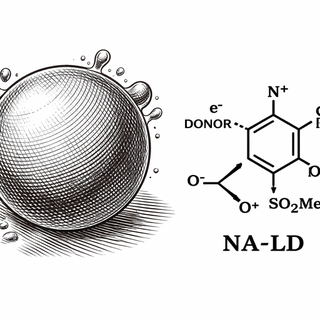
The molecule pulling off this trick is called NA-LD, and the targets are lipid droplets. Let me explain why anyone outside a chemistry lab should care.
What's a lipid droplet, and why won't it sit still?
For a long time, the textbooks treated lipid droplets like the junk drawer of the cell - a passive lump of stored fat that just sat there waiting to be burned for energy. Turns out that's wildly unfair. Lipid droplets are busy, dynamic organelles that get involved in energy metabolism, membrane building, stress responses, and a surprising amount of cellular drama.
They're also implicated when things go sideways. Obesity, fatty liver disease, atherosclerosis, certain cancers, and a few neurodegenerative conditions all involve lipid droplets behaving badly - multiplying, swelling, or generally throwing the cell's accounting into chaos. So if you want to understand these diseases, you need to actually see the droplets. And seeing them clearly has been the catch.
Think of it like trying to photograph a single white sheep in a field full of white sheep, in the fog, at dusk. The droplet is in there. Good luck pointing at it with confidence.
The contrast problem
Older fluorescent dyes for lipid droplets had a bad habit: they'd light up the droplets, sure, but they'd also light up the surrounding watery parts of the cell. The result was a washed-out, low-contrast image where the signal and the background blurred into the same hazy glow. In imaging, that's the equivalent of trying to read a chest X-ray that someone left out in the rain.
What you want is a dye that stays completely silent in water and only switches on when it slips into the oily, fatty environment of a droplet. High signal in the right place, near-zero noise everywhere else. That's the whole game, and it's harder than it sounds.
How the new probe pulls it off
This is where the chemistry gets genuinely clever. NA-LD is built on a naphthalimide backbone and runs on something called intramolecular charge transfer, or ICT. You can skip the acronym and keep the concept: the molecule's brightness depends on the polarity of its surroundings.
The designers bolted together three pieces, each with a job. There's an electron-donor group (a methoxy-benzene unit) on one end and an electron-acceptor group (a diamide) on the other, which together form the push-pull electronic system that makes the whole thing fluoresce based on its environment. Then they added a 2-ethylpyridine group whose entire purpose is to balance how much the molecule loves fat versus water - the chemistry equivalent of tuning a radio so it locks onto exactly one station.
Crank up the lipophilicity, and the molecule eagerly dives into lipid droplets and ignores everything watery. Once it's inside that nonpolar, oily environment, the ICT mechanism flips it into high-output mode and it glows brightly. Out in the watery cytoplasm, it stays dark. The polarity difference between "inside a fat droplet" and "everywhere else" is the trigger. Hence the name: polarity-triggered, high-contrast imaging.
The payoff is a picture where the droplets pop and the background fades to black. For a researcher staring down a microscope, that difference between "I think I see something" and "there it is, unmistakably" is the difference between a guess and a finding.
Why I find this quietly exciting
I spent years making decisions on imaging that ranged from crisp to "is that a tumor or a thumbprint." Better contrast is not a cosmetic upgrade. It changes what you can actually measure. With a probe this specific, scientists can count droplets, track how they grow and shrink in real time, watch them respond to drugs, and follow the choreography of fat metabolism as it happens in a living cell rather than a fixed, dead snapshot.
That matters for the diseases I mentioned. If you can reliably watch lipid droplets accumulate in liver cells, you can study fatty liver disease as a process instead of an autopsy. If you can track them in cancer cells, you can investigate how tumors rewire their fat handling to fuel themselves. Good tools don't cure anything by themselves, but you can't fix a problem you can't see, and this is a notably sharper pair of glasses.
The fine print
Let me play the ER doctor and lower expectations to a healthy resting heart rate. This is a chemical probe demonstrated in cell-level imaging, not a treatment, not a diagnostic test, and not anything coming to a clinic near you next quarter. Fluorescent probes live in the research toolkit, helping scientists understand biology. The road from "elegant molecule that glows in a dish" to "thing that changes patient care" is long, paved with funding applications, and littered with promising compounds that never made it past the lab bench.
But as a foundational tool, NA-LD is the kind of unglamorous, well-engineered advance that quietly makes a hundred other studies possible. Nobody throws a parade for a better lightbulb. They just suddenly start seeing things they couldn't before, and the whole field moves forward a step. That's not science fiction. That's just a very good Tuesday in a chemistry lab.
This blog post discusses research findings and should not be taken as medical advice. If you have concerns about metabolic or lipid-related conditions, please consult a healthcare provider. Research discussed here represents ongoing scientific investigation and clinical validation is still in progress.
All images used in this post are decorative illustrations only and do not represent or reflect the accuracy, reality, or correctness of the referenced research.
Primary Source: Polarity-triggered high-contrast fluorescent imaging of lipid droplets. PubMed. 2026. PMID: 41979037