
Clinical trials, from the outside, can look like polished machinery: protocol, consent form, randomization, data capture, publication, applause. Behind the scenes, they are often more like conducting an orchestra during a fire drill while someone asks whether the violins have been properly refrigerated. Emergency department trials add another layer of choreography, because the patient is acutely ill, the room is crowded, the clock is rude, and nobody has time for academic dawdling.
That is what makes NCT07558265, titled WIN Ratio Analysis to Determine a Strategy of Non-Invasive SUpport for Respiratory Failure in the EmeRgency Department, worth watching. The table view is available at ClinicalTrials.gov. The study asks a practical question that emergency physicians, intensivists, respiratory therapists, and anxious families meet every day: when an adult arrives in the emergency department with acute hypoxemic respiratory failure, should clinicians begin with non-invasive positive pressure ventilation or high-flow nasal oxygen?
That sounds technical. It is also very human. The patient cannot get enough oxygen into the blood. Everyone would prefer to avoid putting a breathing tube through the vocal cords and connecting the patient to a ventilator if there is a safer off-ramp. The trick is choosing the right off-ramp before the car is fully in the ditch.
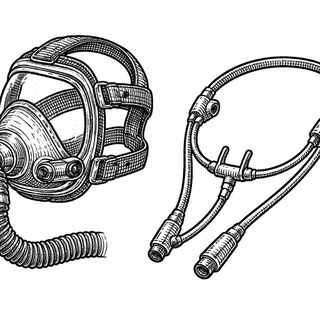
The Two Contenders
Acute hypoxemic respiratory failure means blood oxygen levels are dangerously low, usually because the lungs are inflamed, fluid-filled, infected, injured, or otherwise refusing to perform their one job with the sort of passive-aggressive efficiency only lungs can manage. Pneumonia, pulmonary edema, acute respiratory distress syndrome, and viral infections can all get patients there.
This trial compares two widely used forms of non-invasive respiratory support.
Non-Invasive Positive Pressure Ventilation, or NIPPV, delivers oxygen and pressure through a tight-fitting face mask. The pressure helps push air into the lungs and can recruit collapsed air spaces. It is a bit like inflating a reluctant air mattress while wearing it on your face, which is both medically useful and not exactly spa-like.
High-Flow Nasal Oxygen, or HFNO, delivers warmed, humidified oxygen at high flow through a specialized nasal cannula. It can wash out carbon dioxide from the upper airway, reduce the work of breathing, provide a small amount of airway pressure, and allow patients to talk, cough, and occasionally retain some dignity. In medicine, dignity is not an FDA-approved endpoint, but it should at least get a footnote.
Eligible participants, based on the provided trial summary, are adults presenting to the emergency department with acute hypoxemic respiratory failure who require urgent non-invasive oxygen support. Participants are randomly assigned with equal probability to NIPPV or HFNO. The ClinicalTrials.gov record should be consulted directly for the live recruitment status, sponsor details, and full eligibility criteria, since registry fields can change over time.
Why This Trial Is More Interesting Than It Sounds
At first glance, comparing oxygen devices may seem like arguing over umbrella brands during a hurricane. But the choice matters.
If the initial strategy works, a patient may avoid invasive mechanical ventilation. That can mean fewer ventilator-associated complications, less sedation, less delirium, fewer ICU days, and a shorter, less miserable hospital stay. If the initial strategy fails, delay can be dangerous. Clinicians worry about “silent failure,” where a patient looks temporarily supported but is actually worsening until intubation becomes more urgent and riskier.
That is the daily tension: avoid intubation when possible, but do not wait too long when it is necessary. Easy to say in a lecture hall. Harder at 2:17 a.m. with alarms chirping and a family member asking whether “the oxygen number” is supposed to be that color.
The study uses a hierarchical assessment of important pulmonary outcomes, including hospital survival, days on mechanical ventilation, and duration of non-invasive respiratory support. That hierarchy matters. A therapy that shortens support time is nice. A therapy that improves survival is better. Medicine is sentimental that way.
The trial also collects blood and urine samples, physiologic measurements, and medical record data. One intriguing detail is the use of sensors to measure chest movement. That could help investigators understand respiratory effort and patient-device interaction, not just whether the oxygen saturation number temporarily behaves itself.
What We Already Know
The literature has been wrestling with this question for years. High-flow nasal oxygen gained popularity because it is relatively comfortable and physiologically elegant. Non-invasive ventilation has deeper historical roots and stronger pressure support, but it can be uncomfortable, can leak, and may not be ideal for every form of hypoxemic respiratory failure.
A 2020 systematic review and meta-analysis in JAMA examined non-invasive oxygenation strategies in acute hypoxemic respiratory failure and found that these approaches may reduce intubation risk, though certainty varies by population and device strategy (Ferreyro et al., 2020). Another review in Chest evaluated high-flow nasal cannula therapy and highlighted its role in reducing escalation of respiratory support in selected patients (Chaudhuri et al., 2020).
COVID-19, for all its many unwelcome contributions to human history, also accelerated research in non-invasive respiratory support. A randomized trial in JAMA compared helmet non-invasive ventilation with high-flow nasal oxygen in COVID-19-related hypoxemic respiratory failure and showed differences in respiratory support outcomes, reminding clinicians that the interface and disease context both matter (Grieco et al., 2021).
Guidelines and expert reviews increasingly frame HFNO and NIPPV as tools rather than tribes. The correct question is not “Which device is better forever?” but “Which strategy works best for this patient, at this moment, in this setting?” That is less satisfying for people who enjoy universal answers, but medicine has always been inconsiderate toward certainty.
Why the Emergency Department Setting Matters
Many respiratory failure trials happen in ICUs, where patients are already admitted and heavily monitored. The emergency department is different. It is the front door, sorting room, stabilization bay, holding unit, negotiation chamber, and occasionally a theater of controlled chaos.
Decisions made there shape everything downstream. A respiratory support strategy chosen in the first hour may influence ICU admission, intubation timing, staffing needs, patient comfort, and hospital resource use. If this trial identifies a superior initial approach, the impact could be immediate and practical.
For patients, the real-world stakes are easy to understand. Avoiding a breathing tube can mean staying awake, communicating with loved ones, eating sooner, moving sooner, and avoiding complications tied to deep sedation and mechanical ventilation. For hospitals, it may mean better use of ICU beds and ventilators, which remain finite objects despite every administrator’s fondness for pretending spreadsheets can create capacity.
The WIN Ratio Angle
The trial title references a WIN ratio analysis, a statistical approach that compares patients across prioritized outcomes. In plain English, it gives more weight to outcomes that matter most. Survival beats ventilator-free days. Ventilator-free days beat a slightly shorter time on oxygen. This is refreshingly sensible, like ranking house fires above thermostat preferences.
Traditional trial endpoints can flatten nuance. A patient who survives but spends weeks ventilated is different from a patient who survives and leaves the hospital breathing comfortably after a few days. A hierarchical outcome structure can better reflect clinical reality, where not all “events” deserve equal billing.
The Challenge Ahead
The hard part will be identifying which patients benefit most from which strategy. Acute hypoxemic respiratory failure is not one disease. It is a final common pathway for many problems. Pneumonia is not pulmonary edema. COVID-related lung injury is not aspiration. A patient breathing 38 times per minute with rising carbon dioxide is not the same as a patient who is mildly uncomfortable but oxygenating better on high flow.
NIPPV can reduce work of breathing but may be poorly tolerated or risky in some situations. HFNO is comfortable and flexible, but may not provide enough ventilatory assistance for patients with severe respiratory muscle fatigue. Both can help. Both can fail. The art is knowing when support is support, and when support is just delay wearing nicer tubing.
Why I Will Be Watching
This is the kind of trial that may not make splashy headlines but could change bedside practice. It studies a common emergency, uses familiar tools, focuses on outcomes patients actually care about, and addresses a decision clinicians make under pressure every day.
If the trial succeeds, it could help emergency departments standardize initial respiratory support for acute hypoxemic respiratory failure. It may also clarify how physiologic measurements, like chest movement sensors and biomarkers, can help clinicians recognize early success or failure. That would be a welcome upgrade from the ancient medical technique of staring intensely at the monitor and muttering, “I don’t love this.”
The best clinical trials do not merely ask whether treatment A beats treatment B. They teach us how to think more clearly when the room is noisy, the patient is sick, and the next decision matters. NCT07558265 is aiming directly at that moment.
Disclaimer: This post is for educational purposes only and is not medical advice. Clinical decisions about respiratory support should be made by qualified clinicians based on the individual patient and local protocols.
Sources: ClinicalTrials.gov record NCT07558265; Ferreyro BL et al., JAMA, 2020, https://doi.org/10.1001/jama.2020.9524; Chaudhuri D et al., Chest, 2020, https://doi.org/10.1016/j.chest.2020.07.023; Grieco DL et al., JAMA, 2021, https://doi.org/10.1001/jama.2021.4682.