
Once upon a time in a lab not so far away, scientists tried to teach tiny particles a surprisingly difficult trick: how to recognize cancer cells without barging into every healthy cell nearby like an overenthusiastic houseguest. That sounds like fairy-tale science, but it is very real. A recent review on molecularly imprinted polymers, or MIPs, explores how engineered nanoscale materials could become smarter, more selective drug delivery systems for cancer therapy.
The basic problem is painfully familiar in oncology: many cancer treatments work, but they do not always go only where they are needed. Chemotherapy, for example, can damage fast-dividing healthy cells along with tumor cells. Targeted therapies are more selective, but cancers are crafty. They change, resist, reroute, and generally behave like they have read the treatment plan and hired a consultant.
So researchers are asking a very practical question: can we build drug carriers that recognize cancer-associated receptors more precisely, carry treatment payloads, and release them under the right conditions?
MIPs are one possible answer. And they are weirdly elegant.
What Is a Molecularly Imprinted Polymer?
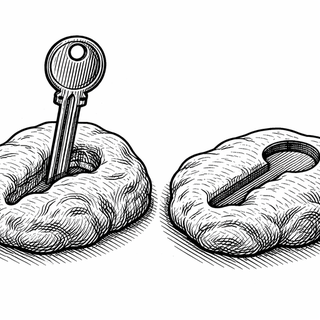
Imagine making a keyhole by pressing a key into soft clay, letting the clay harden, and then pulling the key away. What remains is a cavity shaped to fit that key.
That, in spirit, is molecular imprinting.
Scientists build a polymer around a target molecule, or around a small part of it. Once the target is removed, the polymer contains binding sites that “remember” the target’s shape, chemistry, and charge pattern. It is not memory in the brainy sense, of course. No tiny polymer is sitting there reminiscing about receptor binding over coffee. But structurally, the material has been molded to recognize a specific molecular feature.
That makes MIPs especially interesting for drug delivery. They are synthetic, tunable, potentially scalable, and tougher than many biological targeting tools. Antibodies are marvelous, but they can be expensive, delicate, and difficult to manufacture consistently. MIPs offer a different route: a made-to-order material that can be engineered for recognition, drug loading, and controlled release.
Why Cancer Receptors Are Such Tempting Targets
Cancer cells often display abnormal levels of certain receptors on their surfaces. These receptors can act like molecular doorbells. If a drug carrier can recognize the right doorbell, it may preferentially bind to tumor cells rather than healthy tissues.
That is the dream, anyway.
The review focuses on receptor-guided precision cancer therapy, where MIPs are engineered to recognize cancer-associated receptors. In this setting, the “target” might be a protein sitting on the tumor cell surface. But whole proteins are big, floppy, and sometimes unstable. Trying to imprint an entire protein can be like trying to make a perfect mold of a sleeping cat: technically possible in theory, chaotic in practice.
This is where epitope imprinting enters the story.
Instead of using the full protein as the template, researchers can use a smaller peptide segment, called an epitope. This is a manageable fragment of the larger target. If chosen well, the epitope can stand in for the receptor’s recognizable surface feature. That can make the imprinting process more reproducible and less vulnerable to protein shape-shifting.
In plain language: rather than copying the whole castle, copy the front-door handle that matters.
The Nanoscale Engineering Challenge
The review highlights three major engineering knobs: imprinting strategy, polymerization method, and nanostructure control.
That may sound like materials-science soup, but each piece matters.
The imprinting strategy determines what the polymer will recognize. The polymerization method affects how the material forms, how uniform it is, and how well the binding sites are preserved. Nanostructure control shapes particle size, surface area, porosity, and drug-release behavior.
For cancer therapy, nanoscale design is not decorative. It affects whether a carrier circulates in the bloodstream, avoids rapid clearance, reaches tumor tissue, binds its target, loads enough drug, and releases that drug at the right moment. A beautiful molecule that cannot survive the body’s delivery route is less “precision medicine” and more “expensive confetti.”
That is why the review emphasizes multifunctional MIP architectures. Researchers are not just asking whether MIPs can bind a receptor. They are asking whether one platform can combine recognition, drug loading, triggered release, and perhaps imaging or immune-related functions.
Smart Release: Not Just Finding the Cell, But Knowing When to Act
Targeting is only half the trick. A drug carrier also needs to release its cargo.
Stimuli-responsive MIPs are designed to respond to environmental cues. Tumors often differ from normal tissues in acidity, enzyme activity, redox state, temperature, or other local conditions. A responsive polymer might hold onto a drug during circulation, then release more of it when it encounters a tumor-like environment.
This is where the engineering starts to feel pleasingly sneaky. The carrier is not merely a tiny box. It is more like a box with a lock, a sensor, and a sense of timing. If that sounds like a very responsible lunch container, well, cancer nanomedicine has stranger metaphors available.
Hybrid MIPs add another layer. These may combine molecular imprinting with other materials, such as inorganic nanoparticles, biomimetic coatings, or established drug delivery platforms. The goal is to borrow strengths from multiple systems: the recognition of MIPs, the circulation behavior of nanocarriers, the imaging potential of certain particles, or the stealth properties of biological membranes.
Why This Review Matters
The exciting part is not that MIPs are brand new. Molecular imprinting has been studied for decades. The exciting part is how the field is adapting the idea for cancer therapeutics with more sophistication.
Earlier versions of molecular imprinting often worked best for small molecules. Cancer receptors are more complex. Biological fluids are messy. Tumors are heterogeneous. Human bodies are not tidy glassware with good lighting.
This review pulls together recent progress in making MIPs more biologically realistic: nanoscale formats, epitope-based templates, receptor-specific targeting, controlled release systems, and multifunctional designs. It also points to the harder questions that must be answered before these materials can move from clever lab demonstrations to real clinical tools.
The Hard Parts Still Ahead
There are several big hurdles.
First, biocompatibility. A drug carrier must not trigger unacceptable toxicity, immune reactions, or long-term accumulation. Synthetic polymers can be robust, which is good, but the body has opinions about foreign materials, and it is not shy about expressing them.
Second, reproducibility. MIPs depend on carefully formed recognition sites. Small changes in synthesis can affect binding, selectivity, and release. For a future therapy, “close enough” is not close enough. Manufacturing has to be consistent.
Third, translation. Regulatory systems need clear evidence of safety, quality, mechanism, and benefit. A multifunctional nanoscale platform can be scientifically dazzling, but every added function can also add another layer of testing. The more bells and whistles on the tiny therapeutic vehicle, the more someone has to prove each bell does not fall off in traffic.
Finally, cancer itself is not one disease. Receptor expression varies among tumor types, patients, and even regions within the same tumor. A receptor-specific MIP therapy may need careful matching to the right cancer subtype and patient profile.
What Could Happen If This Works?
If MIP-based drug delivery systems mature successfully, they could help make cancer therapy more selective and adaptable. That could mean better drug concentration at tumor sites, fewer systemic side effects, and new ways to deliver difficult therapeutic payloads.
They might also complement existing precision oncology tools. Instead of replacing antibodies, nanoparticles, small-molecule drugs, or immunotherapies, MIPs could become part of a broader toolbox. The best future cancer treatments may not be one magic bullet, but a carefully organized utility drawer. Less glamorous, perhaps, but extremely useful when the sink is leaking.
For now, the field is still developing. The review does not claim that MIPs are ready to become routine cancer treatments tomorrow. Rather, it argues that the engineering is becoming more refined, more receptor-aware, and more clinically relevant.
That is a meaningful step. In cancer therapy, getting the drug to the right place at the right time remains one of the great logistical puzzles. Molecularly imprinted polymers may offer a clever way to teach synthetic materials the molecular equivalent of “knock before entering.”
This blog post discusses research findings and should not be taken as medical advice. If you have concerns about cancer diagnosis or treatment, please consult a healthcare provider. Research discussed here represents ongoing scientific investigation and clinical validation is still in progress.
All images used in this post are decorative illustrations only and do not represent or reflect the accuracy, reality, or correctness of the referenced research.
Primary Source: Engineering molecularly imprinted polymers for receptor-specific cancer therapeutics. PubMed Record ID 42065470. PubMed link