
I once watched a neurosurgical imaging discussion turn into what felt like a very expensive game of “is that tumor, swelling, scar, or just the brain being dramatic?” Glioblastoma has a way of making confident people stare at scans like chefs judging whether a sauce has split. Everyone knows something is wrong. The hard part is knowing exactly where the malignant trouble begins, where it ends, and whether the treatment is hitting the right biological target.
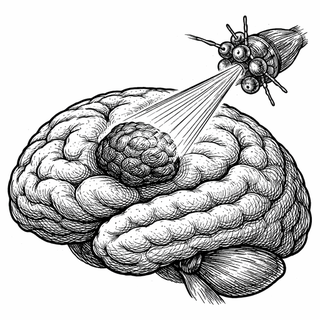
That is why this new PubMed-indexed study on a carbonic anhydrase IX-activated nanosensor for glioblastoma is worth a close look. The research describes a nanoparticle system, called MPC@BDPCA NPs, designed to do two jobs: help image glioblastoma more precisely and then assist with phototherapy using near-infrared light.
In medical device terms, this is not just a contrast agent. It is trying to be a smart probe, a molecular locator beacon, and a tiny therapeutic cookware setup all in one. Find the bad tissue, confirm the molecular signal, then apply heat and reactive oxygen species like a very specialized kitchen torch. Less creme brulee, more tumor microenvironment.
The Problem: Glioblastoma Does Not Respect Boundaries
Glioblastoma, or GBM, is one of the most aggressive brain cancers. It grows quickly, infiltrates surrounding brain tissue, and resists treatment with the stubbornness of a hospital procurement cycle.
Surgery, radiation, and chemotherapy remain central tools, but GBM is hard to fully remove because tumor cells can blend into nearby brain tissue. Imaging helps, but conventional imaging does not always give clinicians the molecular detail they want. A scan can show a suspicious region, but it may not cleanly answer what is happening biologically inside that tissue.
That matters because modern oncology is moving toward target-aware treatment. The more precisely a system can identify tumor-associated biology, the better the odds of guiding intervention without cooking the wrong ingredients.
Why Carbonic Anhydrase IX Gets Attention
The target in this paper is carbonic anhydrase IX, usually shortened to CA IX. CA IX is an enzyme often associated with hypoxic, acidic tumor environments. In glioblastoma, elevated CA IX expression has been linked with tumor malignancy.
That makes CA IX a useful biomarker candidate. It is not just a decorative molecular garnish. It tells us something about the tumor’s operating conditions, especially the low-oxygen, metabolically stressed environment where aggressive cancer cells tend to thrive.
The study’s nanosensor is built around this idea: if CA IX is overexpressed in GBM, then a sensor that activates in response to CA IX could improve tumor contrast and support more targeted therapy.
The Nanosensor: A Probe That Waits for the Right Signal
At the center of the platform is a tailor-made BODIPY derivative called BDPCA. BODIPY dyes are already familiar in fluorescence research because they can be bright, tunable, and chemically adaptable. Here, the molecule includes a benzenesulfonamide group, which is designed to selectively bind CA IX.
The clever bit is the activation mechanism. When BDPCA binds CA IX, the interaction restricts molecular rotation. That restriction produces a fluorescence “turn-on” response. In plain English: the probe stays relatively quiet until it meets the target, then it lights up.
From an engineering standpoint, that is attractive. Always-on signals can create background noise, and background noise is where beautiful concepts go to become mediocre products. A target-activated system can potentially improve contrast because the signal is tied to the biology of interest.
The paper reports that BDPCA supports both fluorescence imaging and photoacoustic imaging. Fluorescence can help show where the probe is emitting light, while photoacoustic imaging converts absorbed light into ultrasound signals. Together, the two modes can provide complementary views of the tumor environment.
Dual-modal imaging is not magic, but it is useful. Think of it as checking a roast with both a thermometer and a timer. One measurement can mislead you. Two well-aligned measurements make you less likely to serve something questionable.
Getting Across the Blood-Brain Barrier
Any brain tumor technology eventually has to answer the same unpleasant question: how does it get into the brain?
The blood-brain barrier is a selective biological gatekeeper. It protects the central nervous system from many substances in circulation, which is excellent for survival and deeply annoying for drug delivery teams.
To address this, the researchers encapsulated BDPCA in a pH-degradable polymer shell using in situ polymerization. The monomer used was 2-methacryloyloxyethyl phosphorylcholine, or MPC. MPC is often valued for biocompatibility, and in this design it helps form nanoparticles intended to improve blood-brain barrier penetration and support receptor-mediated transport.
That packaging matters. A promising molecule on its own may not reach the target tissue in useful amounts. In product terms, the active ingredient is only part of the story. Delivery is the supply chain. And anyone who has shipped hardware through three continents knows the supply chain can ruin a perfectly good idea before lunch.
Imaging Plus Therapy: The Synergy Pitch
The therapeutic angle comes from what happens under 660 nm irradiation. The BDPCA design includes extended pi-conjugation and donor-acceptor molecular architecture, which the researchers report helps tune both radiative and nonradiative decay pathways.
Translated: the molecule is engineered to both emit useful imaging signals and convert light energy into therapeutic effects. Specifically, the study reports photothermal conversion and generation of reactive oxygen species.
Photothermal therapy uses heat to damage tumor cells. Photodynamic therapy uses light-activated chemistry to generate reactive oxygen species that can harm cancer cells. Combining the two is the “synergistic phototherapy” piece.
This is a familiar industry pattern: combine diagnostics and therapy into one platform, then argue that the combined system can improve precision. The regulatory and commercialization path, of course, becomes more interesting. “Interesting” here is the polite word engineers use when the spreadsheet starts sweating.
A nanosensor that images and treats could eventually sit in the growing category of theranostics, technologies that blend therapy and diagnostics. But the bar is high. It would need convincing data on targeting, biodistribution, clearance, reproducibility, light delivery, safety margins, and clinical benefit.
What Makes This Research Intriguing
The intriguing part is not just that the nanoparticles fluoresce. Plenty of things fluoresce if you bully them with enough chemistry.
The stronger idea is target activation tied to a GBM-relevant biomarker, paired with dual imaging and light-triggered therapy. The system is trying to solve several real GBM problems at once:
Better tumor visualization.
More specific molecular sensing.
Improved delivery across the blood-brain barrier.
Therapeutic activation using external light.
Potential reduction of off-target effects.
That is a useful concept stack, assuming each layer holds up under further testing.
The orthotopic GBM model is also relevant. Orthotopic models place tumors in the organ site where they naturally occur, which is more meaningful than testing brain cancer tools in convenient but biologically odd locations. It still is not the clinic, but it is at least cooking in the correct pan.
The Skeptical Device-Industry View
The distance between a strong preclinical nanosensor and a deployable clinical product is not a hallway. It is a mountain road with paperwork, manufacturing validation, toxicology, reimbursement questions, and at least one meeting where someone asks whether the nanoparticle batch process can scale.
Key questions remain.
How consistently can these nanoparticles be manufactured?
How selective is CA IX activation in more heterogeneous human tumors?
What is the safety profile after repeated exposure?
How deeply and precisely can 660 nm light be delivered in real GBM treatment settings?
Can the imaging signal guide actual clinical decisions?
Will the therapy add benefit beyond existing treatment combinations?
None of those questions undermine the science. They are the questions that determine whether the science can survive contact with patients, hospitals, and budgets.
Why It Still Matters
Glioblastoma needs better tools. Not slightly shinier versions of the same blunt instruments, but technologies that help clinicians see tumor biology and act on it with more precision.
This CA IX-activated nanosensor is an elegant preclinical example of where the field is heading: molecularly triggered imaging, smarter delivery systems, and combined diagnostic-therapeutic platforms. It is early, and it has plenty to prove. But the design logic is coherent, and the target makes biological sense.
For now, this is not a clinical device or approved therapy. It is a research platform. But if future studies validate safety, targeting, manufacturability, and treatment benefit, the concept could inform a new class of GBM tools that do more than point at the tumor and shrug.
And in glioblastoma, a little less shrugging would be a meaningful upgrade.
This blog post discusses research findings and should not be taken as medical advice. If you have concerns about glioblastoma or brain tumors, please consult a healthcare provider. Research discussed here represents ongoing scientific investigation and clinical validation is still in progress.
All images used in this post are decorative illustrations only and do not represent or reflect the accuracy, reality, or correctness of the referenced research.
Primary Source: The Carbonic Anhydrase IX-Activated Nanosensor for Dual-Modal Imaging and Synergistic Phototherapy of Glioblastoma. PubMed Record ID: 42065628. PubMed