
I have good news for your subcortical brain circuits: researchers are testing whether low-intensity focused ultrasound can safely nudge brain targets involved in obsessive-compulsive disorder, without opening the skull or installing hardware like the brain is getting a tiny kitchen renovation.
The clinical trial, NCT07558148, is titled “Pilot Study to Investigate Brain Targets for Neuromodulation in Obsessive-compulsive Disorder.” It is a pilot study, which means we should be interested, but we should not immediately sprint into the streets yelling “cure.” Pilot studies are the scientific equivalent of checking whether the bridge is even there before trying to drive a bus across it.
What This Trial Is Testing
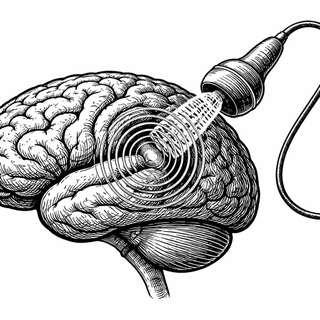
The investigators plan to evaluate the safety and feasibility of low-intensity focused ultrasound for OCD symptoms. The intervention uses the ATTN201 device to deliver ultrasound to subcortical brain targets across four study visits. Participants may receive both unfocused and focused ultrasound, with up to three brain targets tested.
The main idea is neuromodulation: changing brain activity without destroying tissue. That distinction matters. Some forms of focused ultrasound are used to make permanent lesions for movement disorders, but this trial is looking at low-intensity ultrasound as a potentially reversible way to influence neural circuits.
The trial will assess changes using self-rated OCD symptom scales. That is practical and patient-centered, but also a limitation. Self-rated scales are useful, especially in psychiatric research, yet symptoms can fluctuate with expectation, stress, sleep, and the thousand other tiny chaos agents that come bundled with being human.
Why OCD Is a Hard Target
Obsessive-compulsive disorder is not “liking things neat.” It is a psychiatric condition marked by intrusive, unwanted thoughts and repetitive behaviors or mental rituals that can become exhausting and disabling. Common treatments include cognitive behavioral therapy, especially exposure and response prevention, and medications such as selective serotonin reuptake inhibitors.
Many people improve with those approaches. Some do not. That is the clinical gap this research is circling.
OCD appears to involve loops connecting cortical and subcortical regions, including circuits that help regulate threat detection, habit formation, error monitoring, and decision-making. When those loops get stuck, the brain can behave like a smoke alarm that has discovered jazz improvisation: loud, persistent, and not always connected to actual danger.
That makes OCD a logical candidate for neuromodulation. Existing approaches such as deep brain stimulation have shown benefit in some treatment-resistant cases, but DBS requires surgery and implanted hardware. Transcranial magnetic stimulation is noninvasive and already used in some OCD care, but it mainly targets cortical regions. Focused ultrasound is intriguing because it may reach deeper structures with more spatial precision.
What Focused Ultrasound Might Offer
Focused ultrasound uses sound waves aimed at a target inside the body. At high intensities, it can heat or ablate tissue. At lower intensities, researchers are studying whether it can temporarily alter neural activity through mechanical effects on cell membranes, ion channels, and network signaling.
That sounds sleek, but the biology is still being mapped. The field has promising early human and animal data, plus a growing pile of unanswered questions: Which targets matter most? What dose is optimal? How long do effects last? Could repeated sessions help? Could they backfire? Does the same brain target work for everyone, or does OCD need a more personalized circuit map?
This trial’s design is sensible for an early-stage question. It is not trying to prove broad clinical effectiveness in one dramatic leap. It is asking whether the approach can be delivered safely and feasibly to relevant targets, and whether symptom measures move enough to justify bigger studies. That is good scientific manners.
The Status, Sponsor, Eligibility, and Outcomes
According to the trial record information provided, this is a ClinicalTrials.gov pilot study using the ATTN201 device for low-intensity ultrasound neuromodulation in OCD. The study purpose is safety and feasibility, with OCD symptom ratings used as outcome measures.
Eligibility details, full recruitment status, sponsor information, and complete outcome definitions should be confirmed directly in the ClinicalTrials.gov record and its table view, because those fields can change over time. That is not fine print for decoration. Trial status and eligibility criteria are the part where real people decide whether a study is relevant to them.
Why This Is Interesting
The exciting part is not that ultrasound is “futuristic.” Plenty of futuristic things have been useless, including several kitchen gadgets currently judging us from drawers.
The exciting part is precision. Psychiatric disorders are often treated with system-wide tools: medications circulating through the body, psychotherapy working through learning and behavior, or stimulation methods that affect broader regions. Focused ultrasound could, in theory, let researchers test specific nodes in OCD circuits more directly.
That could help in two ways. First, it might become a treatment for people who have not responded to standard care. Second, even if this exact device or protocol does not become a treatment, it may teach researchers which brain targets matter most. In psychiatry, that kind of circuit-level information is valuable.
Let’s Pump the Brakes
This is still a pilot study. It appears small by design. It uses symptom scales rather than hard biological endpoints. It involves single-session ultrasound exposures across visits, so durability is an open question. And without larger sham-controlled trials, it will be difficult to separate genuine neuromodulatory effects from placebo response, expectancy, regression to the mean, or the weird statistical weather patterns that appear whenever sample sizes are tiny.
Also, “noninvasive” does not mean “risk-free.” The brain is not a mood lamp. Any intervention that changes neural activity deserves careful monitoring for headaches, mood changes, anxiety shifts, cognitive effects, and unexpected symptom worsening.
That said, cautious does not mean cynical. A well-run pilot study is exactly how this kind of work should begin: small, measured, transparent, and humble enough to ask basic questions before making grand claims.
What Success Could Mean
If the trial shows that low-intensity focused ultrasound can be delivered safely and feasibly to OCD-related brain targets, it could open the door to larger studies. Those studies would need stronger controls, clinician-rated outcomes, longer follow-up, and ideally biomarkers or imaging measures that show whether the targeted circuits actually changed.
If future trials succeed, the real-world impact could be meaningful. Patients with severe, treatment-resistant OCD need more options that are effective, tolerable, and less invasive than surgery. A noninvasive approach that can reach deeper brain targets would be a serious addition to the therapeutic toolbox.
For now, this is not a breakthrough treatment. It is a carefully placed question mark inside the brain’s circuitry. And honestly, that is how a lot of good science starts: not with fireworks, but with a cautious researcher asking, “What happens if we press here?”
Selected Research Context
Recent work has reviewed the promise and uncertainty around transcranial focused ultrasound neuromodulation, including its potential to alter human brain activity with spatial precision: https://doi.org/10.1038/s41583-021-00543-0
Reviews of deep brain stimulation for OCD continue to support the idea that circuit-based interventions can help some people with severe, treatment-resistant symptoms, while also underscoring the need for careful patient selection and long-term safety data: https://doi.org/10.1038/s41380-021-01066-1
Research on noninvasive brain stimulation for OCD, including transcranial magnetic stimulation, suggests that targeting specific neural circuits can reduce symptoms for some patients, though response is variable: https://doi.org/10.1176/appi.ajp.2020.20040464
Clinical trial citation: ClinicalTrials.gov NCT07558148
Disclaimer: This article is for educational purposes only and is not medical advice. Anyone considering trial participation or treatment for OCD should speak with a qualified healthcare professional.