
They said it could not be done: take one of the body’s most sprawling, moody, behind-the-scenes nerves, reach it through the ear, and see whether it can help people with Parkinson’s disease regulate heart rate and blood pressure more normally. That sounds less like a clinical trial and more like trying to reboot a building’s electrical system by gently tapping the doorbell. Yet that is exactly the intriguing premise behind ClinicalTrials.gov record NCT07557706, “Using taVNS to Modulate Cardiovascular Function in Individuals With Neurologic Disease.”
The Problem Hiding Behind the Tremor
When most people hear “Parkinson’s disease,” they think tremor, stiffness, slowness, shuffling gait. Fair enough. Those are the headliners. But Parkinson’s is not merely a movement disorder. It is also a disorder of the autonomic nervous system, the part of the body that quietly manages heart rate, blood pressure, sweating, digestion, bladder function, and other tasks we rarely appreciate until they stage a labor strike.
Blood pressure control can be especially troublesome. Some people with Parkinson’s develop orthostatic hypotension, meaning their blood pressure drops when they stand. The result can be dizziness, fatigue, falls, near-fainting, or a sudden need to sit down with the urgency of a toddler refusing bedtime. Exercise and physical therapy, both extremely valuable in Parkinson’s care, become much harder when the cardiovascular system is behaving like a badly tuned thermostat.
That is the practical gap this trial is trying to address. The study asks whether transcutaneous auricular vagus nerve stimulation, or taVNS, can improve the body’s regulation of heart rate and blood pressure in people with Parkinson’s disease.
What Is taVNS, Without the Alphabet Soup?
The vagus nerve is a long nerve that helps regulate the “rest-and-digest” side of physiology. It carries signals between the brain, heart, gut, lungs, and immune system. Traditional vagus nerve stimulation has been used for conditions such as epilepsy and depression, but that usually involves an implanted device. Surgery is effective for some indications, but it is also surgery, and medicine already has enough ways to make people fill out consent forms.
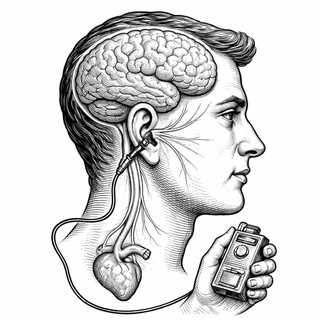
taVNS takes a gentler route. It applies mild electrical stimulation to parts of the outer ear, where sensory branches related to the vagus nerve can be accessed through the skin. No implanted hardware. No operating room. No dramatic soundtrack. Just a small device delivering controlled stimulation to a carefully chosen region of the ear.
The idea is not that the ear magically controls the heart. The idea is that stimulation of auricular vagal pathways may influence brainstem networks involved in autonomic regulation. In plain English: a small signal at the ear may nudge the circuitry that helps coordinate heart rate and blood pressure responses.
What This Trial Is Studying
The ClinicalTrials.gov record describes a study of taVNS in individuals with Parkinson’s disease, focused on cardiovascular function. The intervention is non-invasive transcutaneous auricular vagus nerve stimulation. The goal is to test whether this approach can influence natural autonomic responses, especially those involved in heart rate and blood pressure regulation.
The trial is especially interesting because it sits at the intersection of neurology, rehabilitation, and cardiovascular physiology. That is a crowded intersection, medically speaking, with at least three departments trying to claim parking.
The real-world question is simple: if taVNS can make autonomic responses more stable, could it help people with Parkinson’s tolerate exercise, participate more fully in physical therapy, and function better day to day?
Eligibility and operational details are maintained in the trial registry, including the official study record and table view:
ClinicalTrials.gov study page
ClinicalTrials.gov table view
Why This Is More Than a Gadget Story
Neuromodulation has a way of attracting both serious science and suspiciously shiny marketing. The challenge is separating “promising physiologic tool” from “USB-powered wellness optimism.” taVNS deserves attention because it is grounded in a plausible biological pathway, and because autonomic symptoms in Parkinson’s are clinically meaningful.
For patients, blood pressure instability is not an abstract vital-sign abnormality. It can mean avoiding walks, cutting therapy sessions short, feeling unsafe in the shower, or planning daily life around the nearest chair. For clinicians, it can be frustrating because available treatments may help but are not perfect. Compression garments, hydration, salt intake, medication adjustments, and drugs for neurogenic orthostatic hypotension all have roles, but each comes with limitations.
A non-drug, non-invasive tool that supports autonomic control would be welcome, particularly if it helps people engage in rehabilitation. Exercise is one of the more consistently useful interventions in Parkinson’s disease, but it requires the cardiovascular system to show up for work.
What Does the Recent Science Suggest?
Research on taVNS is still evolving, but several lines of evidence make this trial scientifically plausible.
A detailed anatomical review by Butt and colleagues described why the ear is a reasonable target for non-invasive vagal stimulation, mapping the auricular regions and pathways that may connect peripheral stimulation to central autonomic circuits. DOI: 10.1111/joa.13122
A 2021 review by Yap and colleagues examined non-invasive vagus nerve stimulation across neurologic and systemic conditions, emphasizing its potential to influence autonomic, inflammatory, and brain network activity. DOI: 10.3389/fnins.2020.568051
Work on autonomic dysfunction in Parkinson’s disease has also underscored how common and disabling these non-motor symptoms can be. Palma and Kaufmann reviewed autonomic disorders in Parkinson’s and related synucleinopathies, highlighting orthostatic hypotension as a major clinical problem. DOI: 10.1002/mds.28314
More broadly, studies of non-invasive vagal stimulation suggest measurable effects on heart rate variability and autonomic tone, though results vary by stimulation site, dose, population, and outcome measure. That variability is not a failure of science. It is science doing the annoying but necessary work of figuring out the recipe before declaring dinner served.
What Success Could Mean
If this trial succeeds, the immediate result would not be “everyone with Parkinson’s gets an ear stimulator by Tuesday.” Clinical medicine rarely moves that fast, except when introducing a new billing code.
But a positive result could open several useful doors. It could support larger trials testing whether taVNS improves orthostatic tolerance, exercise participation, rehabilitation outcomes, or daily function. It could help researchers identify which patients respond best. It could also clarify how stimulation timing, intensity, and location affect cardiovascular regulation.
Most importantly, it would shift attention toward a stubbornly under-treated part of Parkinson’s disease. Motor symptoms matter, but the autonomic symptoms often decide how much of life a person can actually participate in. A steadier blood pressure response may sound modest. For someone trying to stand, walk, exercise, or simply get through the morning without feeling faint, modest can be magnificent.
The Sensible Caution
There are reasons to be careful. taVNS is not yet a standard cardiovascular treatment for Parkinson’s disease. The vagus nerve influences many systems, and stimulation protocols are not interchangeable. A device, a dose, an ear location, and a patient population all matter. Also, small physiologic improvements do not always translate into meaningful clinical gains, a lesson medicine relearns with the persistence of someone touching a hot stove for peer review.
Still, the trial is worth watching because it asks a practical question with a biologically plausible tool: can gentle, non-invasive vagal stimulation help restore some autonomic flexibility in Parkinson’s disease?
That is the kind of question I like. It is not flashy for the sake of flash. It is targeted, testable, and aimed at a symptom domain that patients actually feel in daily life. Sometimes the most interesting medicine is not about conquering disease in one cinematic gesture. Sometimes it is about helping the body stop overreacting to standing up.
Disclaimer: This post is for educational purposes only and is not medical advice. People with Parkinson’s disease, blood pressure problems, implanted devices, arrhythmias, or other neurologic or cardiovascular conditions should discuss any neuromodulation therapy with their clinical team.
Trial citation: ClinicalTrials.gov. “Using taVNS to Modulate Cardiovascular Function in Individuals With Neurologic Disease.” Record ID: NCT07557706. https://clinicaltrials.gov/study/NCT07557706