
In the time it takes you to read this sentence, your immune system has inspected countless cells, ignored most of them politely, and probably given one suspicious character the biological equivalent of a raised eyebrow. That daily cellular border patrol is usually quiet, competent work. Cancer, being the sort of tenant who paints the windows black and refuses to answer mail, can learn to hide from it.
That is where immune checkpoint inhibitors enter the story.
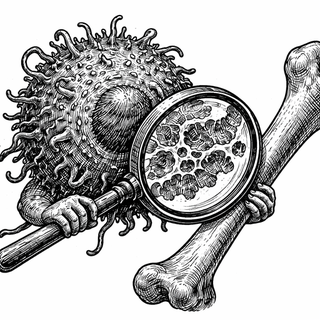
The clinical trial registered as NCT07555210, formally titled Pilot Study Assessment of Bone Mineral Density Changes During Treatment With Anti-PD-1 Immunotherapy Agents, asks a deceptively simple question: when we wake up the immune system to fight cancer, what happens to the bones?
It is a fine question. In medicine, fine questions often arrive wearing comfortable shoes and carrying a clipboard.
The Brakes On The Immune System
Anti-PD-1 drugs belong to a family called immune checkpoint inhibitors. In ordinary life, immune checkpoints are useful. They act like brakes, keeping immune cells from attacking healthy tissue every time they get overexcited. Without such brakes, the immune system can become less guardian and more overcaffeinated hall monitor.
Cancer cells, however, may exploit these checkpoint pathways. PD-1 is a receptor found on T cells, one of the immune system's main fighting forces. When PD-1 binds its partners, including PD-L1, the T cell receives a calming signal. Some tumors use this signal to avoid destruction. Anti-PD-1 drugs block that interaction, helping T cells recognize and attack cancer.
This approach has changed oncology. Checkpoint inhibitors are now used across many cancers, including melanoma, lung cancer, kidney cancer, head and neck cancer, bladder cancer, and others. They may be used in metastatic disease, and increasingly in earlier-stage cancers where treatment is intended to cure.
But the immune system, once encouraged to take initiative, does not always read the meeting agenda carefully. These drugs can cause immune-related side effects in nearly any organ system: skin, gut, liver, lungs, joints, thyroid, pituitary gland, and more. Some effects are temporary and treatable. Others, such as hypothyroidism, may require daily medication for life.
Now researchers are looking carefully at another organ system that tends to be underappreciated until it complains: the skeleton.
Bones Are Not Plumbing
Many people imagine bones as scaffolding, like the beams in an old house. Useful, sturdy, and best ignored until the stairs creak.
But bone is alive. It is constantly being remodeled by cells that build bone and cells that break it down. The process is rather like maintaining a stone cathedral while services are still being held inside. Calcium, hormones, inflammation, kidney function, menopause, medications, cancer itself, and physical activity all affect this remodeling.
The concern behind NCT07555210 is that immune checkpoint inhibitors may disturb this balance. Recent medical reports have raised the possibility that these therapies could weaken bone, lower bone mineral density, and increase fracture risk. That possibility is especially worth studying because many patients receiving immunotherapy are living longer than patients with the same cancers did a generation ago. Survival is the best kind of problem to have, but it does bring follow-up questions.
A cancer therapy that helps patients live longer should not quietly hand them brittle bones as a parting gift.
What This Pilot Study Is Measuring
This study focuses on patients receiving curative-intent anti-PD-1 immunotherapy, either alone or combined with chemotherapy. The intervention of interest is anti-PD-1 treatment itself, and the study is observational in spirit: it aims to track what happens to the skeleton during therapy.
The researchers plan to examine several signals of bone health:
- Bone mineral density, measured by DXA scanning
- Bone structure and volume, measured by high-resolution peripheral quantitative computed tomography, or HRpQCT
- Blood markers of bone turnover, which can show whether bone breakdown and formation are changing
DXA, short for dual X-ray absorptiometry, is the familiar osteoporosis scan. It uses low-dose X-rays to estimate bone density, often at the hip and spine. HRpQCT is more specialized. It creates very high-resolution 3D images of smaller peripheral bones, such as those in the wrist or ankle region, and can reveal details of bone architecture that a standard density test may miss.
I have always liked imaging studies because they remind us that the body is not merely a collection of lab values. Sometimes you need to look at the beams, joists, and load-bearing walls.
The trial's stated hypothesis is that immune checkpoint inhibitor treatment may weaken bones and increase fracture risk. Its outcomes include changes in bone mineral density, bone volume, and bone turnover markers during treatment. Eligibility centers on patients undergoing anti-PD-1 immunotherapy with curative intent, with or without chemotherapy. The ClinicalTrials.gov record should be checked directly for the current recruitment status, sponsor listing, and detailed inclusion and exclusion criteria: primary record and table view.
Why This Is Intriguing
What makes this study interesting is not that bones can weaken. We have known that for centuries. What is intriguing is the immune connection.
Bone and immunity are old neighbors. In fact, the bone marrow is where many immune cells are born. Inflammatory signals can influence the cells that resorb bone, called osteoclasts, and the cells that build bone, called osteoblasts. Rheumatoid arthritis, inflammatory bowel disease, chronic infection, steroid use, and cancer-associated inflammation can all affect skeletal health.
Checkpoint inhibitors add a modern twist. These drugs alter immune activity on purpose. That is their genius. It may also be why their effects ripple in unexpected directions.
The medical literature over the past five years has paid increasing attention to survivorship after immunotherapy, immune-related adverse events, endocrine complications, inflammatory arthritis, and the broader biology of checkpoint blockade. Useful recent background includes reviews on immune checkpoint therapy and toxicity, such as Robert's overview of the first decade of checkpoint inhibitors (DOI: 10.1038/s41467-020-17670-y), work on immune-related adverse event management and biology (DOI: 10.1038/s41571-021-00550-8), and discussions of cancer immunotherapy in clinical practice (DOI: 10.1038/s41591-023-02627-1). For bone biology, the link between inflammation and skeletal remodeling has been discussed in modern osteoimmunology reviews, including work on immune regulation of bone cells (DOI: 10.1038/s41584-022-00815-w).
The key question is whether immunotherapy creates enough inflammatory or metabolic disturbance to matter clinically for fracture risk.
The Practical Problem
At present, routine bone-density monitoring is not a standard part of immunotherapy care for most patients. Oncologists already track many things: tumor response, blood counts, liver enzymes, thyroid function, lung symptoms, bowel symptoms, fatigue, pain, and the emotional weather system that accompanies cancer treatment.
Adding bone surveillance would require evidence. Medicine does not need another test ordered merely because it exists. The drawer is already full.
But if this pilot study finds meaningful bone loss, it could point toward practical changes: baseline DXA scans for selected patients, repeat monitoring during therapy, vitamin D and calcium assessment, fall-risk counseling, earlier osteoporosis treatment, or referral to endocrinology or bone health specialists.
None of that would diminish the value of immunotherapy. Quite the opposite. Good cancer care is not just about shrinking tumors. It is about helping people remain upright, mobile, and independent after treatment. A cured patient with an avoidable hip fracture has won one battle and been ambushed in the parking lot.
What Success Could Mean
If NCT07555210 succeeds, its greatest contribution may be awareness. Pilot studies are not usually the final word. They are the careful knock on the laboratory door.
The study could help identify which patients are most vulnerable: older adults, postmenopausal women, people already at risk for osteoporosis, those receiving chemotherapy at the same time, patients with endocrine side effects, or people whose inflammation markers change during treatment. It could also help researchers decide whether larger trials are needed.
The real-world impact could be substantial. Fractures are not minor inconveniences, especially in older adults. They can lead to surgery, loss of independence, chronic pain, and reduced survival. If a relatively simple monitoring strategy can prevent some of those fractures, that would be a very good return on a few well-aimed scans.
And if the study finds little or no effect? That is useful too. Negative results, when well done, are not failures. They are the scientific equivalent of clearing a suspect from the case.
A Sensible Next Step
What I like about this trial is its modesty. It does not promise to reinvent oncology. It asks whether a powerful new class of cancer drugs may have a quiet side effect that deserves attention. After decades around medical research, I have learned to respect modest questions. They often age better than grand pronouncements, which have a tendency to trip over their own podiums.
Anti-PD-1 therapy has already changed the outlook for many patients. Now the field is entering the next stage: learning how to use these drugs wisely, monitor their long-term effects, and protect the whole person, not just the scan report.
The immune system may be the star of this therapeutic drama, but the skeleton has a speaking part. It is about time someone handed it a microphone.
Disclaimer: This article is for educational purposes only and is not medical advice. Patients should discuss cancer treatment, bone health, fracture risk, and screening decisions with their oncology team.
Citation: ClinicalTrials.gov. Pilot Study Assessment of Bone Mineral Density Changes During Treatment With Anti-PD-1 Immunotherapy Agents. NCT07555210. https://clinicaltrials.gov/study/NCT07555210