
Here's what you need for hemorrhoid treatment: tiny rubber bands, microscopic particles or coils, a catheter, twilight sedation, a surprisingly detailed map of rectal arteries, and the courage to compare two treatments most people would rather discuss only with their bathroom door locked.
That, in a neat little bundle, is the idea behind STRATOS, a clinical trial registered as NCT07559630. Its full title is a mouthful: Single-center Randomized Controlled Trial of Rectal Arterial Embolization vs Band Ligation for the Treatment of Internal hemOrrhoidS. The acronym is doing gymnastics, but the question is refreshingly plain: for bleeding internal hemorrhoids, which standard non-surgical treatment works better, hemorrhoidal artery embolization or rubber band ligation?
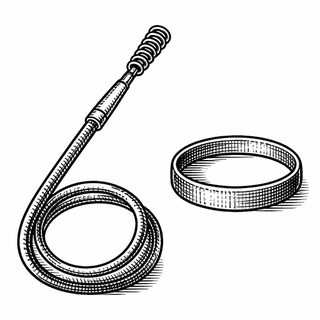
The table view is available here: ClinicalTrials.gov table view.
Wait, What Are We Treating Here?
Hemorrhoids are swollen vascular cushions in the anal canal. That sounds like something invented by a committee trying to make discomfort sound architectural, but these cushions are normal anatomy. The problem starts when they enlarge, bleed, prolapse, itch, or generally begin behaving like tiny civil engineers with poor boundaries.
Internal hemorrhoids sit inside the rectum and are a common cause of bright red bleeding during bowel movements. For many people, lifestyle measures help: fiber, fluids, avoiding straining, and not treating the toilet like a reading nook. But when bleeding keeps happening, office-based or minimally invasive treatments often enter the chat.
STRATOS focuses on two standard-of-care, non-surgical options.
Rubber band ligation, or RBL, is the classic workhorse. A clinician places small rubber bands around the base of internal hemorrhoids. The bands cut off blood flow, and the hemorrhoidal tissue shrinks, shrivels, and eventually falls away. Elegant? Maybe. Glamorous? Absolutely not. Effective? Often, yes.
Hemorrhoidal artery embolization, or HAE, comes from the interventional radiology world. Instead of treating the hemorrhoid directly from below, physicians access an artery with a catheter, guide it toward blood vessels feeding the hemorrhoids, and place tiny particles or coils to reduce blood flow. It is done with conscious, or “twilight,” sedation. Think of it as turning down the faucet rather than mopping the floor forever.
Why This Trial Is Intriguing
The interesting part is not that either treatment exists. Both are already used. The interesting part is the head-to-head comparison.
Medicine has plenty of situations where two reasonable treatments live side by side for years, each with its champions, its skeptics, and its “well, in my experience...” campfire stories. Randomized controlled trials are how we move from confident hand-waving to actual comparison.
STRATOS is asking whether HAE can match or outperform RBL for controlling hemorrhoidal bleeding, reducing symptoms, and improving quality of life. That last part matters. Hemorrhoids are rarely life-threatening, but they can be life-annoying in a deeply personal, daily, laundry-management kind of way. A treatment that reduces bleeding, pain, repeat visits, and anxiety could make a real difference.
The trial is single-center and randomized, meaning participants are assigned to one of the two treatment approaches at the study site. The sponsor, status, detailed eligibility criteria, and outcome measures are listed on the ClinicalTrials.gov record, which is the best source for the most current trial-specific details.
The Two Contenders
RBL has an appealing simplicity. It is usually performed in a clinic, does not require arterial access, and has a long track record. For many internal hemorrhoids, especially bleeding ones, it can be quick and practical. The downside is that symptoms can recur, and some patients need repeat sessions. There can also be discomfort, bleeding, or rarely more serious complications.
HAE is more high-tech. It uses imaging, catheter navigation, and embolic materials to reduce arterial inflow. That is appealing because hemorrhoidal bleeding is fundamentally a blood-flow problem. Instead of tying off the tissue itself, HAE targets the supply lines.
But high-tech does not automatically mean better. It may involve more equipment, specialist expertise, sedation, vascular access, imaging time, and cost. The question is whether those tradeoffs buy patients enough benefit to justify the extra choreography. In medicine, “more advanced” sometimes means “better,” and sometimes it means “the espresso machine has 17 buttons but still makes coffee.”
That is why this trial is useful.
What Success Could Mean
If STRATOS shows that HAE controls bleeding better, lasts longer, or improves quality of life more than RBL, it could shift how clinicians think about patients with troublesome internal hemorrhoidal bleeding. HAE might become a stronger option for people who are poor candidates for certain procedures, have recurrent symptoms after banding, or want a minimally invasive approach that avoids direct manipulation of hemorrhoidal tissue.
If RBL performs just as well, that is also useful. It would support the continued use of a simpler, lower-resource treatment and help avoid unnecessary procedural escalation.
Either result is helpful because patients and clinicians do not need more vague enthusiasm. They need practical answers: Which treatment is likely to stop the bleeding? How many visits might be needed? What are the risks? How fast can normal life resume? Will this become a recurring subplot?
The Current Challenge
Hemorrhoid care sits in an awkward zone. The condition is common, embarrassing, variable, and often under-discussed. Some people delay care because they assume bleeding is “just hemorrhoids,” which can be dangerous because rectal bleeding should be evaluated. Others bounce between creams, fiber supplements, and procedures without a clear sense of what comes next.
There is also the quality-of-life issue. Bleeding hemorrhoids can make people anxious, limit travel, disrupt workdays, and create a low-grade mental tab that never closes. Trials like STRATOS bring structure to a problem that often gets treated as a punchline. Yes, the anatomy invites jokes. No, the impact is not trivial.
A Small Trial With a Useful Question
What I like about STRATOS is that it is not chasing science fiction. It is not asking cells to become tiny pharmacists or trying to 3D-print a replacement pelvis before lunch. It is comparing two real treatments for a real problem and asking which one helps more.
That kind of research can be quietly powerful. If the data are clean and the outcomes patient-centered, the findings could help physicians choose the right treatment earlier and help patients understand their options without needing a crash course in rectal vascular anatomy over breakfast.
The trial’s official record is here: NCT07559630 on ClinicalTrials.gov.
Selected Scientific Context
Recent hemorrhoid research and clinical guidance continue to emphasize matching treatment to symptom severity, anatomy, recurrence risk, and patient preference. Relevant medical literature includes clinical practice guidance on hemorrhoid management and studies examining minimally invasive approaches such as embolization and office-based procedures.
Examples of useful PubMed-indexed background reading include:
- ASCRS clinical practice guidance for hemorrhoid management: https://doi.org/10.1097/DCR.0000000000002932
- Research on hemorrhoidal artery embolization and the “Emborrhoid” approach: https://doi.org/10.1007/s00270-014-0981-7
- Review literature on hemorrhoidal artery embolization outcomes: https://doi.org/10.1186/s42155-021-00230-9
Disclaimer and Citation
This post is for general educational purposes only and is not medical advice. Rectal bleeding should be evaluated by a qualified clinician, since hemorrhoids are only one possible cause. Treatment decisions should be made with a healthcare professional who can assess symptoms, risks, and individual medical history.
Clinical trial citation: ClinicalTrials.gov, NCT07559630, STRATOS: Single-center Randomized Controlled Trial of Rectal Arterial Embolization vs Band Ligation for the Treatment of Internal hemOrrhoidS.