
In the time it takes you to read this sentence, your airway has performed a tiny engineering miracle several times over - open, close, adjust, repeat - like a backstage crew trying to keep the oxygen show running without dropping a sandbag.
That sounds effortless, because most of the time it is. But for people with obstructive sleep apnea, or OSA, that overnight airway choreography can go very sideways. The throat relaxes during sleep, the airway narrows or collapses, breathing pauses, oxygen dips, the brain sounds the alarm, and sleep gets chopped into confetti. The person may not fully wake up, but their body definitely got the memo. Repeatedly. All night.
That is why a clinical trial registered as NCT07559708 caught my eye. Its title is wonderfully direct in the clinical-trial way: “A Prospective, Open-label Study to Assess the Efficacy of the Elara APAP Device When Used in Patients With Obstructive Sleep Apnea.” Translation: researchers are testing whether the Elara APAP device can effectively treat people with OSA in a real-world prospective study.
The table view is available here: ClinicalTrials.gov table view.
Wait, What Is APAP?
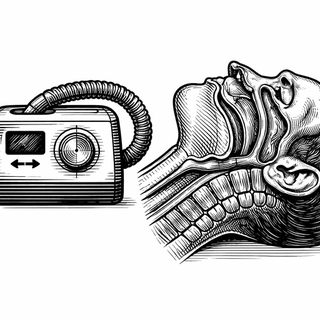
APAP stands for automatic positive airway pressure. It is part of the same family as CPAP, the better-known continuous positive airway pressure therapy. CPAP delivers a steady stream of pressurized air through a mask to help keep the airway open. APAP adds a little more intelligence to the setup: instead of using one fixed pressure all night, it automatically adjusts pressure based on what the device detects.
Think of CPAP as a reliable thermostat set to one temperature. APAP is more like a thermostat that notices when the room gets chilly and quietly nudges the heat up. Except the “room” is your upper airway, and the chilly draft is your throat trying to stage a midnight sit-in.
For many patients, this matters because sleep apnea is not always the same from hour to hour. Airway obstruction can vary with sleep position, sleep stage, alcohol use, nasal congestion, body weight, and other factors. A device that responds to changing needs may improve comfort while still keeping breathing stable.
The Trial in Plain English
Based on the ClinicalTrials.gov listing information provided, this is a prospective, open-label study evaluating the effectiveness of the Elara APAP device in patients with obstructive sleep apnea.
A few terms are worth unpacking:
“Prospective” means researchers follow participants forward in time, rather than looking backward through old records.
“Open-label” means participants and researchers know what treatment is being used. There is no mystery device hiding behind a curtain with a tiny clipboard.
The intervention is the Elara APAP device, used by patients with OSA. The study’s stated goal is to evaluate device efficacy. In practical terms, APAP studies often look at measures such as breathing interruptions during sleep, oxygen levels, therapy usage, comfort, sleep quality, and safety, though the exact outcomes should be checked directly in the trial listing.
The trial page is here: NCT07559708.
Why Sleep Apnea Research Still Matters
At first glance, sleep apnea might sound like “just snoring,” which is a bit like calling a fire alarm “just a wall decoration with opinions.” OSA can be linked with daytime sleepiness, poor concentration, morning headaches, high blood pressure, cardiovascular strain, metabolic issues, and reduced quality of life.
The core problem is deceptively simple: the airway blocks during sleep. But the patient experience is anything but simple. Some people cannot tolerate pressure. Some dislike masks. Some feel claustrophobic. Some get dry mouth, leaks, skin irritation, or the uniquely glamorous experience of wrestling tubing at 2 a.m.
That is why device design matters. Better algorithms, quieter motors, improved humidification, more comfortable pressure changes, and easier setup can all influence whether patients actually use therapy. And for sleep apnea treatment, “works beautifully in theory” is less impressive than “the patient keeps using it.”
What Makes This Elara APAP Study Interesting?
The interesting part is not merely that another APAP device exists. It is that every new device study asks a real-world question: can this technology help patients breathe better at night in a way they will tolerate?
In medicine, the gap between efficacy and everyday use can be enormous. A device may reduce airway obstruction under ideal conditions, but the nightly routine still has to survive ordinary human behavior: travel, allergies, insomnia, mask fit problems, laundry avoidance, and the occasional “I fell asleep on the couch and forgot everything” episode.
If the Elara APAP device performs well, the potential impact could be meaningful. A comfortable, responsive APAP system could help patients reduce breathing interruptions, improve sleep continuity, and possibly reduce downstream health risks associated with untreated OSA. It could also give clinicians another option when matching patients with therapy that fits their needs.
The Bigger Scientific Backdrop
Recent sleep medicine research continues to show that positive airway pressure therapy remains a major treatment for OSA, while also highlighting the messy reality of adherence and individualized care.
A 2021 review in JAMA summarized modern diagnosis and management of OSA, including PAP therapy, oral appliances, weight loss, surgery, and patient-centered treatment decisions. It is a helpful reminder that OSA is common, serious, and often underdiagnosed: doi:10.1001/jama.2020.3514.
A 2022 review in The Lancet Respiratory Medicine discussed precision medicine approaches in sleep apnea, including how different patient traits may shape treatment response. In other words, not every airway collapses in the same dramatic fashion: doi:10.1016/S2213-2600(21)00514-9.
Research has also continued to examine PAP adherence, comfort, cardiovascular outcomes, and patient selection. The recurring theme is wonderfully practical: the best therapy is not just the one that opens the airway, but the one a patient can actually live with. Medicine occasionally rediscovers that humans are involved, which is humbling for everyone and mildly funny for the humans.
The Current Challenge: Treat the Airway, Keep the Patient
The hardest part of sleep apnea treatment is not understanding that airway pressure helps. We know that. The hard part is making treatment feel less like a nightly equipment rental from a scuba shop.
APAP devices try to solve part of this by adjusting pressure only when needed. Lower pressure at calmer moments may feel more comfortable. Higher pressure can appear when obstruction starts to show up. That balance could help some patients stay on therapy longer, though actual results depend on device performance, patient selection, support, and follow-up.
This is where a prospective trial becomes valuable. It can show how the device performs when patients use it over time, outside the tidy fantasy world where every mask fits perfectly and nobody has a stuffy nose.
What Success Could Mean
If this study shows that the Elara APAP device effectively treats OSA, it could add another tool to the sleep medicine toolkit. That may sound modest, but in chronic care, tools matter. A better-fitting mask matters. A quieter machine matters. A pressure algorithm that feels less bossy matters. Small improvements can decide whether therapy becomes a habit or becomes expensive bedside sculpture.
For patients, the dream outcome is simple: fewer breathing interruptions, better sleep, less daytime fog, and a therapy experience that does not feel like negotiating with household plumbing.
For clinicians, successful APAP data could support broader device choice and more personalized treatment plans. For researchers, it adds another piece to the ongoing question of how technology can make evidence-based sleep apnea care easier to use in actual bedrooms, where the pillows are real and the tolerance for nonsense is low.
Citation and Disclaimer
Clinical trial cited: NCT07559708, ClinicalTrials.gov, “A Prospective, Open-label Study to Assess the Efficacy of the Elara APAP Device When Used in Patients With Obstructive Sleep Apnea.”
This article is for educational purposes only and is not medical advice. Anyone with symptoms of sleep apnea, such as loud snoring, witnessed breathing pauses, morning headaches, or daytime sleepiness, should speak with a qualified healthcare professional.