
A head and neck cancer survivor sits in an exam room waiting for a routine surveillance visit. The scan anxiety has already RSVP'd. The parking garage has done its usual impression of a maze designed by a committee. And somewhere between the blood pressure cuff and the “any new symptoms?” questions, another health need is quietly lurking: teeth that have been through radiation and now need serious protection.
That is where clinical trial NCT07556367, “Post-Radiation Oral Health in Underserved Head and Neck Cancer Patients,” gets interesting. The idea is refreshingly practical: provide fluoride varnish during routine cancer surveillance visits for post-radiation head and neck cancer patients who have limited access to dental care. In other words, bring the dental prevention to the visit patients are already making. It is the health care equivalent of putting the umbrella next to the door before the storm, instead of hoping everyone remembers to buy one during a downpour.
Why Radiation Can Be So Hard on the Mouth
Radiation therapy can be lifesaving for head and neck cancer. It can also leave the mouth with a long to-do list.
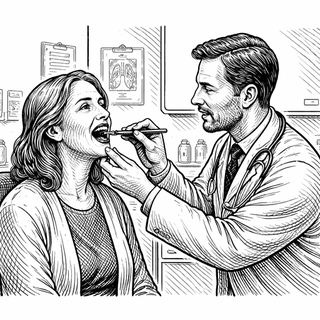
When radiation affects the salivary glands, many patients develop dry mouth, also called xerostomia. Saliva is not glamorous, but it is doing unpaid overtime every day. It helps wash away food, neutralize acids, protect enamel, support swallowing, and keep the mouth comfortable. When saliva production drops, teeth become more vulnerable to decay. Cavities can develop quickly and aggressively, especially near the gumline. Eating can become harder. Speaking can become uncomfortable. Dental infections can become dangerous.
For patients already coping with cancer treatment, the phrase “please also see a dentist regularly” may sound simple on paper and wildly unrealistic in real life. Dental coverage may be limited. Transportation may be unreliable. Appointments may conflict with work, caregiving, or oncology visits. Some communities have too few dental providers who feel comfortable treating patients after head and neck radiation. The result is a gap big enough to drive a billing department through.
The Trial’s Big Idea: Prevention Where Patients Already Are
According to the ClinicalTrials.gov record, this pilot study is evaluating whether fluoride varnish can be delivered during routine cancer surveillance visits for head and neck cancer patients after radiation who have limited access to dental care.
The intervention is fluoride varnish, a concentrated fluoride treatment painted onto the teeth. It hardens quickly and helps strengthen enamel against acid damage. Think of it as a tiny protective raincoat for teeth, minus the squeaky yellow boots.
The study’s purpose is not just to ask whether fluoride works. Fluoride’s cavity-prevention role is already well established. The sharper question is whether this model works: Can oncology follow-up visits become a reliable place to deliver oral health prevention? Will patients accept it? Can clinics fit it into the workflow without turning the schedule into a casserole of chaos? And can this approach improve oral health outcomes for people who face barriers to traditional dental care?
Those are public health questions as much as clinical questions. They are about design, access, trust, convenience, and whether the health system can stop asking patients to solve every logistical problem by themselves.
What the Study Is Looking At
The official study page lists the key trial information, including eligibility criteria, sponsor details, study status, intervention, and outcomes: ClinicalTrials.gov study record. A table-format version is available here: ClinicalTrials.gov table view.
Based on the provided summary, the study focuses on post-radiation head and neck cancer patients with limited access to dental care. The core intervention is fluoride varnish treatment delivered during routine cancer surveillance. As a pilot, the trial appears designed to assess feasibility as well as oral health-related outcomes. That feasibility piece matters. A brilliant intervention that cannot fit into real clinic life is like a treadmill used as a laundry rack: technically useful, practically not doing the job.
The sponsor and current recruitment status should be checked on the ClinicalTrials.gov record, since those details can change as trials move through approval, recruitment, completion, and reporting.
Why This Matters for Health Equity
Oral health is often treated like a separate side quest from “real” medical care. For cancer survivors, that separation can be harmful. Dental pain, tooth loss, infections, difficulty eating, and dry mouth can affect nutrition, employment, mental health, and quality of life. These are not cosmetic concerns. They are part of survivorship.
The equity angle is clear. People with better insurance, flexible work, reliable transportation, and nearby dental specialists have more ways to protect their teeth after radiation. People without those resources may be told what they need, but not given a realistic path to get it. That is not prevention. That is handing someone a map after removing half the roads.
This trial takes a more grounded approach. It asks whether oral health protection can be embedded into cancer follow-up. That may sound small, but small workflow changes can have large consequences when they meet patients where they actually are.
What Recent Research Adds
Recent literature continues to show that oral complications after head and neck cancer treatment are common, persistent, and clinically meaningful. Research and guidelines have emphasized prevention, symptom management, dental coordination, and patient-centered survivorship care.
Relevant recent sources include:
-
The ISOO-MASCC-ASCO guideline on salivary gland hypofunction and xerostomia after cancer therapy, which highlights prevention and management strategies for dry mouth and salivary dysfunction: https://doi.org/10.1200/JCO.21.01208
-
A review of oral complications in cancer therapy that discusses how treatment-related oral damage can affect function, comfort, infection risk, and quality of life: https://doi.org/10.3322/caac.21727
-
Research on oral health management in head and neck cancer survivorship, including the need for coordinated dental prevention before, during, and after radiotherapy: https://doi.org/10.3390/cancers15020370
-
A review of radiation-related dental disease and prevention strategies, including fluoride use and the ongoing challenge of adherence after treatment: https://doi.org/10.3390/dj11060144
The pattern across this work is not subtle: post-radiation oral health needs sustained attention. Fluoride helps, but access and follow-through are the tricky parts. The science can be strong while the delivery system still drops the toothbrush.
The Real-World Promise
If this pilot succeeds, it could support a simple but powerful model: make preventive oral care part of routine cancer survivorship visits, especially for patients least likely to access dental care elsewhere.
That could mean fewer cavities, fewer dental emergencies, less pain, better nutrition, and fewer avoidable infections. It could also reduce the emotional load on patients who are already managing follow-up scans, medical bills, transportation, family responsibilities, and the general indignity of waiting room television.
For clinics, the model may offer a practical way to close a care gap without building an entirely new program from scratch. For public health, it is a reminder that access is often about placement. Put the service in the right place at the right time, and suddenly prevention becomes less of a lecture and more of a reachable handrail.
The Challenges Ahead
This is still a pilot study, so the big questions are practical. Can staff deliver fluoride varnish consistently? Will patients return for repeat treatments? Will oncology clinics have the training, supplies, documentation systems, and reimbursement pathways to support this? Will the model work across different clinic settings, including safety-net hospitals and rural cancer centers?
There is also the deeper challenge of integrating medical and dental care, two systems that have historically behaved like distant cousins who only see each other at weddings. Cancer survivorship demands better coordination than that.
Still, this trial is worth watching because it is not chasing a flashy solution. It is testing a sensible one. Sometimes health equity work looks like policy reform, community investment, and workforce expansion. Sometimes it looks like fluoride varnish in an oncology clinic. Public health contains multitudes.
Disclaimer and Citation
This blog post is for educational purposes only and is not medical advice. Patients should talk with their oncology and dental care teams about personal risks, fluoride use, dry mouth, dental surveillance, and post-radiation oral health planning.
Clinical trial citation: ClinicalTrials.gov. “Post-Radiation Oral Health in Underserved Head and Neck Cancer Patients.” Record ID: NCT07556367. https://clinicaltrials.gov/study/NCT07556367