
Seeking: adults living with diabetes in Birmingham. Must enjoy practical education, occasional biometric screening, and being gently nudged toward healthier habits by people who know your name. Offers free three-month diabetes self-management education and support, community health worker check-ins, and either paper tracking or remote patient monitoring. Likes long walks, lower A1C, and fewer spreadsheets pretending to be care plans.
That is the basic profile of clinical trial NCT07556354, formally titled Empowering Faith-based Communities to Provide Personalized Diabetes Self-management Education and Support in the Magic City: A Pilot Study. The table view is available here: ClinicalTrials.gov table view.
The setup is refreshingly grounded. People with diabetes in the Birmingham area participate in a free three-month DSMES program hosted by MedsPLUS Consulting, a local independent pharmacy and wellness center, at a local faith-based organization. Sessions meet twice monthly and cover the real stuff: nutrition, physical activity, coping, risk reduction, complications, and medication behaviors. Before and after the program, participants complete questionnaires on diabetes knowledge and self-management behaviors, plus biometric screening for A1C, blood pressure, cholesterol, and BMI.
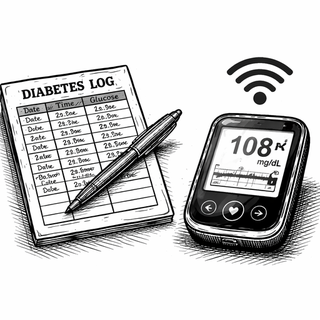
Then comes the interesting fork in the road. Participants are randomized into either a Traditional cohort using paper trackers for blood pressure and blood glucose, or a Remote Patient Monitoring cohort using an RPM platform to capture those data outside class.
In device-industry terms, this is not a shiny gadget study. It is more like testing whether the recipe works when the kitchen is a church hall, the sous-chef is a community health worker, and the oven has Bluetooth.
Why This Trial Is More Interesting Than It Looks
Diabetes care is full of elegant recommendations that collapse when they meet Tuesday afternoon. Eat differently. Move more. Check glucose. Take medication. Schedule visits. Understand lab values. Manage stress. Also, please do all of this while working, caregiving, paying bills, and decoding insurance paperwork written in the dialect of a haunted fax machine.
DSMES exists because diabetes is not treated only in clinics. It is managed in grocery aisles, kitchens, workplaces, pews, parking lots, and family gatherings where someone has brought three desserts “just in case.” Good education and support can improve knowledge, confidence, and daily routines. The clinical literature backs this up. A major consensus report in Diabetes Care describes DSMES as a key component of diabetes care, especially when matched to the person’s life rather than dropped on them like a binder with a logo (DOI: 10.2337/dci20-0023).
What this Birmingham pilot adds is delivery context. Faith-based organizations are often trusted local anchors. They already have relationships, meeting space, social networks, and a level of credibility that many healthcare systems would love to purchase but cannot. For chronic disease programs, trust is not a decorative garnish. It is the pan the whole dish cooks in.
The community health worker element matters too. Outside-session contact can turn education from an event into a support system. That is the difference between “Here is how to check your blood pressure” and “I noticed your numbers have been running high this week. What changed?” One is instruction. The other is care with a pulse.
The Device Angle: RPM Meets Real Life
Remote patient monitoring has become one of those industry phrases that can mean anything from clinically useful infrastructure to a drawer full of connected devices quietly losing battery power. The value is not in collecting data. Data are easy to collect. The hard part is making data useful without burying clinicians, patients, or pharmacists under a casserole of alerts.
That is why this trial’s comparison is useful. Paper trackers are cheap, familiar, and low-friction for some people. RPM can capture more timely data and reduce transcription errors, but it brings its own baggage: onboarding, connectivity, device literacy, platform usability, escalation rules, and workflow design. A Bluetooth cuff is not a care model. It is a kitchen thermometer. Helpful, yes, but it does not cook the chicken.
If the RPM cohort does better, the question will not simply be “Did the technology work?” It will be “Did the technology work because it improved visibility, prompted earlier support, increased accountability, or made the participant feel less alone between sessions?” Those are different mechanisms, and they matter for reimbursement, procurement, staffing, and scale.
If RPM does not outperform paper, that will be useful too. Sometimes the unglamorous tool is the right tool. Medical device companies occasionally forget that the competition is not another platform. It is a pen, a refrigerator magnet, and a motivated person with a routine.
What The Study Measures
The trial collects baseline and post-program data over three months. Key measures include diabetes self-management behaviors, diabetes knowledge, A1C, blood pressure, cholesterol, and BMI. Those outcomes cover both behavior and biology, which is the right pairing. A1C is a lagging indicator. Behavior is where the knobs are.
The intervention itself has several active ingredients: DSMES sessions, community health worker support, a faith-based setting, and either paper or RPM tracking. That makes interpretation a little trickier, because the trial is testing a practical care package rather than one isolated ingredient. From an engineering standpoint, this is less like testing a single component and more like testing the whole assembled system under field conditions. Annoying for purists, useful for everyone who has to deploy the thing.
The Patient Impact If It Works
If this model succeeds, the impact could be very practical. A local pharmacy and wellness center could help deliver structured diabetes support in a trusted community setting, with community health workers extending the program beyond scheduled classes. RPM could give care teams a better window into what is happening between visits, where most chronic disease management actually lives.
That matters in places where access barriers are not solved by telling people to “see your provider.” Transportation, trust, cost, digital access, schedule constraints, and health literacy all shape outcomes. A program embedded in a faith-based organization may reduce some of those barriers. Not all of them, of course. Healthcare access is not a soufflé that rises just because one ingredient is good. But this is a sensible place to stir.
The model could also be attractive to independent pharmacies, which are increasingly trying to move from dispensing transactions toward clinical services. That business shift is not sentimental. Pharmacies need sustainable service lines, payers want measurable outcomes, and patients need support that is closer than a quarterly office visit. If DSMES plus community health workers plus selective RPM can produce measurable improvement, it may become a template worth refining.
The Hard Parts
The trial is a pilot, so expectations should be appropriately sized. Three months is enough to detect signals, especially in engagement and some clinical measures, but it is not enough to prove long-term behavior change. Sustained diabetes management is where many programs lose their seasoning.
There is also the usual RPM challenge: who watches the data, what counts as actionable, and how quickly does someone respond? Too many alerts and staff tune out. Too few and the platform becomes a very expensive diary. The best RPM programs are designed around workflows first and devices second, which is less glamorous but considerably less likely to end in a dashboard nobody opens.
Eligibility details, recruitment status, sponsor information, and full outcome definitions should be checked directly in the ClinicalTrials.gov record before making operational or clinical assumptions. The study record is the source of truth, not the industry’s collective optimism wearing a lab coat.
Why I’m Watching This One
This pilot is interesting because it sits at the messy intersection where healthcare actually happens: community trust, education, behavior change, biometric data, local pharmacy services, and digital monitoring. None of those pieces is magical alone. Together, they might be enough to help people manage diabetes with more support and fewer dropped threads.
The trial is not trying to invent diabetes care from scratch. It is asking whether a familiar community setting, practical education, human follow-up, and better tracking can make diabetes self-management more workable. That is a humble question. In healthcare, humble questions often age better than grand ones.
Selected research context: DSMES is supported by clinical consensus as a core part of diabetes care (Powers et al., Diabetes Care, DOI: 10.2337/dci20-0023). Technology-enabled diabetes self-management support has also been studied as a way to extend care beyond visits, though implementation quality and patient fit remain major determinants of success.
Disclaimer: This article is for educational purposes only and is not medical advice. Patients should consult qualified healthcare professionals before making decisions about diabetes treatment, monitoring, medication, or participation in a clinical trial. Clinical trial citation: NCT07556354.