
Dear 2036: you were right to circle this one. Not because it arrived with fireworks, but because it solved a stubborn, practical problem the way the best medical advances often do - by making something messy, risky, and expensive a little more manageable. The research behind a self-healing colloidal hydrogel called Colloidose may one day be remembered as the moment surgical bleeding control stopped acting like a patch job and started behaving more like a smart, adaptable seal. Think less “gauze with ambition,” more “tiny cooperative building blocks that know how to pull themselves together under pressure.”
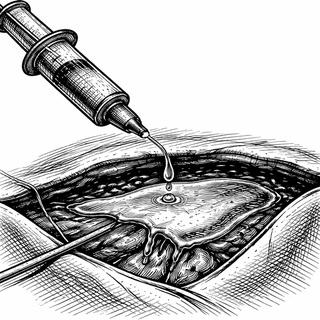
That matters because bleeding during surgery is not a niche inconvenience. It is one of the oldest, most universal problems in medicine. Surgeons need materials that can quickly control bleeding, stay where they are placed, and work in awkward locations where squeezing, tying, or compressing tissue is difficult. The study behind Colloidose describes a flowable hemostatic matrix designed for exactly those situations, including hepatobiliary, otorhinolaryngological, and gynecologic surgeries. In plain language, this is about helping stop bleeding in places that do not politely hold still.
What is a self-healing hydrogel, exactly?
A hydrogel is a soft, water-rich material that can mimic some properties of living tissue. “Self-healing” means the material can restore its structure after being disrupted. In this case, the researchers engineered amphoteric gelatin sub-microparticles that self-assemble into a gel network. That network has two notable features from the study summary: a storage modulus greater than 15 kPa, which speaks to its mechanical sturdiness, and a healing efficiency above 95%, which means it can recover remarkably well after stress.
That combination is a big deal. One reason many advanced biomaterials stall before reaching patients is that they are elegant in the lab and fussy in the real world. Some are too weak. Some need chemical tweaks that raise toxicity concerns. Some require activation steps that seem designed by someone who has never met an operating room. Colloidose appears to have been built with translation in mind from the start: flowable when needed, rapidly solidifying in place, and capable of accelerating clot formation.
Why this paper stands out
Lots of biomedical ideas sound impressive right up until they meet blood, time pressure, and actual human anatomy. What makes this study especially interesting is that it is not just another “promising in mice” story. The paper presents a bench-to-bedside arc, with comprehensive preclinical work and use in more than 300 clinical cases. That does not mean every question is settled, but it does mean this material has moved well beyond concept art for scientists.
The study also compares Colloidose with more conventional flowable matrices made from coarse gelatin granules measuring in the hundreds of micrometers. The newer colloidal design performed better in anatomically challenging or pressure-intolerant sites. That is a very practical advantage. In surgery, materials do not get extra credit for being theoretically elegant if they are clumsy where it counts.
There is also something refreshing here from a public health perspective. Innovation is often discussed as if novelty alone were the prize. It is not. The real test is whether a new tool reduces harm, broadens access to good care, and works reliably across the kinds of settings where patients actually live and seek treatment. Fancy science that only functions under ideal conditions is a bit like a luxury umbrella that collapses in the first real storm.
Why health equity belongs in this conversation
When we talk about better bleeding control, it is easy to focus on the operating room and forget the wider system around it. But surgical complications do not land evenly. Patients in underserved communities often face longer waits, fewer local specialists, more fragmented follow-up, and hospitals operating with tighter staffing and financial margins. A hemostatic material that works quickly and effectively in difficult surgical sites could help reduce downstream complications that are especially hard to absorb in those settings.
To be careful and realistic, this study does not prove that Colloidose will close surgical equity gaps on its own. No single device does that. But technologies that simplify care, improve reliability, and reduce the burden of managing complications can support more equitable outcomes if they are made affordable and widely available. That “if” is doing a lot of work, of course. Medical history is crowded with inventions that were brilliant on paper and inaccessible in practice.
Still, this is exactly the kind of translational research worth watching. It does not ask vulnerable patients to wait for some distant moonshot. It tries to improve a common, concrete part of care right now.
A material that behaves more like a teammate
One of the most appealing things about this hydrogel is that it seems designed to cooperate with the realities of surgery rather than fight them. Because it is flowable, it can reach irregular spaces. Because it self-assembles into an integrated gel network, it can stabilize where it is needed. Because it heals itself after disruption, it may better tolerate the mechanical chaos of a procedure.
That does not make it magic. Surgeons still need evidence across different patient populations, procedure types, and long-term safety measures. Regulators and clinicians will want to know how performance compares across settings, whether there are rare adverse effects, and how cost stacks up against current standards. Hospital procurement teams, those unsung poets of spreadsheets, will definitely have opinions.
But if the reported results continue to hold up, Colloidose could represent a broader shift in biomedical design. Instead of forcing tissues and clinicians to adapt to rigid materials, we may be entering an era where materials adapt to the body and the procedure in real time.
What comes next
The phrase “next-generation hemostat” gets used a little too easily in medical writing, usually right before everyone nods solemnly and asks for more data. In this case, more data is exactly the right answer. The most exciting future work will likely involve broader clinical validation, clearer comparisons with other hemostatic products, and a close look at how this material performs in diverse surgical populations and health systems.
I am especially interested in whether technologies like this can be developed and distributed in ways that do not reserve the benefits for well-resourced centers alone. If a smarter hemostatic matrix truly helps in difficult surgical scenarios, then patients in community hospitals, rural settings, and underfunded health systems deserve to be part of that future early, not last.
For now, this paper offers something rare and valuable: not just a clever material, but a credible story of translation. In biomedical research, that is the difference between a concept that sparkles under conference lighting and one that might quietly improve lives. The latter tends to make less noise, but it is usually the one worth betting on.
This blog post discusses research findings and should not be taken as medical advice. If you have concerns about surgical bleeding or an upcoming procedure, please consult a healthcare provider. Research discussed here represents ongoing scientific investigation and clinical validation is still in progress.
All images used in this post are decorative illustrations only and do not represent or reflect the accuracy, reality, or correctness of the referenced research.
Primary Source: Bench-to-Bedside Translation of Self-Healing Colloidal Hydrogels as Next Generation Design of Flowable Hemostatic Matrix: From Preclinical Evaluation to Human Clinical Trials. PubMed. https://pubmed.ncbi.nlm.nih.gov/42054000/