
Pop quiz: what do you get when insomnia, depression, a headband called Elemind Neuromod, and carefully timed sound cues all end up in the same pilot trial? If your answer was "a surprisingly modern attempt to tune the sleeping brain like a finicky oven," you are already ahead of most product roadmaps.
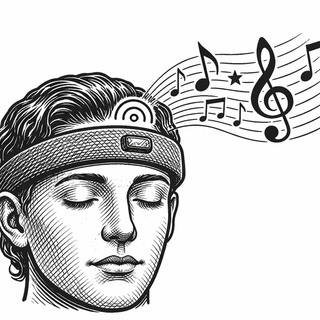
The clinical trial in question, NCT07553364, is testing whether alpha phase-locked auditory stimulation can improve sleep in people who have both insomnia symptoms and depression. There is also a table view here. The concept is simple enough to explain at dinner without losing the table: detect the brain's alpha rhythm, then deliver sound aligned to that rhythm in a way that might help people fall asleep faster and stay asleep better.
From an industry perspective, that is an attractive recipe. Sleep disorders are common, depression is common, and the overlap between the two is less a niche than a traffic jam. If a wearable device can move even part of that problem without adding another pill, investors, clinicians, and exhausted patients will all at least look up from their coffee.
What the trial is actually testing
This is a pilot feasibility study, which is an important label. Pilot studies are not victory laps. They are more like test kitchens. You are checking whether the ingredients behave, whether participants will actually use the device nightly, and whether the signal is strong enough to justify a bigger, more expensive trial later.
Participants in this study wear the Elemind Neuromod headband each night for four weeks. The schedule includes:
- 1 week of baseline
- 1 week of active or sham stimulation
- 1 week of washout
- 1 week of the opposite condition
They also wear an actigraphy watch throughout the study and complete questionnaires about sleep, mood, and device satisfaction.
The study's main hypothesis is straightforward: active stimulation will reduce both sleep onset latency and wake after sleep onset, compared with sham stimulation. In plain English, the team wants to see whether people fall asleep faster and spend less time awake after first drifting off.
That matters because insomnia is not just "I had a rough night." In people with depression, poor sleep can be both a symptom and an accelerant. It is the sort of feedback loop that product brochures love to simplify and real patients absolutely do not experience that way.
Why the mechanism is interesting
The phrase alpha phase-locked auditory stimulation sounds like a grant application tried to swallow a stereo manual, but the idea is pretty elegant. The brain produces rhythmic electrical activity, including alpha waves. A device that can detect those rhythms in real time and time external sound cues to a specific phase is trying to do something much more precise than playing generic white noise or rainfall sounds for eight hours.
That precision is the whole point.
In medtech, timing is often the product. Plenty of systems can deliver a stimulus. Fewer can deliver it at the right moment, repeatedly, in a home setting, on a consumer-friendly wearable, while the user is trying to sleep instead of helping your engineering team debug signal artifacts at 2:00 a.m. That is a much tougher meal to plate.
If this approach works, it suggests a more intelligent form of sleep support. Not sedation. Not blunt-force sensory masking. More like giving the sleeping brain a nudge at the exact moment it might actually listen.
Why insomnia plus depression is a commercially serious problem
This trial is interesting not just because the neuroscience is clever, but because the market need is painfully obvious. People with both insomnia and depression often bounce between treatment categories that do not fully solve either problem. Medications can help, but they can also bring side effects, adherence issues, next-day grogginess, and the usual mess of finding the right fit. Behavioral treatments are valuable, but access and persistence can be barriers.
That leaves a wide opening for devices that are:
- Noninvasive
- Home-based
- Repeatable
- Easier to scale than specialist-delivered therapy
In other words, this is the kind of category where industry people start sharpening pencils. A device that improves sleep in a depressed population is not just clinically interesting. It has implications for reimbursement strategy, care pathways, and consumer uptake. The sleep market already has plenty of gadgets, of course. Many are somewhere on the spectrum between useful tool and countertop juicer from 2014. The differentiator here is whether the neurotechnology is doing something measurably real.
The hard parts no one should politely ignore
Here is where the skepticism earns its keep.
First, sleep trials are notoriously messy. Subjective sleep reports matter because patients care about how they feel, but they can drift. Objective data matter because they are harder to charm. This study uses both, which is the correct move.
Second, sham control is essential. If you put a futuristic headband on someone's forehead and tell them it may help sleep, expectation effects will arrive early and with luggage. A sham condition helps separate true physiological benefit from the therapeutic power of nice industrial design.
Third, feasibility is not efficacy. A pilot can tell us whether nightly use is practical, whether the study procedures hang together, and whether there are encouraging trends. It does not, by itself, settle the question. That is not a flaw. It is just how responsible device development works, even if it is less exciting than the average startup pitch deck.
And finally, depression is not a small confounder. Sleep and mood influence each other constantly. If sleep improves, mood may improve. If mood shifts, sleep may shift. Untangling those effects is about as neat as separating egg yolks after the omelet is already in the pan.
What success would look like in the real world
If this study shows good feasibility and a meaningful effect on sleep onset and wake time after sleep onset, the next step is obvious: larger trials with stronger statistical power and a clearer path toward clinical adoption.
Real-world success would mean a few things.
Patients would need to tolerate the headband and actually use it consistently. Clinicians would need evidence that the benefit is not marginal or fragile. Payers would need a reason to care. And the company behind the system would need to prove it can turn a clever neuroengineering concept into a reliable product, not just a nice demo.
Still, the upside is real. A wearable that can improve sleep in people dealing with both insomnia and depression could fit into psychiatry, sleep medicine, digital therapeutics, and direct-to-consumer wellness-adjacent channels, depending on the eventual evidence and regulatory strategy. That is not a small opportunity.
More importantly, it would address a problem patients feel every night, which is usually where the best device categories start. Not with abstract biomarker theater, but with a stubborn daily burden that people would happily trade money, time, and drawer space to reduce.
Bottom line
NCT07553364 is exactly the kind of early-stage study worth watching: modest in scale, technically specific, clinically relevant, and aimed at a problem that has resisted easy answers. The core question is refreshingly practical. Can a phase-locked auditory stimulation system, delivered through a wearable headband, improve sleep for people whose insomnia and depression tend to reinforce each other?
Maybe. Maybe not. But at least this approach is trying to season the dish instead of setting the whole kitchen on fire.
Disclaimer: This article is for educational purposes only and is not medical advice. Clinical trial details can change over time, and readers should consult qualified healthcare professionals for diagnosis or treatment decisions.
Citation: ClinicalTrials.gov. Feasibility of Using Alpha Phase-Locked Auditory Stimulation for Insomnia Symptoms in People With Depression (NCT07553364). Available at: https://clinicaltrials.gov/study/NCT07553364