
“Single fiber seeks long walks in wet environments, stable performance under pressure, and a meaningful relationship with future wearable health devices.” That is basically the dating profile for this new research, and honestly, it is a better catch than a lot of gadgets aimed at families. The study looks at a way to make soft electronic fibers more durable in water-based conditions, which matters because the human body is, inconveniently, not a dry shelf. We are damp creatures. Kids especially seem determined to test every material on Earth with sweat, spills, rain, baths, and mystery stickiness.
So when I read about a new approach to making organic electrochemical transistors more stable, my first parent question is simple: will this ever help my kid? Not in a vague, “someday science is cool” way. I mean in the practical sense. Could this lead to wearable sensors that are softer, tougher, and less likely to quit the job halfway through real life?
What this research is actually about
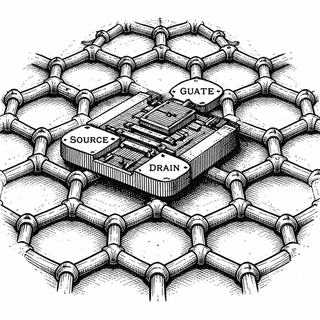
The paper focuses on organic electrochemical transistors, or OECTs. These are small electronic components that can take ionic signals and turn them into amplified electronic signals. In plain English, they are good at bridging the messy chemistry of bodies with the clean logic of electronics.
That makes them appealing for wearable bioelectronics and smart textiles. Think clothing, patches, or flexible fibers that could someday help monitor things like body signals in a comfortable, skin-friendly way. For kids, that “comfortable” part is not a bonus feature. It is the whole game. If a device feels scratchy, bulky, or weird, the odds of long-term success drop fast.
The problem is that one of the standard materials used in these devices, PEDOT:PSS, does not always behave well in watery environments. It can swell. And while “swelling” sounds mild, in materials science it can be the beginning of a full-blown identity crisis. The structure changes, the performance drifts, and reliability goes downhill.
For wearable health tech, that is a serious issue. A sensor that works nicely in the lab but degrades when exposed to moisture is not ready for daily life on a moving, sweating child.
The fix: give the polymer a sturdier home
The researchers tried a clever workaround. Instead of letting PEDOT:PSS sit there by itself and puff up when wet, they confined it inside the nanopores of covalent organic frameworks, or COFs.
You can think of the COF like a highly organized scaffold with tiny pores. The PEDOT:PSS gets tucked inside that structure, where it is held more tightly in place. In this study, the COFs were functionalized with carboxyl or sulfonic groups, which helped create strong hydrogen-bonding interactions. Those interactions reduced swelling and improved stability.
If that sounded a little chemistry-heavy, here is the parent translation: they built a better tiny support system so the working material would stop acting like a sponge with stage fright.
That matters because wearable electronics need to survive repeated use, moisture exposure, and movement without losing function. This team is trying to solve one of the biggest practical bottlenecks, not just polish a number on a spec sheet.
Why the fiber part matters
Another notable piece of the study is that the researchers made composite COF/PEDOT:PSS fibers using wet-spinning, which is a scalable manufacturing method. That word, scalable, gets tossed around a lot, but here it matters. A brilliant material that can only be made in tiny, fussy amounts is interesting science. A material that can be turned into fibers in a practical way starts edging toward real products.
These fibers were also mechanically strong, with a reported tensile strength of 464.7 MPa. You do not need to memorize that number. The useful takeaway is that the fibers were robust, not flimsy little lab noodles.
For parents, that raises the most hopeful possibility in the whole paper: future health-monitoring textiles might not have to choose between being soft and being durable. That is the sort of tradeoff families run into all the time. Comfortable shoes that fall apart. Kid-safe cups with lids from the engineering underworld. Soft wearable sensors that quit after too much moisture would fit right into that frustrating category. This research is trying to avoid that fate.
The result that caught my eye
As transistor channel materials, the fibers retained more than 90 percent of their initial performance after 1000 seconds of cycling.
That does not mean your child is about to wear a magical diagnostic T-shirt next semester. The test window is still short compared with real-world use over weeks or months. But it does show the material can keep doing its job under repeated operation without rapidly falling apart.
And that is the heart of the story here. Not flashy novelty. Reliability.
Medical wearables often sound exciting because they promise continuous monitoring, earlier warning signs, or less invasive care. But reliability is what separates “interesting prototype” from “thing I would actually trust near my kid’s healthcare.”
What could this lead to?
If follow-up work goes well, this kind of material could support better wearable biosensors, smart medical textiles, or other flexible bioelectronic devices that need to operate in moist environments.
That could matter for children who need ongoing monitoring but do not need one more rigid, annoying device taped to them. Softer sensor systems built into fabrics or flexible patches might eventually be more tolerable, especially for kids with sensory sensitivities or long-term medical needs.
There is also a broader benefit. Materials that are biocompatible and flexible have the potential to make health tracking more continuous and less disruptive. In a perfect world, good monitoring technology fades into the background. It does the job without requiring a family logistics summit and a backup bag of adhesives.
What this does not mean yet
This is still materials research, not a ready-made medical product. The paper does not show that this fiber is already being used in a clinical device, or that it has been tested in the messy marathon of actual family life.
There are still several steps between a strong lab result and something you would see in a pediatric clinic or consumer wearable:
- Longer-term stability testing
- Integration into full devices
- Real-world wear testing
- Safety and performance validation in practical settings
So no, this is not a treatment. It is not a new diagnosis tool on the market next week. It is a promising engineering step that addresses a real weakness in the field.
That may sound less dramatic than miracle-breakthrough headlines, but frankly, I trust this kind of progress more. Steady improvements in durability are how useful tools get built. Not every advance arrives with fireworks. Sometimes it arrives with a better housing material and a refusal to dissolve into nonsense when exposed to water.
Why I think this paper is worth paying attention to
What makes this study interesting is that it tackles a very specific, very real obstacle in wearable bioelectronics: soft conductive polymers can fail in aqueous environments. The researchers did not just say, “Wouldn’t future smart textiles be neat?” They targeted one of the reasons those textiles can be unreliable.
As a parent, that is the part I appreciate most. The work is not selling a dream. It is fixing a failure mode.
If this approach keeps holding up in future studies, it could help move bioelectronic wearables closer to something families might actually use. Not because the chemistry sounds fancy, although it does. Because devices that touch bodies need to survive bodies, and bodies are gloriously inconvenient.
This blog post discusses research findings and should not be taken as medical advice. If you have concerns about wearable medical devices, biosensors, or a child’s health condition, please consult a healthcare provider. Research discussed here represents ongoing scientific investigation and clinical validation is still in progress.
All images used in this post are decorative illustrations only and do not represent or reflect the accuracy, reality, or correctness of the referenced research.
Primary Source: Confinement of PEDOT:PSS in Covalent Organic Frameworks for Stable Organic Electrochemical Transistors. PubMed Record 41989750. Available at: https://pubmed.ncbi.nlm.nih.gov/41989750/