
Here's a sentence I never thought I'd write: a porous microneedle may help diagnose dry eye disease by politely borrowing a few tears and interrogating them for inflammatory gossip.
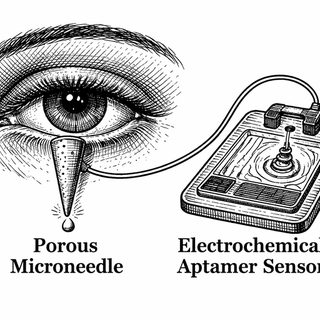
After years around laboratories, I have learned that medicine often advances by making big promises in very small packages. This new research on dry eye disease is a splendid example. The investigators describe a porous microneedle-based electrochemical aptamer biosensor designed to collect tears and measure biomarkers linked to dry eye disease. That is quite a bit of engineering packed into a phrase that sounds, at first pass, like a committee designed it after a long lunch. But the idea itself is elegant. Instead of treating tears as an inconvenient smudge on the human face, the researchers treat them as a rich diagnostic fluid.
Why dry eye deserves more respect
Dry eye disease is easy to underestimate. People hear the name and imagine a minor annoyance, as though the eyes merely need a pep talk and a humidifier. In reality, dry eye can bring persistent burning, irritation, blurred vision, light sensitivity, and a gritty sensation that makes many patients feel as if they have spent the afternoon blinking through a sandstorm. It is common, often chronic, and tangled up with inflammation and instability in the tear film that protects the surface of the eye.
Clinicians have long had a practical problem here. Symptoms matter, of course, but they can be slippery. One person is miserable with little obvious damage, while another has visible signs but less discomfort. Traditional tests can help, yet they do not always give a clean molecular picture of what is going on. That leaves room for better tools, especially ones that can measure biological signals directly.
Tears as tiny research reports
Tears are not just sentimental window dressing. They contain proteins, enzymes, and inflammatory molecules that can reveal what the eye is dealing with. If you can measure the right substances accurately, you may gain a more precise way to diagnose dry eye disease and perhaps track whether it is getting better or worse.
This study focused on three biomarkers associated with dry eye disease: interferon-gamma, tumor necrosis factor-alpha, and matrix metalloproteinase-9. Those names are not exactly built for cocktail conversation, but they are familiar players in inflammatory biology. When these molecules rise, they can reflect an irritated and inflamed ocular surface.
What makes the paper interesting is not simply that it measured them. Researchers have been chasing tear biomarkers for years. The novelty here is the combined device. One part collects the tear fluid using a porous microneedle structure. The other part uses an electrochemical aptamer sensor to detect the molecules of interest quantitatively. In plain English, the gadget is built both to gather the sample and to analyze it, which is the sort of practical integration engineers love and clinicians usually beg for.
A needle, yes, but not the usual sort
The phrase "microneedle" tends to alarm people because the human imagination immediately scales it up to something fit for medieval dentistry. That would be a mistake. Microneedles are tiny structures designed to interact with tissue or fluid in a less invasive way than conventional needles. In this case, the porous design helps with tear collection, which is a clever twist. Think of it less as a syringe and more as a highly disciplined sponge that went to graduate school.
That matters because tear sampling is not always straightforward. Anyone who has worked with eye-related diagnostics knows that the sample volume can be small, the collection method can irritate the eye, and the act of collecting tears can alter the very thing one hopes to measure. The cleaner and gentler the collection, the more believable the analysis.
The electrochemical aptamer side is also worth a moment. Aptamers are short nucleic acid sequences that bind specific targets, a bit like antibodies with a different molecular wardrobe. When the target binds, the sensor can produce a measurable electrochemical signal. That opens the door to sensitive detection in compact devices. The authors report a detection limit in the picogram-per-milliliter range, which suggests the system is operating at a level fine enough to pick up very small amounts of these biomarkers.
Why this could matter in the clinic
If this sort of platform holds up in follow-up work, it could help move dry eye assessment from a somewhat patchwork exercise toward a more quantitative one. That is appealing for several reasons.
First, it could sharpen diagnosis. Dry eye is not one tidy disorder with one tidy cause. It is a family argument involving tear production, tear evaporation, inflammation, surface damage, and patient-specific factors. A biomarker-based approach might help identify which biological pathways are most active in a given person.
Second, it could help monitor disease over time. Doctors and patients both appreciate numbers when the numbers mean something. If a treatment lowers relevant inflammatory markers, that may offer a more grounded way to judge response than relying only on symptoms or surface staining.
Third, it could support more personalized care. Ophthalmology, like much of medicine, is edging toward treatments tailored to the biology in front of us rather than the label on the chart. Dry eye has lagged a bit in that department. A practical tear-analysis device could give it a welcome nudge.
The old scientific catch: elegant is not the same as ready
Now, before anyone starts imagining these sensors beside every eye chart in town, a note of restraint. I spent enough years in research to know that beautiful prototypes can behave like gifted teenagers. Full of promise, occasionally temperamental, and not always prepared for the outside world.
A device like this still faces ordinary but serious questions. How reproducible is it in everyday use? How comfortable is it for patients? How stable are the sensors across repeated measurements? Can it distinguish dry eye subtypes in a clinically meaningful way? Does the measured biomarker pattern reliably match symptoms, examination findings, and treatment outcomes?
Those are not minor details. They are the whole ballgame. Translating a clever sensor into routine care requires validation in larger and more varied patient groups, comparison with existing clinical methods, and evidence that it improves decisions rather than merely generating fascinating numbers.
A small device with a sensible ambition
Still, I admire the instinct behind this work. Good biomedical engineering often succeeds not by adding complexity for its own sake, but by turning a messy clinical problem into something measurable. Dry eye disease has needed more of that. A porous microneedle that collects tears and an aptamer sensor that reads inflammatory biomarkers may sound like a machine assembled from three grant applications and a dare, yet the concept is grounded in a very practical need.
If future studies confirm its performance, this technology could help make dry eye diagnosis more objective, more informative, and perhaps a little less dependent on inference. That would be progress of the most useful kind. Not glamorous, not theatrical, just quietly better for patients. In medicine, those are often the advances that last.
This blog post discusses research findings and should not be taken as medical advice. If you have concerns about dry eye disease, please consult a healthcare provider. Research discussed here represents ongoing scientific investigation and clinical validation is still in progress.
All images used in this post are decorative illustrations only and do not represent or reflect the accuracy, reality, or correctness of the referenced research.
Primary Source: Porous microneedle-based electrochemical aptamer biosensor for the collection and quantitative analysis of dry eye disease biomarkers. PubMed record 42052694. https://pubmed.ncbi.nlm.nih.gov/42052694/