
If you’ve ever felt your heart race during a scary movie or a surprise encounter with a caffeinated squirrel, you know that our heart rate can change in an instant. But did you know that tiny particles floating around in the air - specifically, fine particulate matter (PM2.5) - can have a similar effect on your heart? Recent research has shed light on how these microscopic nuisances can affect something called heart rate variability (HRV) in real-time. And trust me, it’s way more interesting than it sounds!
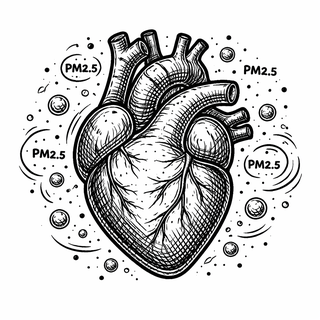
What’s the Buzz About PM2.5 and HRV?
Imagine living in a world where the air you breathe could influence your heartbeat as much as that double espresso you just downed. PM2.5 refers to tiny particles in the air that are less than 2.5 micrometers in diameter - smaller than a human hair! These little guys come from various sources, including vehicle emissions, industrial processes, and even forest fires.
Now, heart rate variability, or HRV, measures the time gap between heartbeats. In a nutshell, a higher HRV means your heart can adapt well to stressors, while a lower HRV can indicate potential issues. If you’re losing HRV like a magician losing rabbits from a hat, you might want to pay attention.
In a recent study published in Environmental Research, researchers looked to capture the ultra-short-term effects of PM2.5 exposure on HRV using real-time personal monitoring devices. They gathered minute-by-minute data from 73 individuals over three days, which sounds like a long time to wear a heart monitor - like a fashion accessory that goes with nothing.
How Did They Do It?
The researchers tracked PM2.5 and HRV using wearable devices, collecting a whopping 315,360 observations. Yes, you read that right - over 315,000 data points! That’s like trying to eat an entire buffet by yourself, but instead of food, they were serving up real-time health insights.
Using complex statistical models that made my head spin faster than a merry-go-round, they uncovered some fascinating patterns. What they found was that PM2.5 exposure was linked to acute reductions in HRV within 180 minutes. For the science enthusiasts out there, they measured key indices like the standard deviation of normal-to-normal intervals (SDNN) and the root mean square of successive differences (RMSSD).
But here’s the kicker: the impact was most pronounced at night. Think of it this way: if you’re out on a late-night snack run, the air quality is worse, and your heart might not be so happy about it. In fact, during nighttime exposure, SDNN decreased by an eye-popping 13.9% - now that’s a serious after-dark effect!
Who’s Affected the Most?
You might be sitting there, thinking, “Great, but who cares? I feel fine!” Well, here’s where it gets personal. The study revealed that certain groups - like females and individuals with arrhythmias - felt the effects even more intensely. Ladies, take heed: you were more likely to experience a significant drop in HRV right after PM2.5 exposure compared to men. And for those with pre-existing heart conditions, the results were even more concerning.
Imagine being at a party where everyone is having a good time, and suddenly a few guests start feeling faint. That’s what it’s like for people with heart problems when faced with PM2.5. While the rest of us might shrug it off, these individuals really feel the pinch.
Why Should We Care?
So why should you be concerned about this research? Besides the fact that the air we breathe contains these pesky pollutants, the findings highlight a crucial message: we need to pay attention to air quality, especially in vulnerable populations. The study calls for a push toward personal air pollution monitoring and targeted interventions.
Picture it: your smartphone buzzes as you step outside, alerting you that the air quality is about to take a nosedive. Suddenly, you’re compelled to stay indoors with your favorite snack - perhaps popcorn - but this time without the scary movie. It’s a small change that could make a big impact on your heart health.
The study also opens the door for public health initiatives aimed at reducing PM2.5 exposure. Maybe that means more green spaces in urban areas, stricter regulations on emissions, or even advances in technology to filter out pollutants in real-time. Whatever the case, we have the power to advocate for cleaner air and healthier hearts.
Wrapping It Up
In a world where tiny particles can have such a significant effect on our health, understanding their impact is more crucial than ever. The research on PM2.5 and HRV sheds light on how air pollution can directly influence our cardiovascular health - especially for those who are already vulnerable. With real-time monitoring and a focus on public health initiatives, we can work toward a future where we breathe easier and live healthier.
So, the next time you step outside or enjoy a lovely stroll through the park, take a moment to appreciate the air you’re breathing. And while you’re at it, maybe keep an eye out for any caffeinated squirrels - they might not be the only ones racing heartbeats!
Disclaimer: This blog post is for informational purposes only and should not be taken as medical advice. Always consult with a healthcare professional for personal health concerns. Images and graphics are for illustrative purposes only and do not depict actual medical devices, procedures, mechanisms, or research findings from the referenced studies.
Citation: Park YH, Park Y, Lee Y, Cho J, Kang DR. Ultra-short-term effects of fine particulate matter (PM2.5) exposure on heart rate variability in susceptible and vulnerable individuals using real-time personal monitoring. Environmental Research. 2025;123522. doi: 10.1016/j.envres.2025.123522