
Why does a plant even drink?
Seriously. Think about it. A tomato plant has no mouth, no kidneys, no internal plumbing department making executive decisions about hydration. It just sort of... sits in dirt and hopes for the best. And yet it manages to suck water up from the ground, distribute it to every leaf and fruit, and somehow produce something you can put on a sandwich. Plants are performing feats of passive engineering that would make a civil engineer weep with envy. The fact that it works at all is kind of miraculous.
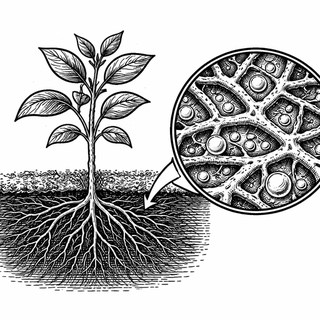
Now consider what happens when the rain stops. Or when it was never reliable to begin with. Climate change is tightening its grip on agricultural water supplies worldwide, and the humble tomato plant - our stand-in for every crop feeding every person on Earth - suddenly looks very vulnerable. It needs water. Reliably. In places where "reliable" and "water" haven't been on speaking terms in decades.
Enter the gel.
Collagen Meets Its Unlikely Farm Partner
Researchers recently published work on a new class of hydrogel scaffolds built from two ingredients that, at first glance, seem like they belong in completely different worlds: collagen (yes, the protein from skin and bones) and xanthan gum (XG), which you may recognize from the ingredient list of your favorite gluten-free bread. Pair them together, cross-link them cleverly, and you get something with genuinely strange and useful properties.
The technical term is semi-interpenetrating polymer networks, or semi-IPNs. The less technical description: a spongy, fibrous, degradable material that can absorb water like it has a personal vendetta against drought.
How much water? The formulation with the highest xanthan gum content - 70% by weight, labelled GX70 in the study - achieved a swelling capacity of roughly 3,585%. That is not a typo. The material absorbs more than 35 times its own weight in water and holds onto it. For context, a kitchen sponge manages somewhere around 1,000%. GX70 is doing something else entirely.
The Architecture of a Very Clever Sponge
What makes this work isn't magic, though it's tempting to use that word. It's microstructure. When the researchers examined their hydrogels under a microscope, they found a fibrillar-granular architecture - a kind of organized chaos of protein fibers interlaced with polysaccharide granules. As the xanthan gum content increased, the pores got bigger (from about 2 to 6 micrometers) and the granules got larger too. More XG meant more space for water to sit, more mechanical resistance, and a more rigid scaffold overall.
The storage modulus - a measure of how stiff a material is - increased by approximately 2,568% in the high-XG formulations compared to collagen alone. That's a scaffold that holds its shape, maintains structural integrity for at least 30 days under biodegradation conditions, and resists thermal stress better than its lower-XG counterparts.
In agricultural terms: it won't turn into soup the first time it rains.
Slow Food for Roots
Here's where things get genuinely interesting. This isn't just a water reservoir. It's also a slow-release nutrient platform.
As the hydrogels degrade - which they eventually do, being fully biodegradable - they release compounds that plants actually want. The study measured total protein concentrations reaching up to about 19.5 mg/L and phosphorus levels around 1.7 mg/L in the surrounding medium. Both matter enormously for plant metabolism. Phosphorus alone is one of the most limiting nutrients in global agriculture, and we currently mine it from finite geological deposits like there's no tomorrow (there may not be, at current rates, but that's a different article).
The collagen component isn't just structural decoration. It degrades into amino acids and peptides that serve as nitrogen sources. The xanthan gum contributes to gradual phosphorus mobilization. The gel feeds the soil as it vanishes. That's an elegant solution to a very old problem.
Tomatoes Were Consulted
The researchers didn't just characterize the materials in isolation. They tested biological compatibility using tomato cells, seedlings, and whole plants - a sensible approach that covers the spectrum from "does this kill cells" to "does this actually help something grow."
The results were good. Tomato cells in direct contact with the hydrogels showed normal adhesion, migration, and proliferation, alongside increased metabolic activity. Whole plants grown under low-input conditions for 60 days showed no adverse effects and maintained normal growth patterns. The hydrogels didn't make anything worse. Arguably, they made things better.
This matters because agricultural materials with good ideas on paper sometimes turn out to be phytotoxic in practice. A material that looks great in a test tube can still stress a plant if it releases compounds at the wrong time or in the wrong concentration. The tomato data provides early reassurance that the chemistry is actually compatible with living systems.
The Bigger Picture
Global agriculture faces a genuinely alarming convergence of problems: shrinking freshwater supplies, degraded soil, rising fertilizer costs, and a growing population that keeps wanting to eat. Materials science isn't going to solve all of that. But biodegradable, superabsorbent hydrogels that can hold water in dry soils, release nutrients gradually, and disappear without leaving a toxic legacy? That's a meaningful contribution.
Collagen is a byproduct of the meat and leather industries - a waste stream with scale. Xanthan gum is produced by bacterial fermentation and already manufactured industrially by the ton. Neither ingredient requires exotic chemistry to source. The supply chains exist. The synthesis routes described in this study are scalable. The gap between "promising lab result" and "farmers can actually use this" is smaller here than in many biomedical technologies.
The researchers frame this as a structure-function platform - a framework for understanding how material composition translates into real-world agricultural behavior. That kind of systematic characterization is exactly what moves a technology from interesting curiosity to practical tool.
The humble tomato plant still has no mouth. But it may soon have a much better water plan.
This blog post discusses research findings and should not be taken as medical or agricultural advice. If you have concerns about sustainable farming practices or soil science, please consult a qualified agronomist or soil scientist. Research discussed here represents ongoing scientific investigation and field validation is still in progress.
All images used in this post are decorative illustrations only and do not represent or reflect the accuracy, reality, or correctness of the referenced research.
Primary Source: Sustainable collagen-xanthan gum hydrogel scaffolds with super-swelling behavior and biostimulatory activity for agricultural applications. PubMed. 2026. DOI: https://pubmed.ncbi.nlm.nih.gov/41865925/