
In the 1980s, urologists figured out they could blast kidney stones into oblivion using focused sound waves. No surgery, no incisions - just high-energy acoustic pulses that shattered the stones into tiny pieces you could pee out. It was called lithotripsy, and it was genuinely revolutionary.
Then someone had a thought: what if we used gentler versions of these sound waves on musculoskeletal problems? Tendons, fascia, muscles - tissues that hurt and don't want to heal?
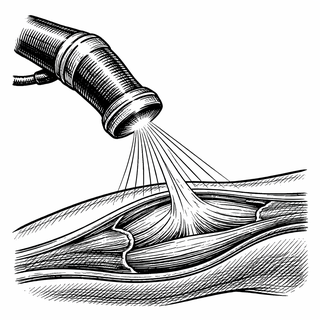
Enter extracorporeal shock wave therapy, or ESWT. And yes, "shock wave therapy" sounds like something a supervillain would use, but it's actually a legitimate treatment that's been FDA-approved for various musculoskeletal conditions since 2000.
The latest question: does combining focused shock wave therapy with good old-fashioned physiotherapy work better than either alone? That's what NCT06688344 is trying to figure out.
What Even Is a Shock Wave?
Let's get the physics out of the way. A shock wave is a single, high-intensity acoustic pulse - basically a burst of sound that's really, really loud, but compressed into a microsecond. The wave front has a very rapid positive pressure phase followed by a negative phase, and this sudden change creates mechanical forces in whatever tissue it passes through.
Think of it like the difference between gently pushing against a wall (steady pressure) versus clapping your hands against it once, hard (impulse). Same energy might be involved, but the rapid delivery makes the impact very different.
There are two main types used in clinical practice:
Focused shock wave therapy (fSWT): The waves are generated inside the device and concentrated by a lens to converge on a specific deep point in the tissue. Like using a magnifying glass to focus sunlight, except with sound waves and your achilles tendon. These can penetrate up to 12cm deep and hit a very precise target.
Radial shock wave therapy (rSWT): A projectile is accelerated by compressed air and smacks into an applicator on your skin. The waves spread outward from the contact point like ripples in a pond. These are better for shallower, broader areas.
Both hurt a bit during treatment - that initial pressure wave isn't exactly a massage - but the effects can be remarkable.
How Does Blasting Something Help It Heal?
The complete mechanism remains somewhat mysterious, but here's what we know:
Mechanotransduction. Cells sense mechanical forces and convert them into biological signals - shock waves are essentially a physical wake-up call.
Increased blood flow. ESWT stimulates new blood vessel formation. Tendons are notoriously poorly vascularized, which is why they heal slowly. Shock waves help fix that (Wang et al., 2012, Int J Surg; DOI: 10.1016/j.ijsu.2012.06.009).
Pain modulation. Shock waves affect substance P, a pain-related neurotransmitter. Initial release (which is why treatment hurts) is followed by sustained decrease (Hausdorf et al., 2008, J Bone Miner Res; DOI: 10.1016/j.knee.2008.01.006).
Calcium breakdown. In calcific shoulder tendinopathy, shock waves literally fragment calcium deposits for the body to clear away.
The overall picture: ESWT creates controlled microtrauma that restarts healing in tissues stuck in chronic injury.
What Conditions Does It Actually Help?
ESWT has pretty strong evidence for:
- Plantar fasciitis - that stabbing heel pain when you take your first steps in the morning
- Calcific shoulder tendinopathy - calcium deposits in the rotator cuff tendons
- Lateral epicondylitis - tennis elbow
- Patellar tendinopathy - jumper's knee
- Achilles tendinopathy - runner's favorite nemesis
The FDA first approved ESWT for plantar fasciitis in 2000 and lateral epicondylitis in 2002. Success rates in studies range from 65% to 91%, which is pretty impressive for chronic conditions that often resist other treatments (Moya et al., 2023, Healthcare; DOI: 10.3390/healthcare11212830).
The Combo Platter: ESWT Plus Physiotherapy
Here's the thing about musculoskeletal problems: they're rarely one-dimensional.
Take plantar fasciitis. Yes, your plantar fascia is inflamed and possibly has microtears. But you also probably have tight calves, weak foot intrinsic muscles, and maybe poor ankle mobility. Blasting the fascia with shock waves might help the local tissue, but if you don't address the biomechanical factors that caused the problem, you might end up right back where you started.
That's the logic behind combining ESWT with physiotherapy. ESWT handles the tissue-level dysfunction while physiotherapy addresses the movement patterns, muscle imbalances, and flexibility issues.
A study by Rompe and colleagues showed that stretching exercises combined with radial shock wave therapy worked better for chronic plantar fasciitis than RSWT alone. The combined approach produced greater improvements in pain and function at follow-up.
The trial NCT06688344 is exploring this combination approach - specifically, focused ESWT as an addition to physiotherapy rather than a replacement for it.
Focused vs. Radial: Different Tools for Different Jobs
Focused shock waves penetrate deeper (up to 12cm), hit precise targets, and require fewer sessions. Radial waves spread over wider, shallower areas and work better for superficial structures. For knee osteoarthritis, focused ESWT has shown greater effects - probably because cartilage and bone benefit from concentrated deep energy (Kim et al., 2022, J Clin Med; DOI: 10.3390/jcm11144093).
What Does Treatment Feel Like?
I'm not going to lie - it's not a spa day. You'll feel a tapping or pounding sensation, like a particularly enthusiastic woodpecker attacking your tendon. Pain during treatment is common but tolerable, and sessions only last 5-15 minutes. Afterward, expect some temporary redness or soreness. Most protocols involve 3-5 sessions spaced about a week apart.
The Trial: Adding Focused ESWT to the Physio Toolkit
NCT06688344 examines focused ESWT as an addition to physiotherapy - representing a growing trend: stop asking "which treatment is best?" and start asking "which combination is best?"
This makes biological sense. ESWT works at the tissue level; physiotherapy works at the movement level. There's no reason they should be mutually exclusive. The challenge is figuring out optimal timing - and that's what clinical trials help answer.
Fair Warning: Limitations Exist
ESWT isn't magic. Protocol variability makes comparing studies tricky. Placebo effects are real - loud, high-tech treatments generate expectations. And success rates of 65-91% mean some people won't respond. That said, compared to surgery or chronic medication, ESWT offers a non-invasive option with a solid safety profile.
The Bottom Line
Shock wave therapy is one of those treatments that sounds absolutely bonkers when you first hear about it - "wait, you're going to blast my painful tendon with acoustic waves?" - but has surprisingly solid evidence behind it.
The key insight is that sometimes tissues get stuck. Chronic tendinopathies, stubborn plantar fasciitis, calcific deposits - these are situations where the body's healing process has stalled out. ESWT provides a kick-start, a biological restart button that tells the tissue to try again.
Combined with physiotherapy - which addresses the broader movement and strength issues - it represents a genuinely comprehensive approach to musculoskeletal problems.
The trial NCT06688344 and others like it are refining our understanding of how to use these tools together. The goal isn't just to treat pain, but to restore function and prevent recurrence. Because let's be honest - solving a problem only to have it come back six months later isn't really solving it.
So next time someone offers to blast you with sound waves, maybe don't run away immediately. The evidence says it might actually help.
Disclaimer: This blog post is for informational purposes only and does not constitute medical advice. Treatment decisions should be made in consultation with qualified healthcare providers based on individual circumstances. The views expressed are those of the author. Images and graphics are for illustrative purposes only and do not depict actual medical devices, procedures, mechanisms, or research findings from the referenced studies.