
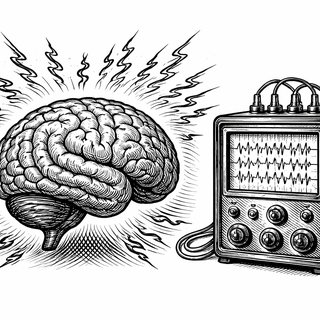
If you've ever tried meditation and felt like your brain went somewhere far, far away - maybe to a beach, maybe to another dimension, maybe to that weird zone where you can't remember if you fed the cat - well, science is finally catching up with that experience. A fascinating new clinical trial called STIM-PSI (NCT07267403) is investigating whether deep meditation can produce brain activity patterns that look similar to sedation. Yes, you read that right. Researchers want to know if your mindfulness practice might make your brain waves resemble someone who just got anesthesia.
And honestly? As someone who has fallen asleep during guided meditation more times than I care to admit, I find this whole premise extremely validating.
The Science Behind the Study
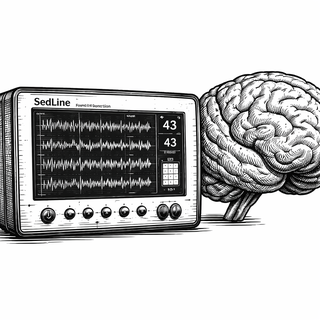
Here's what's happening: researchers are using a device called the SedLine Brain Function Monitor to measure something called the Patient State Index - or PSi for short. The SedLine system is normally used in operating rooms to help anesthesiologists figure out exactly how "under" a patient is during surgery. It provides bilateral EEG data (that's electroencephalogram for those keeping score at home), which essentially means it's reading brain waves from both sides of your head simultaneously.
The Patient State Index generates a number that typically ranges from 25 to 50 during general anesthesia, while an awake person usually scores much higher. The technology uses a proprietary algorithm that processes EEG signals and spits out a real-time assessment of consciousness level. It's pretty sophisticated stuff - the kind of technology that makes you grateful we live in an era of modern medicine rather than the "bite down on this stick" era.
But here's where it gets interesting: researchers have noticed that experienced meditators show some unusual brain activity patterns. Previous studies have documented that meditation can dramatically alter EEG readings, with increased power in slow-wave bands like theta (3-7 Hz) and alpha (8-12 Hz) frequencies. Some meditators can achieve states of consciousness that, on paper, look remarkably different from ordinary wakefulness.
Why Motor Brain Activity Matters
The STIM-PSI study isn't just looking at general brain waves - it's specifically interested in motor brain activity. This might seem like an odd choice for a meditation study, but there's actually some elegant science behind it.
When you meditate effectively, one of the first things that happens is your body gets really, really still. Not just "sitting quietly" still, but profoundly relaxed. This shows up on EEG as changes in what's called the mu rhythm - an alpha-like wave pattern that originates from the sensorimotor cortex. During effortless, meditative awareness, researchers have found that the whole family of alpha rhythms gets synchronized, including the somatosensory alpha from the somatic motor-sensory cortex. This produces that characteristic stillness of the body - head, face, hands, legs, everything just... settles.
Think of it like this: when you're awake and thinking about moving (or actually moving), your motor cortex is buzzing with activity. When you're under anesthesia, that same region goes quiet. And apparently, when you're deep in meditation, something similar might be happening - your motor system essentially goes into standby mode while you're still technically awake and aware.
It's like your brain is running a "Do Not Disturb" mode, except instead of ignoring your notifications, it's ignoring your body.
The Monitoring Technology
The SedLine system used in this study represents some serious neuroscience hardware. It processes EEG signals and generates the PSi value along with a multi-taper Density Spectral Array (DSA) that gives clinicians a visual representation of brain activity over time. Originally designed to help prevent awareness during surgery - which is apparently something that happens and is every bit as horrifying as it sounds - the technology has proven accurate enough that researchers are now repurposing it for consciousness research.
A 2020 study published in the British Journal of Anaesthesia established normative values for SedLine-based processed EEG parameters in awake volunteers, which gives researchers a baseline to work from. In other words, we now know what "normal awake brain" looks like on this machine, which makes it possible to detect when meditation does something unusual.
Recent randomized controlled trials have shown that SedLine monitoring can help guide anesthesia in children undergoing surgery, reducing both the amount of anesthetic needed and the time to recovery. The fact that this technology is sensitive enough to detect meaningful differences in pediatric patients suggests it might also be sensitive enough to detect the subtle shifts that occur during meditation.
What This Could Mean
If this study finds that experienced meditators can reliably produce PSi values that overlap with sedation levels, the implications are genuinely profound. First, it would provide objective, measurable evidence for what meditators have claimed for centuries - that deep meditation represents a genuinely altered state of consciousness, not just relaxation with extra steps.
Second, it could open up new avenues for understanding consciousness itself. Anesthesiologists have been studying the boundary between consciousness and unconsciousness for decades, trying to understand exactly what happens when awareness fades and returns. If meditation can approach that boundary from the other direction - maintaining awareness while suppressing the usual markers of wakefulness - it might teach us something fundamental about how consciousness works.
Third, and perhaps most practically, it could help validate meditation as a legitimate medical intervention. Right now, meditation is often lumped in with other "wellness" practices that may or may not do anything. If we can show that meditation produces consistent, measurable changes in brain activity comparable to pharmacological interventions, that changes the conversation entirely.
The Bigger Picture
This study sits at an interesting intersection of ancient wisdom and modern technology. Meditation practices have existed for thousands of years, with practitioners reporting states of consciousness that seemed impossible to verify scientifically. Now we have tools sophisticated enough to potentially measure what monks and practitioners have been experiencing all along.
Research from 2024 has shown that meditation induces changes in deep brain areas associated with memory and emotional regulation. Studies at the Icahn School of Medicine at Mount Sinai using intracranial EEG recordings found that meditation led to changes in activity in the amygdala and hippocampus. Meanwhile, frontal alpha asymmetry research has demonstrated that meditation can significantly influence alpha activity in the frontal lobes - regions responsible for attention, decision-making, and emotion regulation.
The STIM-PSI study adds another layer by using clinical-grade monitoring equipment designed for the operating room. It's one thing to show that meditation changes brain waves in a research lab; it's quite another to show that those changes are significant enough to register on equipment designed to distinguish between "awake" and "unconscious."
Looking Forward
The scientific community has been wrestling with meditation research for decades, partly because the effects can be subtle and variable. Not everyone who meditates achieves deep states, and those who do don't necessarily do it on command. This makes controlled research challenging - you can't exactly tell someone to "meditate harder" and expect consistent results.
using objective monitoring equipment and focusing on experienced practitioners, the STIM-PSI study might help establish more reliable benchmarks. If we know what deep meditation looks like on a SedLine monitor, we can start asking more refined questions: How long does it take to reach that state? Can novices achieve it with training? Does the specific type of meditation matter?
These questions have practical implications beyond basic science. If certain meditation techniques reliably produce specific brain states, that information could help people choose the right practice for their goals. Want to reduce anxiety? Here's the technique that best modulates the amygdala. Looking for improved focus? Try this approach that optimizes frontal alpha activity.
We're not quite there yet, but studies like STIM-PSI are laying the groundwork. And in the meantime, if anyone asks why you fell asleep during meditation, you can now say you were just achieving a PSi value consistent with general anesthesia. Very spiritual. Very intentional.
References:
- ClinicalTrials.gov Identifier: NCT07267403
- Miyasaka KW et al. EEG-Guided Titration of Sevoflurane and Pediatric Anesthesia Emergence Delirium. JAMA Pediatrics. 2025.
- Kim M et al. Normative values for SedLine-based processed electroencephalography parameters in awake volunteers. Br J Anaesth. 2020. PMID: 33175254
- Lardone A et al. EEG Derived Neuronal Dynamics during Meditation. Adv Mind Body Med. 2015. PMC4684838
- Babu MG et al. The Electroencephalographic Brainwave Spectrum, Mindful Meditation, and Awareness. Cureus. 2023. PMC10424274
- Icahn School of Medicine at Mount Sinai. Meditation induces changes in deep brain areas. PNAS. 2025.
Disclaimer: This blog post is for informational purposes only and should not be considered medical advice. Clinical trials are research studies, and participation involves risks and benefits that should be discussed with qualified healthcare providers. The views expressed here do not represent the opinions of any institution or research organization. Always consult with healthcare professionals before making decisions about your health or treatment options. Images and graphics are for illustrative purposes only and do not depict actual medical devices, procedures, mechanisms, or research findings from the referenced studies.