
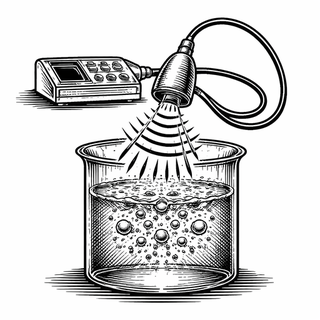
The ultrasound machine is humming at frequencies way above anything your ears could pick up, and somewhere inside that murky solution, something wild is happening. Polyphenol molecules - those same antioxidant compounds your health-conscious friend won't stop talking about at brunch - are being violently ripped apart and reassembled into perfectly uniform nanoparticles. No harsh chemical solvents. No complicated multi-step synthesis. Just sound waves doing what sound waves apparently do when you crank them up high enough: build nanoscale antibacterial weapons out of plant compounds.
I am losing my mind over this paper, and you're about to find out why.
The Problem With Polyphenols (They're Great Until They're Not)
Polyphenols are nature's Swiss Army knife. They show up in green tea, red wine, berries, and basically every "superfood" listicle ever written. They're antioxidants. They fight inflammation. Some of them kill bacteria. On paper, they're biomedical gold.
Here's the catch, though: most polyphenols are about as water-soluble as a brick. They're hydrophobic, meaning they basically refuse to dissolve in biological fluids. And even when you manage to wrangle them into a usable form, they tend to degrade faster than your New Year's resolutions. Chemical instability is their Achilles' heel.
So scientists have been stuck in this frustrating loop for years. "Look at all these amazing biological activities!" followed immediately by "...that we can't actually deliver to cells reliably." It's like having a Ferrari with no wheels.
Enter: Extremely Loud Sound Waves
This is where the new study gets fun. Researchers developed a high-frequency ultrasound-assisted method to convert these stubborn, water-hating polyphenol molecules into well-dispersed, uniformly sized nanoparticles. The technique is called sonochemistry, and it's exactly as metal as it sounds - using acoustic cavitation (tiny bubbles forming and violently collapsing in liquid) to drive chemical reactions.
Wait, it gets better.
They didn't just use ultrasound alone. They combined it with a Fenton reaction - a chemical process that generates highly reactive hydroxyl radicals from iron salts and hydrogen peroxide. When you pair ultrasound with Fenton chemistry, the polyphenol polymerization and nanoparticle nucleation happen dramatically faster. It's like the ultrasound is the drummer keeping time while the Fenton reaction is the lead guitarist absolutely shredding. Together, they produce nanoparticles that are consistent in size and beautifully dispersed in solution.
And the method works across a wide range of polyphenol precursors. This isn't a one-trick pony tailored to a single molecule. The researchers demonstrated versatility across multiple compounds, including 1,8-dihydroxynaphthalene (1,8-DHN), which became the star of the show for reasons we'll get to in a second.
These Nanoparticles Have a Serious Resume
So what can these tiny polyphenol particles actually do? Two things, and both are impressive.
First: antioxidant powerhouse. The resulting nanoparticles demonstrated outstanding capacity for scavenging reactive oxygen species (ROS) inside cells. ROS are those unstable molecules that cause oxidative stress - the kind of cellular damage linked to aging, cancer, cardiovascular disease, and basically every condition that makes you go "ugh." Having nanoparticles that can efficiently mop up intracellular ROS is a big deal for protective therapies.
Second - and this is the part that made me put down my coffee - antibacterial activity. The DHN-derived nanoparticles killed both Gram-positive bacteria (Staphylococcus aureus) and Gram-negative bacteria (Escherichia coli) at relatively low concentrations.
If you know anything about antibacterial research, you know that Gram-negative bacteria are notoriously harder to kill because of their extra outer membrane. It's like they're wearing a second jacket. Many antibacterial agents can handle Gram-positive bugs but bounce right off Gram-negative ones. The fact that these nanoparticles handle both is seriously noteworthy, especially as antibiotic resistance continues to be one of the scariest public health problems of our generation.
Why "Green and Scalable" Actually Matters Here
I'll be honest - the phrase "green chemistry" gets thrown around a lot in nanoparticle research, sometimes generously. But this method has some genuine claims to that title. High-frequency ultrasound is an energy input, not a chemical reagent. The Fenton reaction uses relatively simple and available chemicals. There are no exotic organic solvents involved. And the process appears to be scalable, which is the word that makes pharmaceutical companies' ears perk up.
A lot of brilliant nanoparticle synthesis methods die on the vine because they work beautifully at the benchtop but fall apart when you try to make industrial quantities. The simplicity of this ultrasound-assisted approach - plus its versatility across different polyphenol starting materials - suggests it could actually make the jump from lab curiosity to practical manufacturing platform.
The Bigger Picture
We're living in an era where antibiotic resistance is accelerating, oxidative stress-related diseases are everywhere, and the demand for biocompatible nanomaterials keeps growing. A platform technology that turns cheap, abundant plant compounds into multifunctional nanoparticles using sound waves and basic chemistry? That checks a lot of boxes simultaneously.
The researchers describe this as a foundation for "next-generation bioactive nanomaterials," and honestly, that framing doesn't feel like overselling it. Imagine wound dressings embedded with these nanoparticles - simultaneously fighting infection and reducing oxidative damage to promote healing. Or coatings for medical implants that resist bacterial colonization. The application space is genuinely broad.
Of course, there's still a long road from benchtop proof-of-concept to clinical reality. Biocompatibility studies, pharmacokinetics, regulatory hurdles - the usual gauntlet. But the foundation here is solid, the method is elegant, and the results are hard to argue with.
Sometimes the best innovations are the ones that take something nature already made and just figure out a smarter way to use it. Add some extremely aggressive sound waves, and apparently you've got yourself a nano-factory.
This blog post discusses research findings and should not be taken as medical advice. If you have concerns about antibacterial treatments or antioxidant therapies, please consult a healthcare provider. Research discussed here represents ongoing scientific investigation and clinical validation is still in progress.
All images used in this post are decorative illustrations only and do not represent or reflect the accuracy, reality, or correctness of the referenced research.
Primary Source: High-frequency sonochemical conversion of hydrophobic polyphenols into functional nanoparticles for bioengineering. PubMed. 2026. PMID: 41713121